


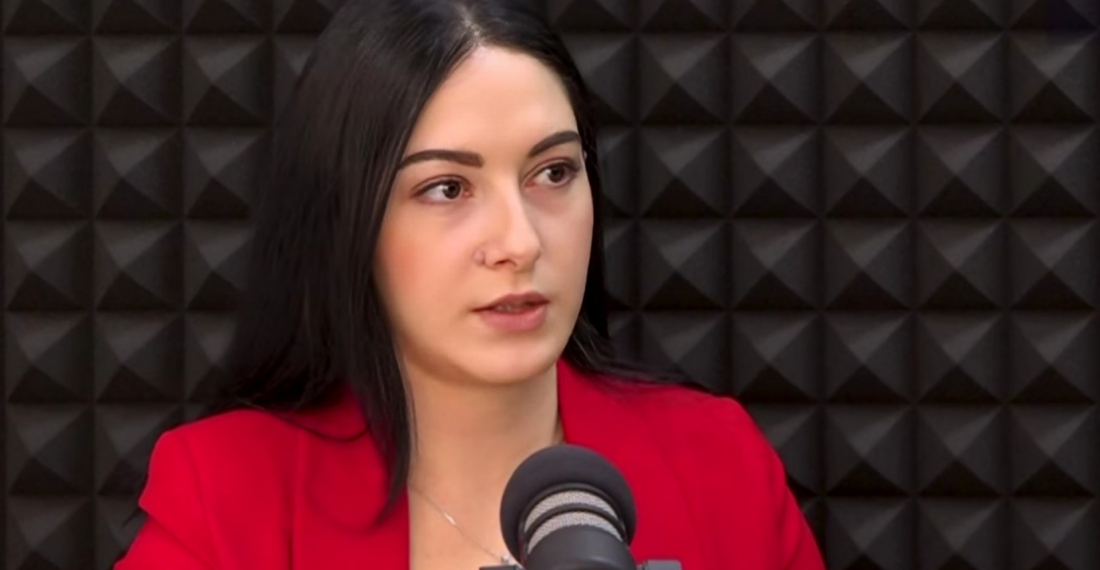
This commentary was prepared by Ms. Varduhi Harutyunyan for the 10th issue of the Armenia Election Monitor 2026 newsletter.
Exactly one month before the parliamentary elections in Armenia, Yerevan was transformed into the center of Europe, hosting the 8th European Political Community Summit, parallel to which the inaugural Armenia-European Union Summit and the state visit of French President Emmanuel Macron were also held. Such developments in Armenia-EU relations became possible after the National Assembly of Armenia adopted a law on March 26, 2025, initiating the process of Armenia's accession to the EU. Yerevan and Brussels are also engaged in an active dialogue on visa liberalization. Cooperation in the fields of security and defence is deepening, and the EU has also expressed support for Armenia's agenda on regional unblocking and the diversification of economic relations.
Just days before the elections, US Secretary of State Marco Rubio also arrived in Armenia for a brief visit. The Secretary's visit was marked by the signing of three crucial documents. Through one of them, Armenia-US relations were effectively elevated to yet another level, reaching a Comprehensive Strategic Partnership. Additionally, the framework agreement on the Trump Route for International Peace and Prosperity (TRIPP) was initialed, along with a framework memorandum on critical minerals and rare earths. Undoubtedly, Armenian-American relations are developing and deepening at an unprecedented pace. Specifically, the Republic of Armenia and the US transitioned from a strategic dialogue to a strategic partnership on January 14, 2025. It is noteworthy that while this initial document was signed under the US Democratic administration, the Republicans, led by Donald Trump, contrary to the assertions of many, did not ignore this partnership. Instead, they elevated it to a new level with lightning speed and infused it with strategic depth, demonstrating their consistency and active interest in Armenia, as well as in peace and stability in the South Caucasus.
The current authorities of the Republic of Armenia have announced a policy of foreign policy diversification. In addition to deepening relations with the West, this also means normalizing relations with Azerbaijan and Turkiye, as well as activating ties with the countries of Central Asia and the Middle East, among others. The diversification of the defense and economic sectors also forms an integral part of this policy.
The ruling Civil Contract party, for which 32 percent of respondents expressed support according to the IRI polls published on May 22, promises to continue this course upon re-election. The party proposes the institutionalization of peace, the implementation of a balanced foreign policy, the development of relations with all four neighbors, and the realization of a regionalization concept targeting the countries of Central Asia, the Middle East, and India. The Civil Contract also promises voters steps toward a European future. At the same time, as long as European Union membership remains a long-term prospect and current regulations do not hinder membership in the Eurasian Economic Union, the Republic will continue to remain an EAEU member and develop trade and economic relations with its member states. Regarding relations with Russia, the force led by Nikol Pashinyan reassures that Armenia will develop mutually beneficial, constructive relations with the Russian Federation while simultaneously reducing its dependency on it, emphasizing that bilateral relations are currently in a phase of constructive transformation. As for relations with the US, we can assume they will continue under the logic of the documents signed in May.
It is noteworthy that the opposition forces, which, according to opinion polls, are the most likely contenders to win seats in parliament, have negatively viewed both the European events and the advancements with the US. According to the latest IRI polls, these forces include Strong Armenia with 6 percent of the vote and the Armenia Alliance with 3 percent. Meanwhile, 2 percent of respondents expressed support for the Armenian Meritocratic Party. Supporters of the Prosperous Armenia Party, the I Am Against Everyone Party, the Wings of Unity Party, and the DOK Party accounted for 1 percent each.
The Strong Armenia party, founded by Russian-Armenian businessman and billionaire Samvel Karapetyan, generally criticizes the authorities' foreign policy, from the peace agenda to relations with various power centers. The peace agenda is characterized as defeatism, to say the least, and the thesis is actively pushed that if the current government is re-elected, 300,000 Azerbaijanis will move to Armenia for permanent residence, a claim the ruling authorities have repeatedly denied.
In public speeches and interviews, representatives of the party have stated that Armenia must maintain a balanced policy among Russia, the EU, and the US, and build relations with all countries and organizations from which Armenia can benefit, without presenting a clear agenda for diversification. At the same time, they have sharply criticized the Armenian authorities' policy toward Russia. Nonetheless, this force is perceived as pro-Russian, with its connections to Russian business and political circles frequently highlighted, and they face accusations of utilizing Russian narratives in the domestic political struggle and contributing to the preservation of Armenia's dependency.
The Armenia Alliance, led by the second President of Armenia, Robert Kocharyan, puts forward a more well-defined agenda. In its electoral program, the political force also promises to build complementary relations with all power centers. At the same time, its foreign policy priority is a new quality of allied relations with Russia, including within the frameworks of the EAEU and the Collective Security Treaty Organization, where Armenia has currently frozen its membership. The program notes elevating the level of strategic partnership with Iran and China, as well as joining BRICS. It also speaks of developing partnership relations with the US and deepening ties with the EU, including visa liberalization. At the same time, the Armenia Alliance accuses the current authorities of ruining relations with Moscow. Its position is that while relations with the West are important, they must not come at the expense of Russia.
Although at first glance these political forces appear to offer engagement with all power centers without a pronounced foreign policy vector, the depth of the relationships they propose varies significantly. In the program and statements of the ruling party, the balancing act is more pronounced, backed by a clear plan to deepen relations with the EU and the US. Conversely, in the statements of the two main opposition forces, the balance is heavily tilted toward Russia and the preservation of membership in current integration blocs.
It is noteworthy that in the same IRI polls, 61 percent of respondents stated that Armenia is moving in the right direction, 28 percent said it is moving in the wrong direction, and 11 percent did not answer the question. It is important to note that in the February 2026 poll, 47 percent of people responded that the Republic of Armenia was moving in the right direction, while 41 percent said the wrong direction. The numerical gap between those selecting the right and wrong directions was also narrow in the 2024 and 2025 polls. However, in recent months, public opinion has effectively swung toward endorsing the current political course.
France was identified as the most important foreign policy partner by 39 percent of respondents, followed by Russia at 35 percent, the EU at 34 percent, Iran at 29 percent, and the US at 27 percent. Compared to the previous poll, the approval ratings for the EU and France have risen, while those for Russia and the US have declined. It is important to emphasize that this survey was conducted before Rubio’s visit and the signing of the latest agreements. Meanwhile, in the top political threats, Russia ranks third, immediately behind Azerbaijan and Turkiye. Finally, 58 percent of respondents expressed support for Armenia's pro-European course.
In conclusion, we can emphasize that given the nature of the pre-election campaign, the 2026 parliamentary elections will be the most critical in the history of the Republic of Armenia from the perspective of the country's vision and strategic choice. It can also be viewed as a referendum on whether to support or reject the course adopted by the current authorities. These elections will demonstrate the extent to which Armenian society is prepared to bear the cost of strategic sovereignty. Diversification is not just a beautiful slogan; it is hard, daily work that requires building alternative energy, logistics, and economic channels without exposing the country to new geopolitical shocks. The outcome of the vote will provide the answer to whether Armenia will succeed in forging a resilient and independent foreign policy.
Source: Ms. Varduhi Harutyunyan is an Armenian international relations specialist with expertise in foreign policy diversification, European integration, and information warfare. Her work focuses on navigating Armenia's strategic realignments and media manipulation dynamics. Her LinkedIn can be found here.



