Filter archive

Publication date
Editor's choice
Opinion
Obituary: Ilia II, Catholicos-Patriarch of All Georgia

Obituary: Ilia II, Catholicos-Patriarch of All Georgia

Ilia II, Catholicos Patriarch of All Georgia died on Tuesday (17 March) at the age of 93. He had been leader of the Orthodox Church in Georgia since 1977. Dennis Sammut wrote this obituary for commonspace.eu: I met Patriarch Ilia for the first time in March 1992, on my first visit to Georgia. I was accompanied to the Patriarchate by Zurab Zhvania and Ghia Baramidze. When we entered the Patriarch’s office, Zurab Zhvania shook his hand, Ghia Baramizde kissed it. The Patriarch was in a short-sleeved shirt, and throughout our conversation, he woke up from his chair several times to answer phone calls. It was a very relaxed meeting in a very difficult moment in Georgia’s history. Georgia, recently independent after the collapse of the USSR, was in complete chaos. Edward Shevardndze had come back from Moscow a few days before to head the State Council, but there was little sign of government. When I next met Ilia II a few years later, it was a different meeting. He was sitting on his throne in full robes. The conversation was more formal. Ilia II had made the transition to become the leader we are more familiar with. Between them Shevardnadze and Ilia II saved Georgia in that difficult period: Shevardnadze was instrumental on the margins, ensuring the loyalty of the large and restless Armenian and Azerbaijani minorities, and the now disempowered but still influential nomenklatura. But it was Ilia II who controlled the hearts of the Georgian heartland, and he understood what needed to be done as Georgia continued to implode, often as in Abkhazia and South Ossetia, with Russian instigation and support. Ilia II was born in Vladikafkaz, modern day North Ossetia, to a Georgian Orthodox family, he studied at the Moscow Theological from 1956 to 1960. Ilia served as Bishop of Simokhedi from 1963 to 1967 and as bishop of Sukhumi and Abkhazia from 1967 to 1977. He also led the church's external relations department from 1964 to 1977. He was elected Catholicos-Patriarch of All Georgia in 1977. During his tenure, Ilia II led the growth and restoration of the Church in Georgia. During the Shevardnadze years, until 2003, Ilia II was able to position the Church as an important player in the Georgian state and society. This relationship became more complicated in the Saakashvili era that followed from 2003-2012. Under the Ivanishvili since, the Church has remained important, bot boxed in. It is riddled by internal divisions and accusations of corruption. For more than a decade Ilia II has been frail, and many say that he lost control. But his personality and presence ensured at least nominal unity of the church, and no one dared to question his word too loudly. His death creates a vacuum. There is a danger that the church will divide, or that a faction will take hold of it. This will have implications for the country. Georgia already has a very polorised political scene. The Patriarch was the last symbol of unity. The next days and weeks will be testing for the Georgian Orthodox Church and Georgian society. The death of Ilia II is not only the end of an era in Georgia. It marks a break with a past that no longer exists. But for many Georgians, a new present has not yet started. Source: This obituary was prepared for commonspace.eu by Dennis Sammut
Editor's choice
Editorial
Iran must stop attacks on neighbouring countries

Iran must stop attacks on neighbouring countries

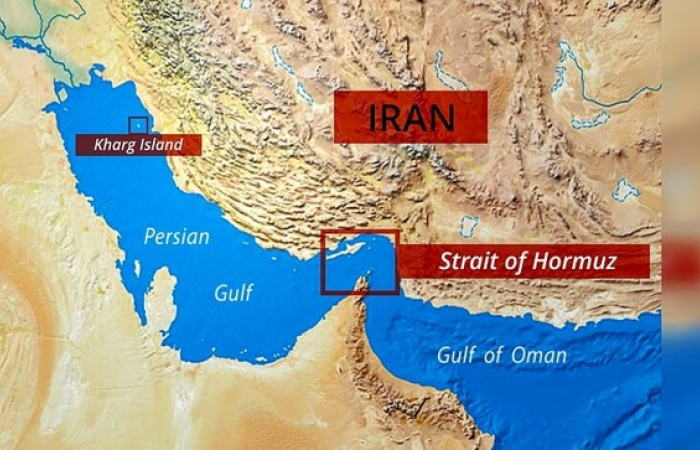
The US-Israeli war against Iran is in its third week. It is taking its toll, even if in different ways, on all the countries involved, on the Gulf states and other neighbouring countries, and ultimately on the whole world. This war must be stopped as soon as possible, before it does more harm. One aspect of the conflict however deserves special attention. This is Iran's attacks on the neighbouring GCC states, and other countries such as Azerbaijan and Turkey. These attacks have been indiscriminate, and have already killed or injured innocent civilians, and did untold damage especially to the neighbouring GCC states. US president Donald Trump was disingenious when he said yesterday (16 March) that he was taken by surprise. Iran's late Supreme Leader, Ayatollah Ali Khamanei said on 1 February clearly "America should know that if it starts a war, this time it will be a regional war". The warning does not excuse Iranian action. The Gulf countries and other neighbours did not want a war on Iran, and tried to prevent it.  The targeting of civilians and civilian targets in unacceptable in all situations, but becomes more serious when those targeted are in non beligerent countries. Iran must stop attacking its neighbours now! They are a path to de-escalation, and a cease fire. The world stands in solidarity with the GCC countries and other neighbours. Iran has to understand this.
Editor's choice
GULF CRISIS
Monday Commentary: The war nobody wanted, but that may end up harming everybody

Monday Commentary: The war nobody wanted, but that may end up harming everybody

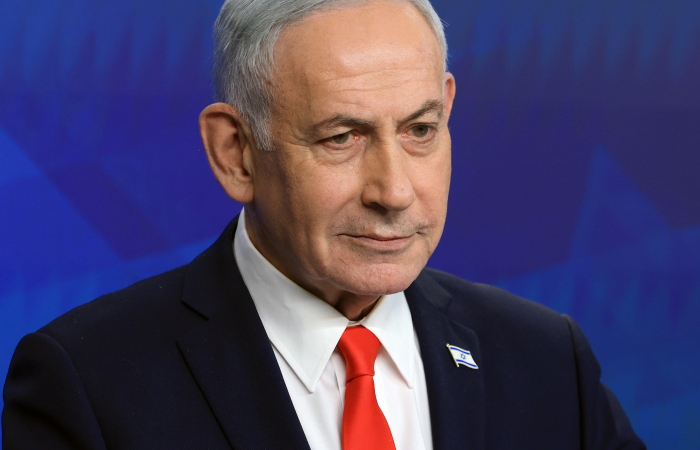
The war of the United States and Israel against Iran has entered its third week. Not a very long time some would say, but enough already to have changed the Middle East, not in any good way. As the BBC veteran Security Correspondent, Frank Gardner, put it, the war has put a shadow over the whole region. Nobody, except for Benyamin Netanyahu, wanted this war, not even Donald Trump. The war, unless it is stopped quickly may end up harming everybody. The way out is clear: De-escalate, negotiate, and re-build, even if as of today, the prospect for that appear distant. The only way out of the present crises is first through de-escalation. A cease fire may not be possible for weeks, but using diplomatic back channels the US and Iran may agree to de-escalate,  or to put it more crudely, stop shooting. It will be up to Trump to ensure that Netanyahu stops shooting too. Once de-escalation happens, the difficult process of negotiations can start again, focusing on the nuclear file and picking up from where discussions were left on 27 February. This is an agreement within reach – a non nuclear Iran in  return for the lifting of sanctions. Other possibilities are possible, and once a cease fire is agreed the EU and China can also be involved in the discussions. Finally, a process of rebuilding must start. The GCC have the money to do reconstruction of infrastructure quickly. Reputational damage to their Shangri-la image will take longer. Rebuilding Iran will be more challenging, given the scale of the destruction, and will require more money than Tehran has. Even as the bombs continue to fall, this issue needs to be considered. In the end no one really wanted this war, and no-one is going to benefit from it. It must be brought to an end as soon as possible, but the thinking of what happens after must start now.