


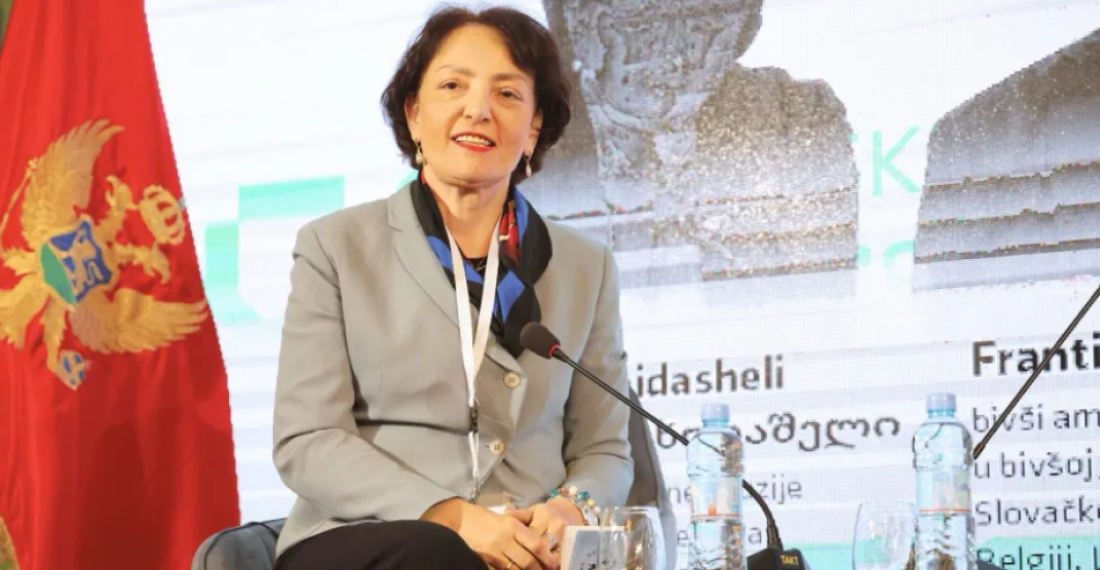
Civic IDEA, a Georgian civil society organisation chaired by Tinatin Khidasheli, says it has come under renewed pressure following its research on foreign influence in Georgia, including the role of Iran and China.
The latest incident followed remarks made on 11 June by Iran’s Ambassador to Georgia, Seyed Ali Moujani Ghomi, during a press conference with Georgian media. According to Civic IDEA, the ambassador accused Khidasheli of acting in the interests of the United States and referred to an investigation involving Khidasheli and researcher Giorgi Kandelaki over alleged links to foreign powers.
The comments relate to an investigation launched earlier this year by Georgia’s State Security Service after Civic IDEA published research on Iranian influence in Georgia. Khidasheli was questioned in connection with the case.
Civic IDEA has also faced criticism from Media Union Obieqtivi and representatives of the Alliance of Patriots of Georgia after publishing a media monitoring report on Chinese influence in Georgian media. The report examined, among other content, the programme Chinese Panorama, broadcast by Obieqtivi.
Following the report’s publication, Obieqtivi and Alliance of Patriots figures rejected Civic IDEA’s findings and accused Khidasheli of serving foreign interests. Civic IDEA has pointed out that data from Georgia’s Communications Commission lists the Embassy of the People’s Republic of China as a funding source for programme placement by Media Union Obieqtivi in the second quarter of 2025.
Civic IDEA argues that these developments form part of a wider campaign to discredit independent research on foreign influence in Georgia. It says researchers, journalists, and civil society actors who examine the activities of foreign states are increasingly being portrayed as serving foreign interests themselves.
The case raises concerns about the environment for independent research and civil society work in Georgia. As the role of external actors in the country becomes more contested, the ability of researchers and watchdog organisations to publish evidence-based findings without political or legal pressure remains an important test for Georgia’s democratic resilience.
Source: Commonspace.eu with Civic IDEA



