Filter archive

Publication date
Authors
Editor's choice
Opinion
Opinion: After the visit of US Vice President JD Vance, the South Caucasus is being rewired

Opinion: After the visit of US Vice President JD Vance, the South Caucasus is being rewired

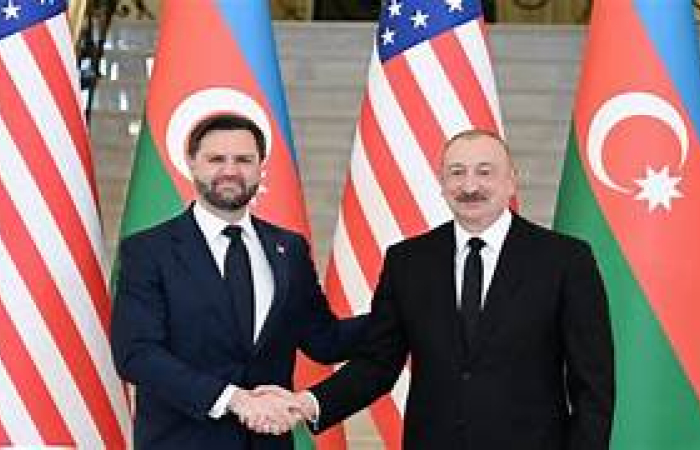
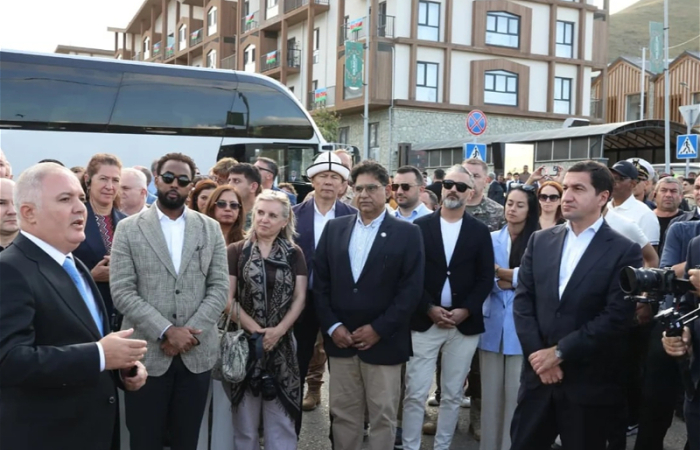
"Vance’s visit did more than consolidate a peace process – it began rewiring the South Caucasus through energy, AI, and infrastructure. The region’s future alignment may well be determined less by traditional security blocs and more by who controls the region’s transport routes, builds its reactors, powers its data centers, and lays its fiber-optic cables", writes Vasif Husseynov, in this op-ed for commonspace.eu Vance’s February 9–11 visit to Armenia and Azerbaijan marked a structural turning point in the South Caucasus. Unlike previous high-level engagements of the United States that generated rhetorical alignment but limited follow-through, this visit embedded the region into long-term American economic, technological, and strategic frameworks. Taking place on the heels of the latest agreement (January 14) between Washington and Yerevan on the implementation framework for the Trump Route for International Peace and Prosperity (TRIPP), the visit served to consolidate the American influence in the region and taking it to higher levels. The consequences are unfolding along two axes: domestically, within Armenia and Azerbaijan’s political economies; and geopolitically, in the region’s recalibrating balance between the United States and Russia, with Georgia seeking entry into the new configuration. (click the image to read the op-ed in full).
Editor's choice
Opinion
Opinion: The upcoming visit of Vice President J.D. Vance to the South Caucasus consolidates the US position in the region

Opinion: The upcoming visit of Vice President J.D. Vance to the South Caucasus consolidates the US position in the region

"On January 24, 2026, President Donald Trump announced on Truth Social that U.S. Vice President J.D. Vance will travel to Armenia and Azerbaijan in February 2026 to build on recent peace efforts and advance the Trump Route for International Peace and Prosperity (TRIPP)", writes Vasif Husseynov in this op-ed for commonspace.eu "In his statement, President Trump said the visit would “build on our peace efforts, and advance the Trump Route for International Peace and Prosperity,” signaling Washington’s intent to maintain high-level engagement in a region of growing strategic significance." The announcement came just days after January 14, 2026, when U.S. Secretary of State Marco Rubio and Armenian Foreign Minister Ararat Mirzoyan signed the Implementation Framework for TRIPP in Washington, D.C. The agreement translated commitments reached at the August 8, 2025, Washington Summit into a practical roadmap for achieving unimpeded multimodal transit connectivity between Azerbaijan and its Nakhchivan Autonomous Republic through Armenian territory. According to official statements, the framework provides mechanisms for planning, construction, operation, and oversight of infrastructure while fully affirming Armenia’s sovereign authority over the route. The expanded American role in the South Caucasus has elicited reactions from other regional powers. Russia, previously the primary security guarantor in the region and the former key mediator in the talks on the Zangezur corridor, has seen its influence overtaken by U.S. participation under TRIPP. Iranian officials have voiced objections as well, concerned about increased U.S. involvement near their borders and potential shifts in regional security dynamics. While both powers have expressed discontent, they have been unable to prevent these changes. Baku and Yerevan, however, understand that their region must remain a platform for cooperation among all external actors, not a theater of confrontation. These developments indicate that the South Caucasus has moved from the periphery to the forefront of U.S. foreign policy. The sequence of the Washington Summit, the January 14 TRIPP implementation framework, and the upcoming Vice Presidential visit reflects a sustained strategy aimed at consolidating peace, promoting connectivity, and advancing American influence. By anchoring peace agreements in infrastructural and economic frameworks, embedding strategic oversight in implementation mechanisms, and elevating regional partners within its broader peace architecture, Washington is consolidating its role in a region of enduring strategic importance. (You can read Vasif Husseynov's opinion piece in full by clicking the image)
Editor's choice
Opinion
Opinion: The European Union must recognise that the C5 have now become the C6

Opinion: The European Union must recognise that the C5 have now become the C6

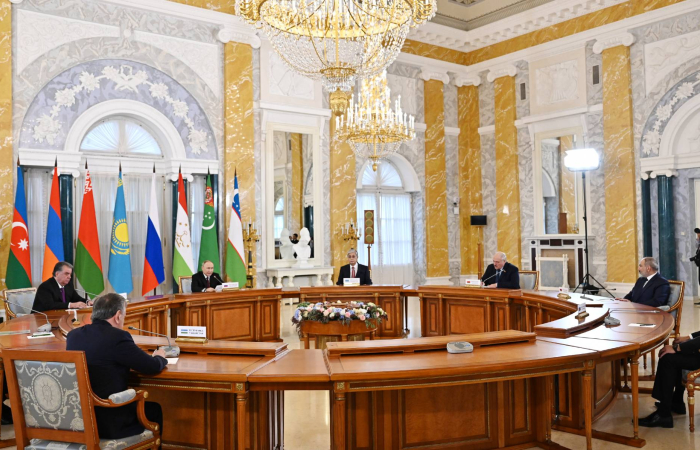
In recent years, Eurasia has undergone a structural transformation in how regions connect, trade, and cooperate. The combination of geopolitical shocks, disrupted supply chains, and the search for secure east–west routes has elevated the importance of the Trans-Caspian space. The states of Central Asia, once constrained by geography, have taken unprecedented steps to strengthen regional coordination, modernize infrastructure, and integrate more closely with Europe. Meanwhile, Azerbaijan has rapidly emerged as an indispensable connector linking Central Asia with the South Caucasus, Türkiye, and European markets. This new reality was formally acknowledged in November 2025 when Azerbaijan was unanimously welcomed as a full participant in the Consultative Meeting of Central Asian Heads of State in Tashkent. What had long been a C5 grouping transformed into a C6, marking a historic moment: the Caspian was no longer a frontier separating two regions but the center of a unified geopolitical and geo-economic space. President Ilham Aliyev described this alignment as the emergence of “a single geopolitical and geo-economic region,” while President Shavkat Mirziyoyev called Azerbaijan’s inclusion “historic” and proposed transforming the consultative platform into a structured regional institution capable of shaping security, economic, environmental, and digital policy. The Caspian is no longer a boundary; it is the heart of an integrated region. The transformation of the EU and U.S. C5+1 formats into C6+1 is the logical next step to ensure that both sides of the Caspian advance together – coherently, strategically, and with shared purpose. (click the image to read the full op-ed).