


New Georgia-Azerbaijan agreements spark debate over energy security and regional trade

A series of long-term agreements signed by Georgia and Azerbaijan has intensified debate over whether Tbilisi is prioritising its role as a regional transit hub at the expense of its energy security.

The deals were announced following a meeting in Baku on 18 May between Georgian Prime Minister Irakli Kobakhidze and Azerbaijani President Ilham Aliyev. They include a 20-year framework governing electricity supply and transit, as well as a 20-year extension of a gas purchase arrangement originally signed in 2003. Georgian officials said the gas deal would help guarantee the country’s social gas supply.

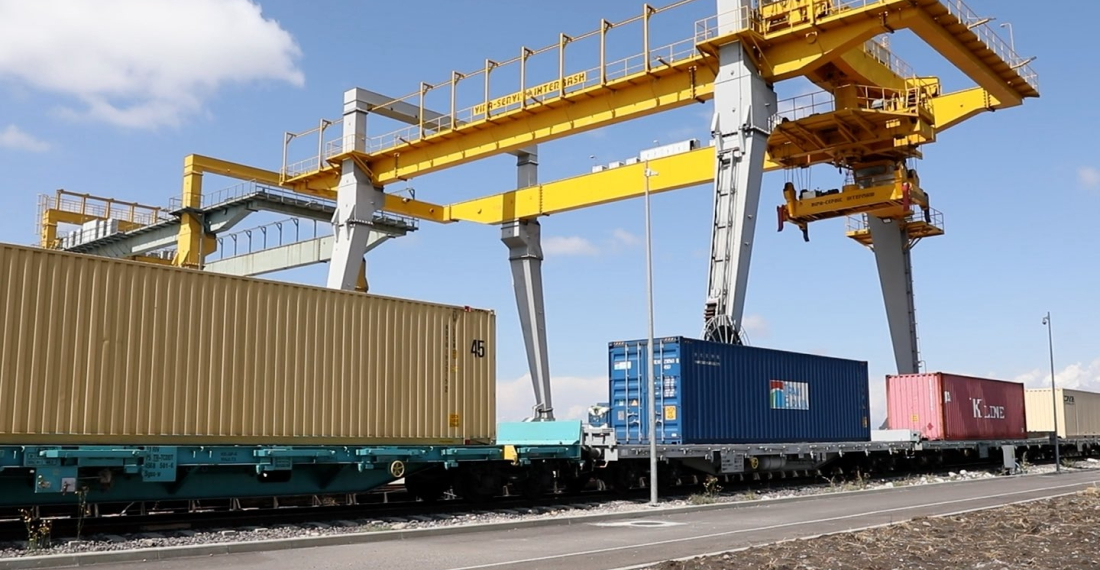
The two sides also agreed to restore daily passenger rail services between Tbilisi and Baku after a six-year suspension, and confirmed plans to make a new section of the Baku-Tbilisi-Kars railway fully operational. The railway is a key transport corridor connecting the South Caucasus with international markets.

While the Georgian government has highlighted the economic and geopolitical benefits of the agreements, as well as the need to maintain Tbilisi’s strategic importance as Armenia and Azerbaijan move toward normalising relations and new transport corridors, critics have raised concerns over the lack of transparency. The full texts of the deals have not been made public, prompting questions about their long-term implications.

Concerns also persist over Georgia’s changing energy profile. Russian gas supplies to Georgia rose significantly in 2025, while critics say Azerbaijan’s share in Georgia’s gas imports has been declining. They argue that the new agreements could limit Georgia’s future access to Azerbaijani gas and increase its reliance on Russian supplies.

Among them is economist and former National Bank president Roman Gotsiridze, who warned in a Facebook post on 20 May that the arrangement could reduce Georgia’s ability to secure additional gas from Azerbaijan in the future. He argued that rising domestic demand could eventually leave Russia as the only practical source of additional imports.

Government officials reject such concerns and instead frame the agreements as part of a broader strategy to strengthen Georgia’s role as a bridge between Europe and Asia. Following the signing, Kobakhidze emphasised the importance of connecting the Caspian and Black Sea regions and expanding regional transport links, underscoring transit and connectivity as key priorities for the government.

Source: commonspace.eu with Eurasianet

Related articles

Editor's choice
News
Nikol Pashinyan re-appointed as Armenian prime minister after decisive June election victory

Nikol Pashinyan re-appointed as Armenian prime minister after decisive June election victory

Armenia president, Vahagn Khachaturyan has re-appointed Nikol Pashinyan as Armenian prime minister, after the decisive victory of his Civil Contract party in parliamentary elections in June. During a ceremony at the Presidential Palace in Yerevan, President Khachaturyan signed a decree on the appointment of Nikol Pashinyan as Prime Minister of the Republic. President Vahagn Khachaturyan said in short remarks: It is a great honor for me to sign a decree on appointing you to the post of Prime Minister of the Republic of Armenia, for which I received a proposal from the political majority in the National Assembly, under Article 149 of the Constitution of the Republic of Armenia. I sincerely congratulate you, I wish you great patience, endurance, and determination to lead us in these difficult times, to lead the country to the future, a prosperous future. Nikol Pashinyan thanked the president and added,  I must say honestly that in 2018, when I assumed the post of Prime Minister of the Republic of Armenia as a result of the People's, non-violent, velvet revolution, it would have been difficult to predict that we would go down such a path and I think it would have been difficult to predict that we would be able to overcome this path. But we are where we are, and I think that the key role and significance in all this is unequivocally and undoubtedly the people of the Republic of Armenia, who, after all, have demonstrated special expressions of state consciousness and state-centeredness throughout this period. And of course, this is a great obligation and commitment. Of course, the Government will be formed in the near future and all members of the Government, including me, will already enshrine our obligations to our people in the text of the oath.  In the meantime Ruben Rubinyan has been elected Speaker of the National Assembly of Armenia, following a secret vote of MPs. He is a 36-year-old MP from the ruling Civil Contract party, who was one of the deputy speakers in the previous parliament and, until recently, was the special representative in the negotiations on the normalization of relations with Turkey.

Popular

Editor's choice
Interview
Thursday Interview: Murad Muradov

Thursday Interview: Murad Muradov

Today, commonspace.eu starts a new regular weekly series. THURSDAY INTERVIEW, conducted by Lauri Nikulainen, will host  persons who are thinkers, opinion shapers, and implementors in their countries and spheres. We start the series with an interview with Murad Muradov, a leading person in Azerbaijan's think tank community. He is also the first co-chair of the Action Committee for a new Armenian-Azerbaijani Dialogue. Last September he made history by being the first Azerbaijani civil society activist to visit Armenia after the 44 day war, and the start of the peace process. Speaking about this visit Murad Muradov said: "My experience was largely positive. My negative expectations luckily didn’t play out. The discussions were respectful, the panel format bringing together experts from Armenia, Azerbaijan, and Turkey was particularly valuable during the NATO Rose-Roth Seminar in Yerevan, and media coverage, while varied in tone, remained largely constructive. Some media outlets though attempted to represent me as more of a government mouthpiece than an independent expert, which was totally misleading.  Overall, I see these initiatives as important steps in rebuilding trust and normalising professional engagement. The fact that soon a larger Azerbaijani civil society visits to Armenia followed, reinforces the sense that this process is moving in the right direction." (click the image to read the interview in full)


