


Opinion: Azerbaijan energy sector in 2025 has been innovative and dynamic

The year 2025 marked a defining moment in Azerbaijan’s energy journey. Long recognized as a cornerstone of Eurasian oil and gas supply, the country did not abandon its hydrocarbon legacy but reframed it, leveraging existing credibility to accelerate a strategic pivot toward renewables, electricity exports, and green energy diplomacy. By the end of the year, Azerbaijan strengthened its position as a stabilizing force in Europe’s gas security and a rising hub for clean energy transmission across continents.

Natural gas exports, amounting to 25bcm per year, continued to play a critical role in Azerbaijan’s energy policy assisting the country’s overall foreign policy and geopolitical standing. Through the Southern Gas Corridor (SGC), Azerbaijani gas reached 14 countries, ten of them in Europe, including eight EU member states. Daily exports to Europe averaged around 35 million cubic meters, reinforcing Azerbaijan’s reputation as a reliable supplier at a time when European energy diversification remained a strategic imperative.

Baku signaled readiness to increase gas supplies to Europe from its existing level (around 13bcm) but stressed the need for long-term demand guarantees. Without investment certainty, further expansion of upstream production and pipeline capacity would not be economically viable.

During his visit to Slovakia on 8-9 December, President Ilham Aliyev of Azerbaijan assured that his country has enough resources to increase gas exports to Europe. “As new gas fields are developed, we will obtain additional resources, and it will naturally become possible to supply Azerbaijani gas to both Slovakia and its neighboring countries in even larger volumes,” the president noted during his press conference with his Slovakian counterpart.

While natural gas retained its geopolitical prominence, Azerbaijan’s oil and petroleum sector in 2025 reflected both continuity and adaptation.

Crude oil production of Azerbaijan continued its gradual decline in 2025, projected at 28.5 million tons, in line with a long-term shift from oil dominance toward a more diversified energy portfolio. In terms of the oil industry, a politically and economically significant development was the SOCAR–ExxonMobil Memorandum of Understanding signed in Washington during President Aliyev’s visit on August 7-8. Azerbaijan is hopeful about the discovery of a major unconventional oil field in the country with the support of US energy giant ExxonMobil, Economy Minister Mikayil Jabbarov said following the Washington visit of President Aliyev. Beyond technical collaboration, this MoU anchored U.S. economic engagement in Azerbaijan’s energy future, reinforcing investment confidence in the South Caucasus at a sensitive geopolitical moment.

Refining and export trends revealed nuanced dynamics. For the first ten months of 2025, Azerbaijan exported a total of 10,650 tons of gasoline. This included 6,457 tons of Aİ-92 and 4,196 tons of the higher-octane Aİ-95 grade. Aİ-92 gasoline went primarily to Türkiye (47%), Afghanistan (36%), and Georgia (17%), while Aİ-95 was shipped exclusively to Georgia. Despite the modest volumes, the introduction of Aİ-95 gasoline into export markets marked a strategic move toward higher-value products and diversified market offerings.

December 2025 brought a landmark development in regional energy trade. For the first time, SOCAR exported 1,220 tons of locally produced Aİ-95 gasoline to Armenia, loaded in 22 railcars. This shipment, the first petroleum trade between Azerbaijan and Armenia, occurred even as a formal peace treaty remained pending, signaling a cautious but meaningful step toward economic normalization and post-conflict market integration.

That said, on the production side, structural shifts were evident. While oil output continued its gradual decline, natural gas, by contrast, offered growth potential. New production from the deep layers of Azeri-Chirag-Gunashli, progress toward Absheron Phase 2 (adding at least 3 bcm annually), and renewed interest in fields such as Babak (400 bcm reserves) and Umid (at least 200 bcm) signaled a strategy focused on stability rather than volume maximalism.

Renewables: From Policy Vision to Physical Infrastructure

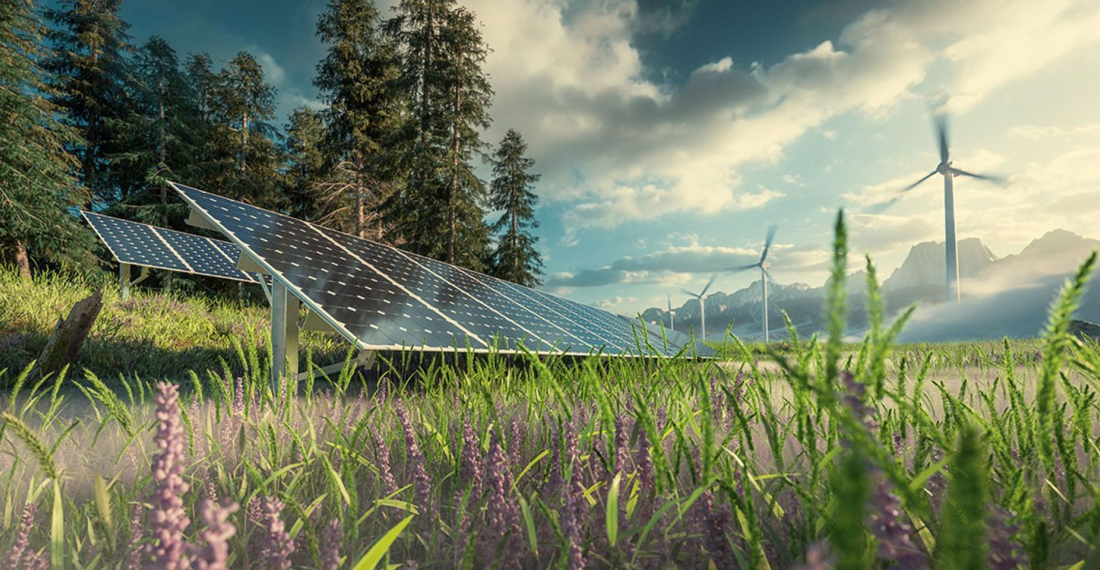
What set 2025 apart was the speed with which Azerbaijan moved from renewable ambition to execution. The government announced plans to commission more than ten solar and wind plants in the next two years, totaling over 2,000 MW in capacity and $2.7 billion in investments. By 2030, renewables are expected to account for 38 percent of national energy production, with ambitions to generate over 6 GW of combined onshore and offshore solar and wind energy by 2032.

This transformation rests on exceptional natural resources. Azerbaijan’s renewable technical potential is estimated at 135 GW onshore and 157 GW offshore, with Caspian Sea wind resources ranking second globally after the North Sea. By the end of 2025, the country operated 1,829 MW of renewable capacity – around 18.8% of total installed electricity capacity – with more than 2 GW planned by 2027.

Several projects underscored Azerbaijan’s irreversible momentum in renewables. The Garadagh Solar Power Plant (230 MW), developed with Masdar from the United Arab Emirates, produced over one billion kWh within two years since its launch in October 2023, saving 110 million cubic meters of gas annually and avoiding 200,000 tons of CO₂ emissions.

The Khizi–Absheron Wind Power Plant (240 MW), being constructed with the Saudi company ACWA Power, advanced toward full grid connection. In parallel, the bp-backed Shafag Solar (240 MW) in Jabrayil progressed in construction, utilizing an innovative virtual power transfer model to decarbonize the Sangachal terminal by roughly 50%.

Masdar’s mega-projects – including Bilasuvar (445 MW), Neftchala (315 MW), and Absheron-Garadagh wind (240 MW) – reinforced Azerbaijan’s appeal to global investors, with the first Bilasuvar modules installed in October. In the liberated territories of Karabakh and East Zangezur, projects such as Nobel Energy's Ufug and Shams solar plants (each 50 MW) saw foundations laid, advancing post-conflict reconstruction while aligning with sustainability goals. The vast renewable energy potential of the liberated territories promises to play significant role in Azerbaijan’s green energy transition.

In 2025 Azerbaijan emerged as a regional hub for green electricity transit and export

Green energy corridors developed with Azerbaijan’s participation are designed to leverage the country’s geographical location at the crossroads of Europe and Asia, its abundant renewable resources, and its growing electricity infrastructure to connect renewable energy producers with high-demand markets.

The Black Sea Submarine Cable, on which Azerbaijan, Georgia, Romania and Hungary first signed an agreement in December 2022, exemplifies this approach. Stretching approximately 1,195 km and linking the above-named countries, the project received EU Project of Mutual Interest (PMI) status in December 2025. This recognition not only accelerates funding and regulatory support but also embeds the corridor within Europe’s strategic energy infrastructure. Once operational, the cable will transmit 1,000–1,300 MW of renewable electricity, effectively turning Azerbaijan into a gateway for clean power to European markets. Construction of the Black Sea Energy Cable is estimated at €3.5 billion and will take 3-4 years. The European Commission plans to allocate €2.3 billion to the project. Beyond technical capacity, the corridor carries broader geopolitical significance: it positions Azerbaijan as a reliable partner in Europe’s renewable energy diversification, complementing its traditional role in natural gas supply.

Complementing this, the Central Asia–Azerbaijan green energy corridor was institutionalized following COP29 in 2024. Formal agreements with Kazakhstan and Uzbekistan, supported by a Baku-based joint venture and backed by feasibility studies from the Asian Development Bank (ADB) and the Asian Infrastructure Investment Bank (AIIB), aim to channel renewable electricity from Central Asia through Azerbaijan to Europe. This corridor taps into Central Asia’s significant solar and wind potential, allowing surplus green electricity from Kazakhstan and Uzbekistan to reach high-demand markets efficiently.

In parallel, a Memorandum of Understanding (MoU) was signed in April 2025 between Azerbaijan, Georgia, Türkiye, and Bulgaria and formalized cross-border renewable electricity transmission and trade between the sides. This will serve as another corridor carrying Azerbaijani electricity produced from renewable sources to the European market. This initiative aims not only to expand physical interconnectors but also to integrate national grids with the European Network of Transmission System Operators for Electricity (ENTSO-E). The agreement sets the stage for deeper regional energy integration, enabling flexible, large-scale electricity flows, balancing variable renewable generation, and strengthening energy security.

In conclusion, by the close of 2025, Azerbaijan succeeded to preserve its role as a gas security provider for Europe while constructing cables, turbines, solar panels, and financial instruments that anchor a renewable future.

Rather than treating the energy transition as a rupture, Azerbaijan approached it as a gradual process, balancing continued hydrocarbon production with investments in renewable energy and cross-border connectivity. As a result, 2025 reflected a consolidation of this dual-track approach, with Azerbaijan simultaneously maintaining its traditional energy role and expanding its participation in emerging green energy networks.

Source: Dr Vasif Huseynov, is a Senior Advisor at the Center of Analysis of International Relations (AIR Center) and Adjunct Lecturer at Khazar University in Baku, Azerbaijan. 
The views expressed in opinion pieces and commentaries do not necessarily reflect the position of commonspace.eu or its partners

Latest

Editor's choice
Monday Commentary
Monday Commentary: PEACE IN OUR TIME?

Monday Commentary: PEACE IN OUR TIME?

Making peace between Armenia and Azerbaijan was never going to be simple, nor easy, nor quick. It is taking time, writes Dennis Sammut in this Monday Commentary. “There is a sense of realism coming from the leaders of the two countries – President Ilham Aliyev of Azerbaijan and prime minister Nikol Pashinyan of Armenia, that frankly, is necessary and welcome”, he writes. At a time when conflicts are raging all over the world – from Ukraine to the Gulf, from Africa to South Asia, the prospect that Armenia and Azerbaijan had finally, after decades of conflict that left thousands of dead and many more displaced, decided on embarking on a journey of peace was welcomed. Peace between Armenia and Azerbaijan can be top-down up to a point. Both leaders have spent political capital preparing for a peace deal. But both are aware that their people are not ready for peace yet. In fact, in Armenia, most of the elite are negative toward a peace deal with Azerbaijan. Pashinyan needs time to persuade his countryfolk. That is why 2031 is realistic. Ilham Aliyev runs a tighter shop, but he is also not immune to public opinion. Every time someone hits a landmine in Karabakh, which unfortunately happens often, peace comes into question. Which is why Aliyev chooses to sound hardline, more often than not. In pursuing the peace agenda, both Aliyev and Pashinyan need to proceed cautiously. But they are right in making peace the central issue in their agenda. It is the main issue, and the one that will define them in history. So forward, cautiously but resolutely! In pursuing the peace agenda, Aliyev and Pashinyan need to be supported clearly and unambiguously. There are too many people in Baku and Yerevan who are sitting on the sides, waiting. The international community is not doing enough. It is time to be counted. Otherwise, the spoilers will win, and the region will go back to its bad habits. (Click the image to read the full commentary).
Editor's choice
News
King calls slave trade a 'shameful chapter' during Commonwealth address

King calls slave trade a 'shameful chapter' during Commonwealth address

King Charles has described the transatlantic slave trade as a "shameful chapter of history" that filled him with "profound sorrow" as he opened a summit of Commonwealth leaders in the Caribbean. He said the trade in enslaved persons "still casts a shadow" over the association of nations. There have been calls from some for the UK to make a formal apology for its historic role in the slave trade ahead of the Commonwealth Heads of Government Meeting (Chogm) in Antigua and Barbuda, but there was not one in the King's address. Prime Minister Andy Burnham, also at the summit, has said that he is open to Britain issuing a formal apology but has ruled out financial reparations. While there was no direct apology, the King did offer some contrition - and there was also an acknowledgement that he had personally learnt more about the legacy of the slave trade. He said: "The transatlantic trade in enslaved persons still casts a shadow over these islands and other members of our Commonwealth. "As I have said before, that shameful chapter of history is one that fills my heart with horror and my soul with the most profound personal sorrow." (click image to read more).

Popular

Editor's choice
Monday Commentary
Monday Commentary: European-Azerbaijan relations need an intensive and multifaceted dialogue that is frank and honest

Monday Commentary: European-Azerbaijan relations need an intensive and multifaceted dialogue that is frank and honest

Last week I visited Baku, Azerbaijan. My visit was relatively short, but very intensive, and had many meetings with stakeholders and colleagues. When I arrived in Baku first time in 1996,  Azerbaijan was a different country: weak, poor, and shaken by defeat in war. For thirty year the Karabakh issue dominated the agenda: the political agenda but also the popular mindset. Now, thirty years later, Azerbaijan has returned to Karabakh, and peace with Armenia is on the horizon. It is a new era for Armenia-Azerbaijan relations, for the South Caucasus, but also for Europe.  But we cannot be complacent: the Peace agreement has been initialed but not signed; borders remain closed; TRIPP is ambitious but remains an idea; and there are spoilers who want to turn the clock back. We must not allow them, and in this Europe and Azerbaijan must work together. Europe’ vanguard organization is the European Union – it is a free union of 27 member states; it is a strong global economic force, and increasingly a diplomatic and military force too. But it remains “work in progress” and can often appear dysfunctional. It often lacks collective and institutional memory. In its dealings with Azerbaijan the EU has made many mistakes – not least opening the delegation here late – in 2008. It sometimes appears condescending. Some utterances from the European Parliament and from some quarters in some member states are not understandable even for me. They irritate the Azerbaijanis, but serve no other purpose But Azerbaijan has also not handled relations with the EU well. It has failed to respond when the hand of friendship reached out; and it confused irritating actions, sometimes by well-meaning people; sometimes by outright spoilers, with strategic action. In short, EU-Azerbaijan relations have suffered from a lack of proper dialogue. This dialogue must be frank, honest and multi-faceted involving different segments of society on both sides.   Is Azerbaijan Europe? When Azerbaijan applied to join the Council of Europe in the 1990s, there were some who opposed, saying this was not Europe. I was one of the people who argued that Armenia and Azerbaijan may be on the periphery of the continent geographically, but were European in essence. Certainly their elites. During the discussion on 4 September in Baku, my friend Farhad Mammedov, mentioned that Azerbaijan is not interested in joining the EU, and was now close to the Central Asian countries in the 5 plus 1 format. Neither things mean that Azerbaijan is not Europe. There are several European countries that are not in the EU, and do not want to be, for example Norway and Switzerland. Iceland has recently voted to stay out of the EU. The UK was a member and left. Europe is bigger than the EU, and the holding of the European Political Community summit in Baku in 2027 proves that. Despite all the rhetoric, I never heard the president of Azerbaijan  saying that Azerbaijan is not Europe, nor have I heard any European president say it either. Not wanting to join the EU and forging close relations with neighbouring regions does not make Azerbaijan any less European. It is only logical that when Europeans talk to Azerbaijan they talk like family. The conversation is often frank. It must also be honest, and Europeans need always to remember this too. A frank, honest and multi-faceted dialogue A frank, honest and multifaceted dialogue will contribute to relations between Azerbaijan and the rest of Europe: it will avoid misperception, which unfortunately is very common on both sides; it will provide a forum where problems can be discussed and resolved, and it will increase mutual trust, so that together common problems can be addressed. (click image to read the full Monday Commentary)
Editor's choice
Monday Commentary
Monday Commentary: “The barren rocks of Aden” and “These lands of Yemen are so ruthless”

Monday Commentary: “The barren rocks of Aden” and “These lands of Yemen are so ruthless”

There are two early 20th-century tunes that mark foreign attempts to occupy and “pacify” Yemen. The Scottish tune “The barren rocks of Aden” marks the mobilisation of Highland soldiers, enlisted to be deployed to the Yemeni port of Aden, that in 1837 became the last colony to be incorporated into the British Empire. The tune talks of the harshness of the terrain, but is celebratory, It was even played as a farewell tune to Sir William Luce at the parade in Sharjah celebrating his end as “British Viceroy” in the Middle East in 1966. The second tune is an Anatolian lament. As Ilker Sezer reminded us this weekend, in his weekly feature on “Turkiye Today”, it “mourns the tragic fate of Ottoman soldiers dispatched to the harsh, remote deserts of Yemen during the fall of the empire, young men who marched away from their villages and never returned home. Most of their names, and numbers, were never recorded. Yet, their fate left a mark on the Turkish psyche.” Subsequent invaders have discovered that Yemen is a grave that cannot be overcome by the strength of modern technology, and that whilst Yemeni society is splintered and divided, building a reliable alliance with Yemeni factions is difficult. These are the harsh lessons facing Saudi Arabia, as the Kingdom faces its biggest challenge in its modern history. The leadership of the Kingdom now has to respond decisively. At stake is their very credibility. This is likely to be a long and messy conflict. Saudi military objectives need to be focused: to box in the Houthis rather than destroy them. This is likely to include: (a) regaining territory lost on the Red Sea coast; (b) control over Bab el Mandeb Strait; (c) some kind of cordon sanitaire on the Saudi-Yemeni border; and if things go well (d) the capture of Sanaa. All this would not eliminate the Houthi problem, but it will contain it. In the end the Saudis will have to continue managing Yemen with a mixture of carrot and stick. For the moment, the stick is likely, but the carrot cannot be forgotten either. (click the image to read the Monday Commentary in full)

