Theme

Geostrategic Europe

Stories related to European foreign policy and Europe as a global power.

Editor's choice
Opinion
Opinion: A sustainable peace requires consistent long-term European involvement

Opinion: A sustainable peace requires consistent long-term European involvement

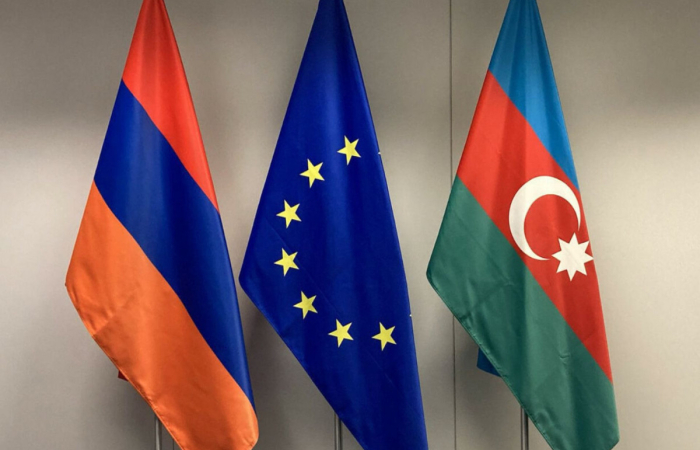
There is no denying that the EU, especially key member states acting in support, helped bring Baku and Yerevan closer to the Washington Declaration of August 8, 2025. But a declaration is not a treaty. Turning principles into a peace deal and eventually to a sustainable peace requires consistent long-term European involvement, writes Yalchin Mammadov in this-op-ed for commonspace.eu Before facilitating trust between Armenia and Azerbaijan, the EU is first expected to address its own credibility gap with Baku. A more balanced approach—such as including Azerbaijan, alongside Armenia, in the European Peace Facility—could be a useful first step. Diplomats can negotiate peace; societies must build peace. In this context, the EU can do what it does the best: long-term societal engagement. By expanding youth and academic exchange programmes, investing in cross-border civil society initiatives, and fostering people-to-people cooperation, Brussels can help shape a new generation equipped to sustain peace beyond political cycles. Such tools are slow and unglamorous, but if ignored, even the strongest treaty risks collapse. And obviously, these aspects require two-way engagement and genuine willingness by both governments to facilitate contact. If Brussels wants to remain influential, it needs to replace outdated one-size-fits-all policies with ambitious, interest-driven and differentiated approaches. Without a clear regional strategy, which appears to be the current situation, the South Caucasus will continue to sit at the margins of Europe’s security architecture—leaving space for other powers to take the lead. (You can read the op-ed in full by clicking the image.)
Editor's choice
Opinion
From Baku to Yerevan: A New Chapter for Multitrack Diplomacy

From Baku to Yerevan: A New Chapter for Multitrack Diplomacy

Towards the end of October, a lone Azerbaijani Airlines Gulfstream G650 landed in Yerevan, Armenia. It wasn’t the first to do so in over three decades of conflict but it could well change the future of multitrack diplomacy. Although mutual visits by Azerbaijanis to Armenia and Armenians to Azerbaijan are also not new, before October's flight they always occurred under the auspices of an international organisation or intergovernmental body including countries outside the region. Last month’s visit not only flew direct between the capitals but was bilaterally agreed.

Filter archive

Publication date
Editor's choice
News
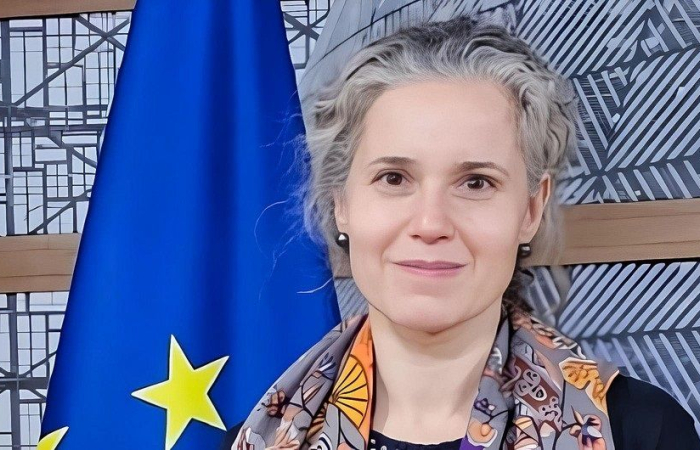
EU Special Representative for South Caucasus Magdalena Grono visits Armenia and Azerbaijan

EU Special Representative for South Caucasus Magdalena Grono visits Armenia and Azerbaijan

The EU Special Representative for the South Caucasus Magdalena Grono paid her first official visits to Armenia and Azerbaijan from 7 to 11 January 2025. According to the official X account of the EUSR for the South Caucasus, valued in-depth exchanges of views were held with the leaderships and officials in both capitals on how best to advance peace, normalisation efforts and regional cooperation. The EU Special Representative also referred to the need to develop bilateral relations between the EU and the two countries. The EU Special Representative also stated she had exchanges with local civic societies but did not make specific references to any organisations.
Editor's choice
Opinion
Opinion: A Milestone of Neutrality: Turkmenistan in the International Year of Peace and Trust

Opinion: A Milestone of Neutrality: Turkmenistan in the International Year of Peace and Trust

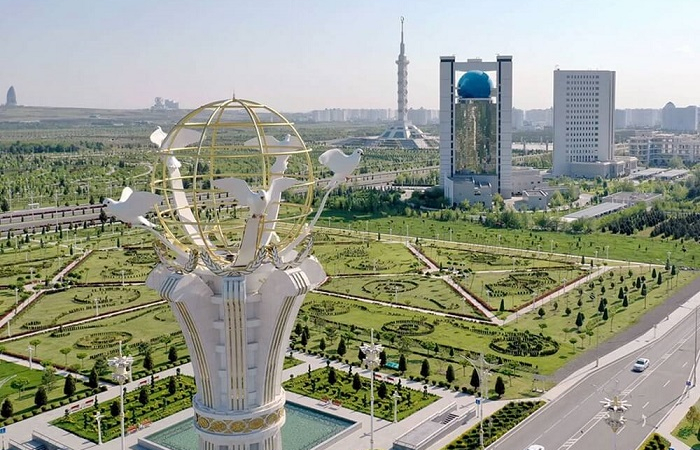
The year 2025 marks a pivotal moment for Turkmenistan as it commemorates three decades of its established status as a neutral state, coinciding with the International Year of Peace and Trust – a worldwide initiative championed by Turkmenistan itself. This dual celebration underscores the nation’s enduring influence in fostering international peace, development, and diplomatic harmony.
Editor's choice
News
Armenia starts long road towards joining the European Union

Armenia starts long road towards joining the European Union

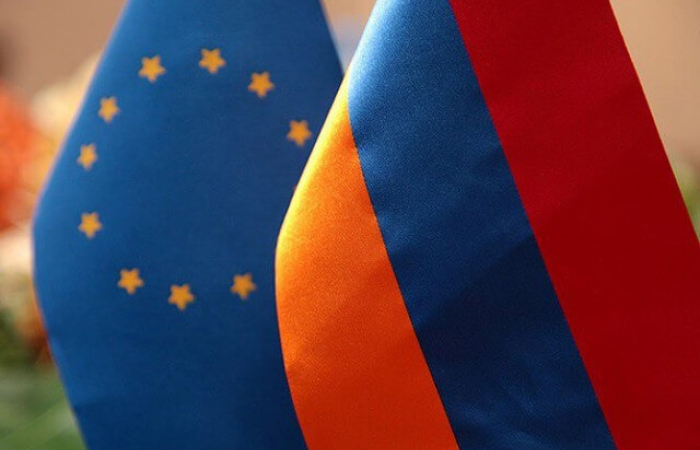
Armenia's government has approved legislation calling for the country to launch the process that will open the path to discussions with Brussels for eventual membership in the European Union. A bill was drafted in response to a petition that called for the country to submit an application to join the EU. Prime Minister Nikol Pashinyan emphasised to the cabinet on Thursday that the public should not expect a rapid accession to the EU, and that it would in any case require public approval. “Adopting the law doesn’t literally mean Armenia is joining the EU because that cannot be done through a law or government decision, the decision on that can only be made through a referendum,” Pashinyan said after the decision.
Editor's choice
News
Poland takes over presidency of the European Union after a stormy six month Hungarian Presidency

Poland takes over presidency of the European Union after a stormy six month Hungarian Presidency

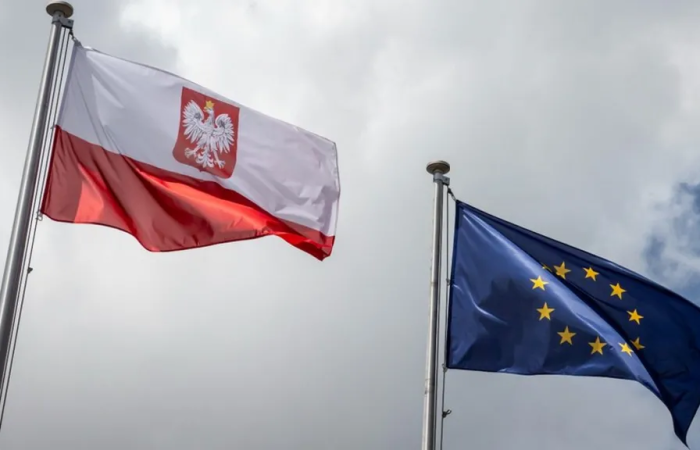
Poland on Wednesday(1 January) took over the Presidency of The European Union for a period of six months ending a stormy six month Hungarian presidency that often left the member states dismayed, frustrated and angry. Poland is ready to lead Europe towards security and economic competitiveness, Polish Prime Minister Donald Tusk said in Brussels just before Christmas. Coming after Hungary the Polish presidency is a symbol of change and great hope of the entire EU for a democratic and secure future of the continent.  Summing up the Polish ambitions prime minister Tusk said I would very much like Poles, to give faith to the whole of Europe that a Europe free from corruption, free from threats, confident in its own strengths, helping those who need help, but also thinking very pragmatically about its own interests is possible. The Hungarian presidency of the Council of the EU began with an unexpected visit by Prime Minister Victor Orban to Moscow and ended with, among other things, a declaration of Hungary's lack of support for the extension of sanctions against Russia.
Editor's choice
News
Paris and Berlin seek 'a more united Europe'

Paris and Berlin seek 'a more united Europe'

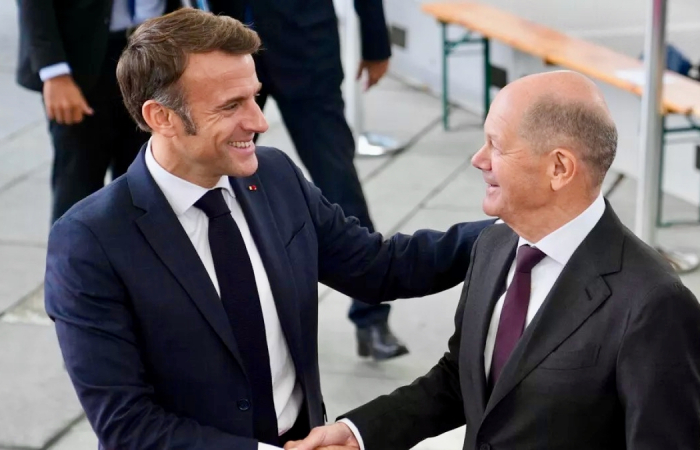
French President Emmanuel Macron and German Chancellor Olaf Scholz met in Berlin today to discuss their vision for the future of Europe in light of the recent US presidential election, which Donald Trump claimed victory in. The meeting underlined their commitment to steer Europe towards greater unity, resilience and sovereignty amid evolving global dynamics.
Editor's choice
News
EU adopts 14th package of sanctions against Russia

EU adopts 14th package of sanctions against Russia

The Council of the European Union on Monday (24 June) adopted a 14th package of economic and individual restrictive measures against Russia, "dealing a further blow to the Putin regime and those who perpetuate its illegal, unprovoked and unjustified war of aggression against Ukraine". These measures are designed to target high-value sectors of the Russian economy, such as energy, finance and trade, and make it increasingly difficult to evade EU sanctions.
Editor's choice
News
European Council calls for an integrated and coherent EU response to external crises and conflicts

European Council calls for an integrated and coherent EU response to external crises and conflicts

The European Council approved on Tuesday (7 May) conclusions on the 2023 annual report on the implementation of the European Union’s External Action Instruments in 2022. It commends the steps taken by the EU in the current challenging geopolitical context, marked by Russia’s war of aggression against Ukraine, conflict in the Middle East and the effects of the COVID-19 pandemic, among others. The Council welcomes the report’s emphasis on the key support provided by the EU to Ukraine and neighbouring countries affected by Russia’s war of aggression, as well as efforts to address the regional and global consequences and its impact on the most vulnerable groups, in particular with regard to food and energy security. In this context, the Council encourages the Commission to continue highlighting the EU’s support to tackle global challenges. It underlines the necessity to continue working towards an integrated and coherent EU response to external crises and conflicts, including through the EU’s external action instruments. Preventing conflict through timely analysis and early action, supporting peace mediation and dialogue, building peace and resilience, and forging international and regional partnerships in the area of peace, security and defence are key aspects in this regard.
Editor's choice
News
Borrell speaks about global changes and challenges

Borrell speaks about global changes and challenges

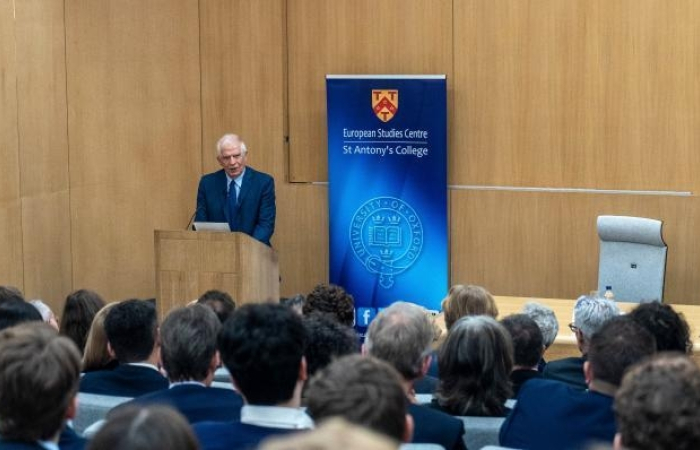
EU High Representative for Foreign and Security Policy, Josep Borrell, delivered an important policy speech on Friday 3 May during which he did a wide tour d'horizon of the current global situation and the challenges it flags up for Europe and for the world. Speaking in an academic setting, delivering the Dahrendorf Lecture at St Antony's College Oxford, Borrell spoke of a world where there is much more confrontation than co-operation, where there is more polarity and less multilateralism, Borrell spoke about the diminishing role of the United States as world hegemon and the rise of China. "We, Europeans, wanted to create in our neighbourhood a ring of friends. Instead of that, what we have today is a ring of fire. A ring of fire coming from the Sahel to the Middle East, the Caucasus and now in the battlefields of Ukraine", the High Representative said: Speaking on Russia, Borrell said  "Under Putin’s leadership, Russia has returned to the imperialist understanding of the world. Imperial Russia from the Tsar times and the Soviet empire times have been rehabilitated by Putin dreaming of a former size and influence." "It was Georgia in 2008. It was Crimea in 2014. We did not see, or we did not want to see, the evolution of Russia under Putin’s watch. Even though Putin himself had warned us at the Munich Security Conference in 2007. It is important to re-read what Putin said in 2007 at the Munich [Security] Conference that I am afraid that nobody wanted to hear or to understand." Borell described Putin as "an existential threat". In his speech Borell dwelt on the wars in Ukraine and in Gaza. "Now, we have two wars. And we, Europeans, are not prepared for the harshness of the world." The High Representative said that the way of living of the Europeans, "this best combination of political freedom, economic prosperity and social cohesion that the humanity has never been able to invent, is certainly in danger. And in order to face these challenges, I think that we have to work on three dimensions: Principles, Cooperation and Strength."
Editor's choice
Editorial
Editorial: EU decision to grant Georgia "candidate status" overshadowed by controversy in Brussels over Ukraine

Editorial: EU decision to grant Georgia "candidate status" overshadowed by controversy in Brussels over Ukraine

If one had said it even as recently as 2021, that by the end of 2023 Georgia would be given "candidate status" for EU membership, hardly anyone would have believed it. Yet it happened yesterday, when the member states gathered in the European Council in Brussels took the historic decision to open accession talks with Ukraine and Moldova and grant candidate status to Georgia. The immediate impact of this decision will be minimal - some consider the step as more symbolic than tangible, but soon, the impact of the prospect of a South Caucasus country becoming an EU member will sink in, with huge implications. Of course, it is the events around Ukraine starting with the Russian invasion in February 2022, that changed all the certainties. And it was also Ukraine that dominated the news yesterday. The decision to open accession negotiations with Ukraine and Moldova will also have tremendous implications. Perhaps appropriately it was taken in somewhat dramatic circumstances, after Hungary tried to oppose it. Hungarian prime minister, Viktor Orban, left the meeting of the European Council to enable the decision to be adopted unanimously by the remaining 26 member states. There remains a decision on the issue of a substantial aid package to Ukraine, which has been left for another meeting in January. What now for Georgia? In Georgia everyone is trying to take credit for the "candidate status" decision. Good thing because everyone can now feel to be a stakeholder in the journey that needs to follow. No doubt, in the style of Georgian politics, the journey will be  adventurous and sometimes hazardous. But the new status is good news for Georgia. It will help stabilise the political situation, and contribute towards economic success. The decision also brings the EU firmly in the South Caucasus. Those who very disingenuously in the last year or so have been talking about keeping the South Caucasus cosy in a 3 plus 3  format - ie with Russia, Iran and Turkey together with Armenia, Azerbaijan and Georgia, now need to think again. The South Caucasus is Europe and Europe should be a partner in its future. But that is for later. For today, it is congratulations Georgia, and to all those Georgians who for decades worked for this development to be possible.