Theme

Conflict and Peace

Stories related to violent conflicts, diplomatic tensions, and conflict prevention, mediation and resolution.

Editor's choice
Opinion
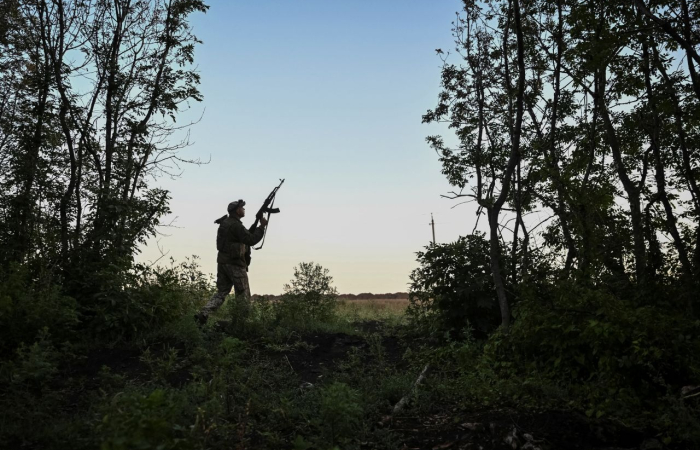
Opinion: The US strikes Venezuela, Consequences for Ukraine and Europe

Opinion: The US strikes Venezuela, Consequences for Ukraine and Europe

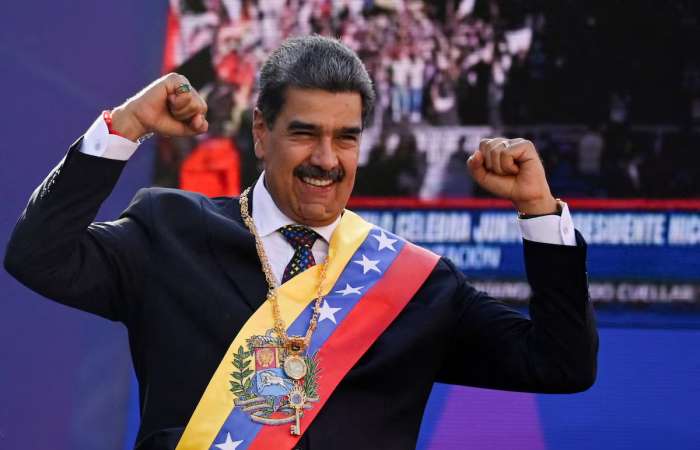
This is a Flash Analysis published on 3 January 2026 by the European Policy Centre in Brussels. Chris Kremidas-Courtney is a Senior Visiting Fellow at the European Policy Centre. As 2026 barely takes its first breath, we are already drifting back into an age where great powers manage their own neighbourhoods and look away from everyone else’s. It’s a world order that prizes control over legitimacy and stability over justice until neither one survives. The most immediate consequence of the US strike on Venezuela may be felt not in Latin America, but first in Ukraine. As foreshadowed in the Trump administration’s National Security Strategy, Washington is intent on rooting its power firmly in the Western Hemisphere while potentially leaving Russia and China greater freedom of action in their ‘backyards’. Seen through this lens, the strike on Venezuela looks more like part of a broader reversion to regional spheres of influence. The emerging message is that the United States will enforce primacy close to home but its willingness to underwrite security beyond its hemisphere is increasingly transactional and politically fragile. This is a 21st century version of the 1823 Monroe Doctrine, in which US hemispheric dominance was paired with strategic disengagement from Europe’s wars. It is also the world Putin has long argued for. It is hard to see an upside for Europe, but there may be one small silver lining. Prior to the strike, Caracas had been demonstrating how a sanctioned regime could survive and adapt by embedding itself into alternative economic and financial networks backed by China, Russia and Iran. That resilience was undermining the credibility of sanctions as a systemic tool, on which the EU relies far more heavily than the United States. By decapitating the Maduro regime, Washington has reasserted that sanctions are not an end state, but a step on an escalation ladder that can still culminate in the use of force. Yet this restoration of the credibility of sanctions comes at a great cost. It risks signalling to other revisionist or embattled regimes that force is the ultimate arbiter. All eyes are now on Moscow, since, as former US National Security Council official Fiona Hill testified in 2019, Russia had informally offered to end its support for Venezuela in exchange for US acquiescence on Ukraine.  Meanwhile, online advocates in China are calling on their regime to emulate the US and take similar steps against Taiwan. Worse still, Venezuela is now politically hollowed out. Any opposition figure who emerges now could be instantly labelled a US proxy. It is not yet clear what the thinking is in Washington about the day after, but the precedents of Iraq and Afghanistan are not encouraging. Once again, Washington has demonstrated its ability to act decisively – but also reminded us of its lack of staying power. For Ukraine, that distinction may prove fatal unless Europe can step up and support Kyiv more decisively in 2026.

Filter archive

Publication date
Editor's choice
News
Russian deputy governor of border region arrested in corruption case

Russian deputy governor of border region arrested in corruption case

Russia has once again prosecuted a former regional administrator bordering Ukraine. This time, the case concerns Vladimir Bazarov, the former deputy governor of Kursk. He has been arrested. He is suspected of corruption in connection with the embezzlement of around 10 million euros during the construction of defensive structures. This information was reported by the state press agency TASS.
Editor's choice
Opinion
Russia-Azerbaijan Relations in Freefall with No End in Sight

Russia-Azerbaijan Relations in Freefall with No End in Sight

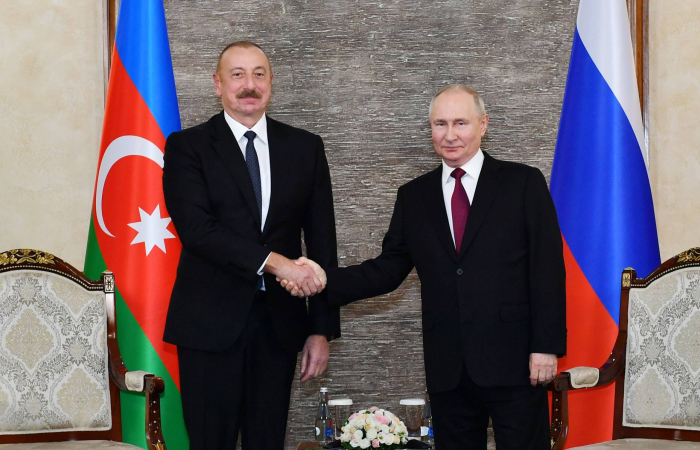
Tensions between Azerbaijan and Russia have been on an escalatory track since the crash of the Azerbaijani Airlines commercial airplane in December 2024. In the past, similar disputes were usually resolved quickly, leaving little lasting impact. This time, however, the crisis is far more complex and shows no signs of de-escalation. On the contrary, almost every month since the crash has marked new record lows in Baku–Moscow relations and appears likely to have a lasting impact on future bilateral ties. The situation has become so intricate and unpredictable that further deterioration cannot be ruled out.
Editor's choice
News
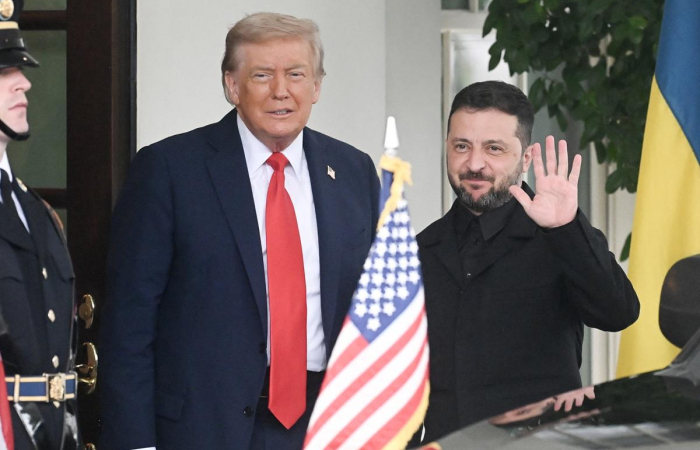
Trump plans Putin-Zelensky peace summit after talks in Washington

Trump plans Putin-Zelensky peace summit after talks in Washington

Russian President Vladimir Putin Ukrainian president Volodymyr Zelensky look set for a peace summit after fast-moving talks on Monday 18 August between Donald Trump and European leaders that focused on the key issue of long-term security guarantees for Kyiv. Hopes of a breakthrough rose after Trump said he had spoken by phone with Russian counterpart Putin, whom he met in Alaska last week, following a "very good" meeting with the Europeans and the Ukrainian president at the White House on Monday.
Editor's choice
News
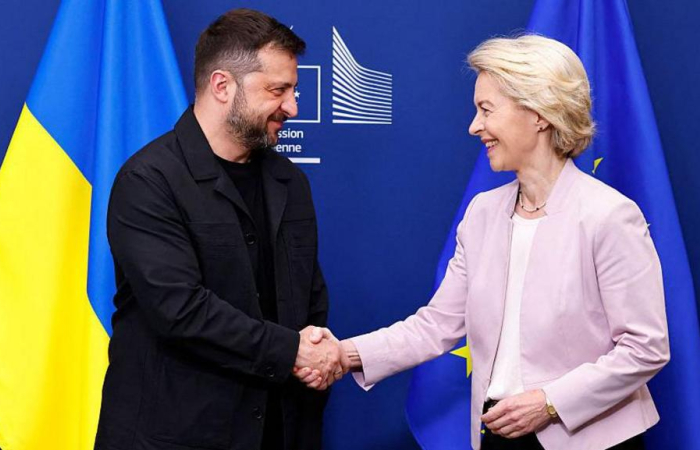
In a show of solidarity, key European leaders will join Zelensky in Washington

In a show of solidarity, key European leaders will join Zelensky in Washington

Key European leaders will join Ukrainian president Zelensky at talks with US president, Donald Trump, in Washington on Monday (18 August). Zelensky is currently in Brussels where he met with European Commission president, Ursula von der Leyen. European leaders have announced they will be joining Ukrainian President Volodymyr Zelensky on a trip to the White House on Monday. They include UK Prime Minister Keir Starmer, Italian Prime Minister Giorgia Meloni, German Chancellor Friedrich Merz, Finnish President Alexander Stubb, French President Emmanuel Macron, Nato Secretary-General Mark Rutte and European Commission President Ursula von der Leyen. Speaking to the press after her meeting with president Zelensky, Von der Leyen said she is glad to be accompanying Zelensky and other European leaders to Washington tomorrow.
Editor's choice
Opinion
This Time, an Armenia-Azerbaijan Peace Must Prevail

This Time, an Armenia-Azerbaijan Peace Must Prevail

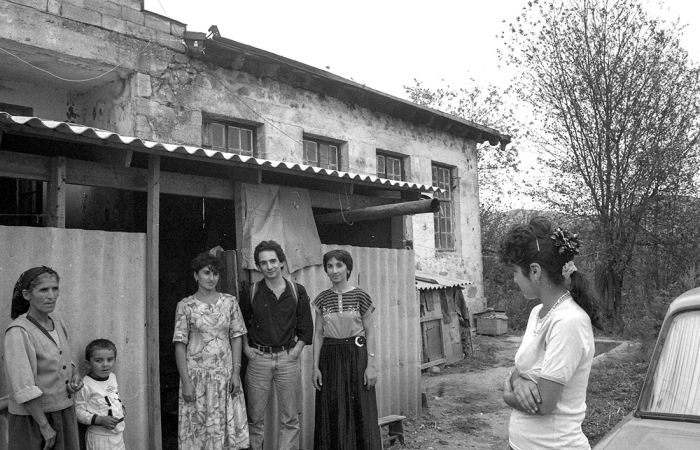
It is now 31 years since I first travelled from London to the South Caucasus to report from what was then Nagorno Karabakh. Since then, I’ve covered almost every dimension of the conflict. From the Azerbaijani POWs and civilian hostages I encountered on my first trip to Karabakh in 1994, through the ethnic Armenian refugees from Azerbaijan struggling to rebuild their lives in Armenia that same year and then from 1999, and the lingering danger of landmines and unexploded ordnance that plagued the seven formerly occupied regions of Azerbaijan surrounding Karabakh throughout the 2000s. They still claim lives today.