

The Armenian President Serzh Sargsyan on Wednesday, 22 June 2011 addressed the Parliamentary Assembly of the Council of Europe. In his speech he touched on issues connected with the Karabakh conflict, regional issues, the state of democracy in Armenia and Armenia's relations with Europe.
The following the full text of the President's speech (source www.president.am)
Mr. President,
Mr. Secretary General,
Distinguished Members of the Assembly,
I would like to start by expressing my gratitude for the opportunity to address the European audience through this distinguished forum, which has played a crucial role in the process of enrooting democracy in Armenia.
Twenty years ago, in September 1991, Armenia declared independence, attaining the dream of many centuries and generations, and reuniting with the community of sovereign states. Ten years later, in 2001, Armenia acceded to the Council of Europe, reaffirming a shared historical and cultural legacy with this European family of nations. Today, stand before the Assembly, I recall these milestones with a sense of pride for the achievements of our people and our state in the last two decades.
Having experienced various oppressive regimes, my people know too well the price of freedom. The history of my people is one of creation and struggle. Freedom and peace have been our dream for centuries. We are now en route to our dream.
The people of Armenia have made their historic and irreversible choice. Our road to becoming closer to Europe has been unique in a natural way. However, there have been obstacles, which are not natural, such as the artificial and unlawful blockade imposed on Armenia by our two neighbors. However, in spite of all the difficulties, our society knows precisely where it is going, and why it has chosen this particular route of development. For us, it is a homecoming to the European civilization and cultural realm, to which we belong, and where we have been ever-present.
The Council of Europe is indeed the institutional embodiment of our common system of values. Its mission encompasses the entire Continent, defining Europe not purely as a geographical term, but above all, as a common cultural and civilizational platform of values and identity.
My people have throughout history paid too high a price for the right to worship these values and ideas, which at such times in history were alien to our particular region. As a consequence, we were silenced in the most brutal and horrendous way. The Council of Europe signifies the promise that such events are not to be allowed to reoccur on the European Continent.
In the last two decades, the Council of Europe has been a vital partner for Armenia in the process of state building and strengthening of democracy. In Armenia, some even joke that our political system has three components: the government, the opposition, and the Council of Europe. The joke, however, actually reflects the strong involvement of the Council of Europe in the change process currently underway in Armenia.
Dear Colleagues;
In 2008, our country experienced serious problems and challenges. The steps taken by the government to overcome the consequences of the tragic events of March 2008 have been discussed in detail with all of our partners, including those in the Council of Europe. We have sometimes had serious discrepancies and have respectfully disagreed with each other’s assessments. We have, however, benefited from the exchange, the wisdom of the experience, and the constructive dialogue. Short of it, it would have been impossible to move forward after those tragic events, steering clear of new confrontation and disaster. Allow me to extend our respect and appreciation to the co-rapporteurs for Armenia Mr. Prescott, Mr. Colombie, and Mr. Fisher, as well as Commissioner Hammarberg for their productive and persistent engagement.
The Armenian government has profoundly believed in and pursued the aim of sustaining progress along the democratic path. No doubt has ever been cast on Armenia’s democratic future, even in the direst moments of the domestic political crisis. This very conviction has also underpinned the logic of the measures taken in the last three years, especially in recent months, with a view to promoting a healthy political environment in our country. This determination also lies at the heart of the comprehensive and continuous reform of all the structures aimed at further consolidation of democracy in Armenia.
We learn.
We learn to listen to and respect each other’s views.
We learn and gradually adopt the understanding that the government and the opposition are not enemies. Strength is not best demonstrated by attempting to eliminate the other side.
We learn tolerance and shape a culture of dialogue.
We learn not to reciprocate insults, and we learn to consult a wider circle of stakeholders on key issues.
We learn to honor and appreciate the accomplishments of former leaders. We learn not to shun away from hearing constructive criticism and reviewing our decisions.
We learn to live by another set of rules.
We learn as a society.
In this Assembly, for you as representatives of countries that have deeply-rooted democratic traditions, my words may appear self-evident. However, I would like to assure you that this process is crucial. We have to graduate from it, and doing so requires an enormous effort and perseverance. We are ready for it. We will not hesitate to use every opportunity to take a step in this direction or make our message clear.
Ladies and Gentlemen;
We are indeed proud of our achievements. In two decades, Armenia has implemented wide-scale democracy building. Since achieving independence, especially after the 2005 constitutional amendments, much has been done to strengthen democracy, the rule of law, and the protection and promotion of human rights. Our country has seriously and irreversibly aligned its ways of living with the rules of the democratic and liberal world. In this process, the advisory and institutional assistance provided to us by the Venice Commission, various OSCE structures, and recently also the European Commission, have been indispensable for us. The impact of the European Court of Human Rights, a unique and important supranational structure promoting human rights, is omnipresent in our country.
The 2008 political crisis revealed the vulnerabilities of our legal framework and practice, providing an additional impetus to our efforts. As a result, the legislation underwent serious revisions. Fundamental reform of the police system is currently underway. The 2012-2014 Judicial Reform Plan is now being elaborated with the aim of safeguarding judicial independence. Important changes have been made to the Criminal Code articles regarding mass disorders and seizing of power by force. The legislation was revised in order to guarantee the exercise of the right to freedom of assembly. A very different philosophy underlies the new law: a presumption in favor of facilitating the legitimate exercise of the right, rather than restricting the freedom of assembly.
A comprehensive review of the legislation with a view to eliminating corruption risks and bureaucratic procedures is high on our political agenda. An Anti-Corruption Council and Anti-Corruption Monitoring Commission have been created and are operating effectively. A Public Service Law has been adopted, requiring public disclosure of the property and income of over 600 high-ranking public servants and persons affiliated with them, as well as a set of ethical rules.
A major effort is underway to improve the Law on Television and the Radio. Legislation was enacted to decriminalize defamation, which has been a significant step in support of the freedom of speech.
Our team has worked with an active group of EU advisors to develop an extensive strategy to promote reforms over the next three years, which will harmonize and bring under one roof the processes of change occurring in various areas.
We are determined to continue the reforms. We recognize that Armenia cannot develop without further fundamental improvements that will perhaps be no less painful than the ones implemented in the past.
Ladies and Gentlemen;
The people of Armenia are the main actor and driving force of progress in our country. I rightfully take pride in the maturity and balanced attitude of Armenia’s society, the principled approaches of many civil society organizations. They secure a comprehensive and speedy process promoting and sustaining the core values of democracy, human rights, and the rule of law. We are building and consolidating our institutions and democracy in this particular framework of diversity.
The next milestone along this path will be the parliamentary election next spring.
The Armenian government, like any other democratic government, undoubtedly attach great importance to the role of fair and transparent elections for further development of our statehood. However, free and fair elections are not enough. It is also necessary that the elections be perceived as such by the public. To this end, the recent adoption of a new Electoral Code is certainly worth mentioning. The new Code has been developed on the basis of a review of all the relevant reports of observer missions. We believe that it will not only allow conducting free and fair elections, but also guarantee the full acceptance of the election results by society. The Armenian government will spare no effort to conduct the elections in full compliance with our Constitution and laws, as well as our international commitments. We are grateful to the Council of Europe for the persistent support and counselling of its numerous structures in this area.
We will cooperate in this vital area with all the institutional stakeholders of civil society. We are ready to accept the advice and support of our international partners. We are ready to utilize all the existing mechanisms and to create opportunities for the most transparent domestic and international monitoring of elections. Most importantly, the upcoming elections should take place in an atmosphere of public trust and fortify our achievements.
We do not look for shortcuts in our reforms or democracy building. Neither are we looking for political praise by the international community. Our intention is not to prove to others that the path chosen by us is non-fallible. We do not attribute failure to “objective” limitations such as the unresolved conflict or the inability of neighbours to normalize relations with us. I am nonetheless confident that what we do today will last. We do expect, however, that the Council and the Assembly will demonstrate political credibility and apply fair and consistent rules in assessing the member states.
Ladies and Gentlemen;
Peaceful and just resolution of the Nagorno-Karabakh conflict remains the most important issue for us. The negotiations are conducted in the framework of the OSCE Minsk Group. We are grateful to the co-chair states for their efforts. Importantly, the presidents of those states are personally engaged in the resolution process. It does, undoubtedly, inspire great hope.
I believe you would agree that the most important current and potential contribution of the Council of Europe to this process is the promotion of tolerance. To this end, we note with pain and concern that hotbeds of racism and xenophobia still exist in the territory of the Council of Europe.
The European Commission against Racism and Intolerance, in its recent regular report on Azerbaijan, reconfirmed the extreme level of Armenophobia and racism prevailing in that country. We regret this fact, because it is hard to imagine such a situation in a member state of the Council of Europe. We regret, because we clearly understand that the poison of intolerance strikes most heavily the society bearing such poison. It also troubles us because:
- Azerbaijan is our immediate neighbor,
- The Nagorno-Karabakh conflict remains unresolved in our neighborhood, and
- We attach importance to the necessity of progressing in the process of resolving the conflict.
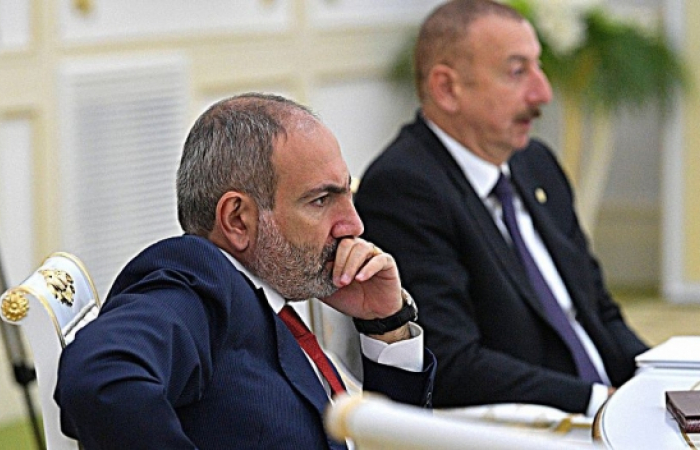
In two days, a trilateral meeting of the Presidents of Russia, Armenia, and Azerbaijan will take place. In the run-up to the meeting, the co-chair states have exerted all efforts to secure finalization of the basic principles of resolution. We are talking about solving the issue by means of mutual concession. However, our situation would seem like a concession to the side that is looking for the convenient excuse to shoot at us. In such a situation, it will be very difficult for anyone to persuade society in Armenia, or society in Karabakh - the indigenous Armenian people living in Karabakh for centuries - that it is necessary to make certain concessions to a country where there is such intolerance and such extreme racist feelings towards Armenians.
Even under these circumstances, we travel to Kazan in anticipation of progress, as we attach great importance to regional stability and development, to securing a safe future for the generation growing up in Armenia, Nagorno Karabakh, and Azerbaijan, and to demonstrating good will and a constructive approach. However, we all should realize that an agreement can be finalized and effectively implemented only when the patterns of Armenophobia and racism are eliminated in Azerbaijan and an atmosphere of trust is formed. Naturally, no one may question the inherent right of the people of Karabakh to live freely and safely on their land and to be the masters of their destiny.
Thus, what can be expected of the Council of Europe:
- First of all, not to harm the process. The short-term impact of uninformed debates allows the parties to avoid lasting solutions that could otherwise emerge in the peace talks in the frameworks of the OSCE Minsk Group.
I am confident that the overwhelming majority of our colleagues at the PACE, who have expressed or will express a desire to discuss any issue related to the Nagorno-Karabakh conflict, have done or will do so out of good will. However, some can still act on the basis of inadequate information, which can indeed undermine the process. Therefore, I urge all of you to exercise some restraint. The main guidance should be the principle of causing no harm.
- Is it possible to help?
Certainly, it is. Regardless of different visions for the final resolution of the Nagorno-Karabakh conflict, one thing is certain. Karabakh has been, is, and will remain a part of Europe, albeit unrecognized. Do we realize that society in Karabakh today is a part of European society, a part of the European family regardless of the de-jure status of Karabakh? Has the time not come for the Council of Europe to engage directly with Karabakh in terms of its primary functions of protection and promotion of human rights, formation of civil society, democracy, tolerance, and the like? Would it not be much more logical if the Council of Europe first engaged with Karabakh before expressing a desire to discuss matters related to Karabakh, with the participation of the people of Karabakh in such discussions?
Dear Colleagues,
The collapse of the Berlin Wall heralded the elimination of dividing lines in Europe. Unfortunately, twenty years later, our region is still waiting for its dividing lines to be eliminated.
Two years ago, we initiated a process of normalization between Armenia and Turkey, which would have allowed, through the establishment of diplomatic relations and opening of the border, to gradually overcome the divide that had existed for almost a century. I would like to note that, throughout the process, we greatly appreciated the inspiration and permanent support of not only the mediator states, but also the international community more broadly, including various senior officials of the Council of Europe. Unfortunately, in spite of this support, Armenia-Turkey normalization process ended up in a deadlock.
The sole reason was that Turkey reverted to its practice of setting preconditions, and failing to honor its commitments, which rendered the ratification of the signed protocols impossible. Having faced the wall of disappointment and mistrust, I cannot predict when the window of opportunity will reopen. I regret to say so, but it is the reality.
It is important to emphasize that Armenia initiated the process with good intentions, true to the 21st-century imperative of peaceful coexistence of nations and peoples, all on the backdrop of Turkey still not only failing to recognize, but also engaging in a policy of blunt denial of the Genocide of Armenians committed in the Ottoman Empire in 1915. Meanwhile, Armenians worldwide are expecting an adequate response. Our tireless efforts, and hopefully also the efforts of those concerned about crimes against humanity, will henceforth remain focused on the international recognition of the Armenian Genocide.
However, we are determined not to leave this problem unsolved for generations to come. The normalization of relations between Armenia and Turkey is important not only for Armenians and Turks, but also for the whole region, I believe even for the whole of Europe in terms of creating an atmosphere of peace, stability, and cooperation. The unlawful blockade of Armenia must come to an end.
Ladies and Gentlemen;
Allow me to conclude by restating my deep belief in the future of a common, comprehensive, peaceful, and prosperous Europe. If Europe is an idea, a platform of shared values, then it should be true for all of Europe – from the Atlantic Ocean to the Urals and beyond, without groupings or divisions. Europe cannot and should not tolerate new dividing lines - tangible or intangible. The Council of Europe should become an important political arena for Europe-wide comprehensive discussions and collective efforts aimed at the advancement of European unity. It is commanded by our common responsibility towards future generations.
Source www.president.am