Region

South Caucasus

The South Caucasus – a region encompassing Armenia, Azerbaijan and Georgia - is one of strategic importance, not only for adjacent countries, such as Turkiye, Russia, Iran and the Central Asian states, but also for neighbours such as the European Union and the GCC states, and globally for the United States, India, China, Pakistan and Japan.

commonspace.eu team brings decades of experience of working in the South Caucasus and we are pleased to share our insights with our loyal readers through the website, and the sister newsletter, Caucasus Concise.

Editor's choice
Monday Commentary
Monday Commentary: 2025 was a momentous year for the South Caucasus

Monday Commentary: 2025 was a momentous year for the South Caucasus

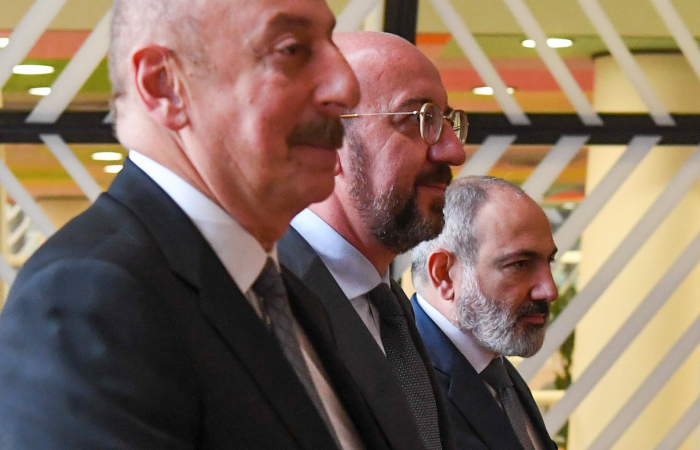
The year 2025 has ended up being a momentous year for the South Caucasus, writes Dennis Sammut in his Monday Commentary. Armenia-Azerbaijan relations have been redefined, and that has consequences for the whole region, and beyond. That huge development overshadowed key moments in the domestic trajectory of the two countries, that however have deep consequences for the two countries, and even beyond. It has also been a tumultuous year for Georgia too. The country has been gripped in political crisis throughout 2025, with no obvious end in sight. Whatever the domestic arguments, on the international stage Georgia is today a shadow of what it used to be until recently. It not only has lost the chance of joining the European Union any time soon, it has also lost its position as the leading South Caucasus country. Today, in the new reality of the region, it lags as a tired third. Important as 2025 was, it ends with a lot of unfinished business. So 2026 will also be crucial for the three countries. Since regaining their statehood in 1991 after the dissolution of the Soviet Union, Armenia-Azerbaijan relations were defined by war. The two fought open wars, wars of attrition, and propaganda wars, incessantly. Tens of thousands of people lost their lives, and hundreds of thousands were displaced. Many had lost hope that the two could try the alternative – i.e. peaceful co-existence. Yet in 2025 they were proven wrong.
Editor's choice
Opinion
Opinion: A sustainable peace requires consistent long-term European involvement

Opinion: A sustainable peace requires consistent long-term European involvement

There is no denying that the EU, especially key member states acting in support, helped bring Baku and Yerevan closer to the Washington Declaration of August 8, 2025. But a declaration is not a treaty. Turning principles into a peace deal and eventually to a sustainable peace requires consistent long-term European involvement, writes Yalchin Mammadov in this-op-ed for commonspace.eu Before facilitating trust between Armenia and Azerbaijan, the EU is first expected to address its own credibility gap with Baku. A more balanced approach—such as including Azerbaijan, alongside Armenia, in the European Peace Facility—could be a useful first step. Diplomats can negotiate peace; societies must build peace. In this context, the EU can do what it does the best: long-term societal engagement. By expanding youth and academic exchange programmes, investing in cross-border civil society initiatives, and fostering people-to-people cooperation, Brussels can help shape a new generation equipped to sustain peace beyond political cycles. Such tools are slow and unglamorous, but if ignored, even the strongest treaty risks collapse. And obviously, these aspects require two-way engagement and genuine willingness by both governments to facilitate contact. If Brussels wants to remain influential, it needs to replace outdated one-size-fits-all policies with ambitious, interest-driven and differentiated approaches. Without a clear regional strategy, which appears to be the current situation, the South Caucasus will continue to sit at the margins of Europe’s security architecture—leaving space for other powers to take the lead. (You can read the op-ed in full by clicking the image.)

Filter archive

Publication date
Editor's choice
News
Terrorist attack against Azerbaijani Embassy in Tehran

Terrorist attack against Azerbaijani Embassy in Tehran

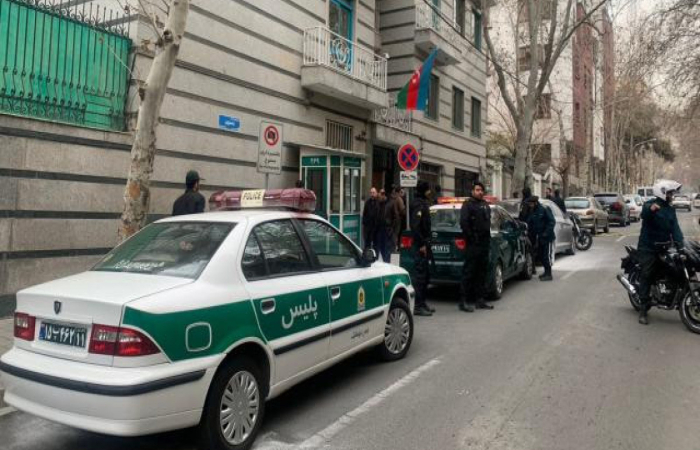
At least one security officer was killed and two others injured when a man armed with a Kalashnikov attacked the Azerbaijani Embassy in the Iranian capital, Tehran. The incident happened on Friday morning as the man tried to force his way into the diplomatic mission. Azerbaijan has strongly condemned the attack and criticised Tehran for not protecting its diplomatic mission. The Iranian Ambassador was summoned to the Azerbaijani foreign ministry in Baku and told that the attack was the consequence of a systematic anti-Azerbaijan campaign. There have been outbursts of anti-Azerbaijani sentiment in some sections of the Iranian media which appear to have the blessing of at least some elements of the Iranian regime. There has been widespread condemnation of the attack by the international community, including the EU, the US and many European and Middle East governments.  commonspace.eu political editor said in a comment that the attack on the Azerbaijani embassy in Tehran is the latest in a series of unfriendly or hostile acts towards Azerbaijan originating from Tehran that seem to be encouraged by at least some elements of the Iranian Shia clerical regime.
Editor's choice
News
Five people killed in mass shooting in Sagarejo, Georgia

Five people killed in mass shooting in Sagarejo, Georgia

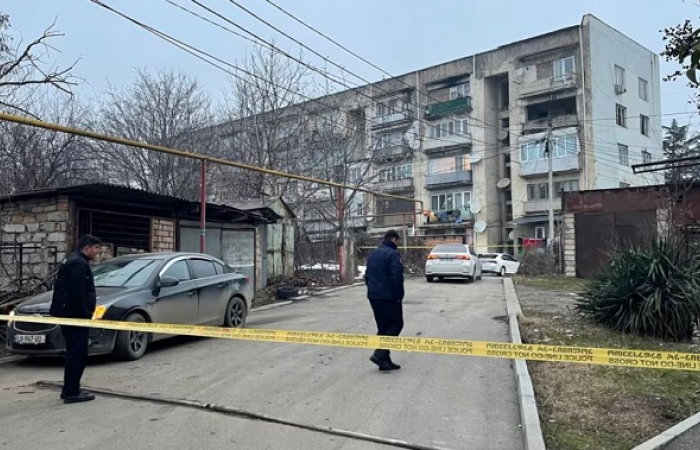
A retired military veteran has killed five people in the eastern Georgian town of Sagarejo before committing suicide, the country's interior ministry announced on Friday morning (20 January). The offender, according to the Georgian interior ministry, had served in the Georgian Defence Forces between 2006 and 2021, including in the NATO-led peacekeeping mission in Afghanistan. Among the dead is 38-year-old Otar Gvinashvili, a police officer who sustained fatal injuries while trying to protect another person during the shooting. Five other people were wounded. Vakhtang Gomelauri, the Georgian Interior Minister who arrived at the scene early on Friday, said the offender had been with his adult child who escaped the flat following the incident. The 49-year-old offender is believed to have killed himself as security forces entered his flat. Neighbours told local media the shooter had rented his flat and was reportedly undergoing treatment for psychological problems. There is currently no known motive for the mass shooting.
Editor's choice
Opinion
Opinion: Armenia must not use the Lachin corridor for the transportation of military goods

Opinion: Armenia must not use the Lachin corridor for the transportation of military goods

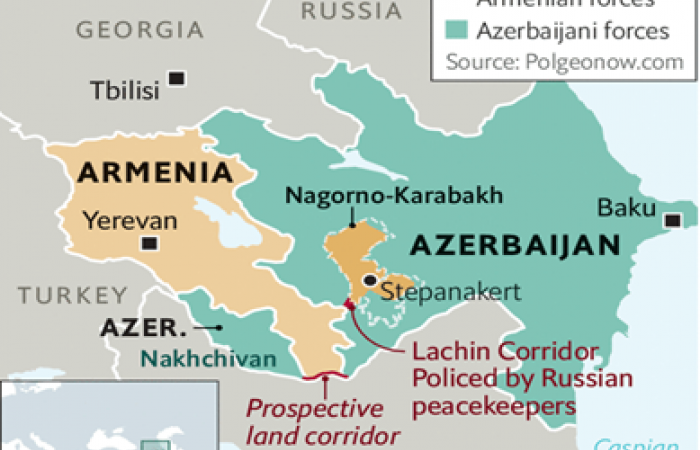
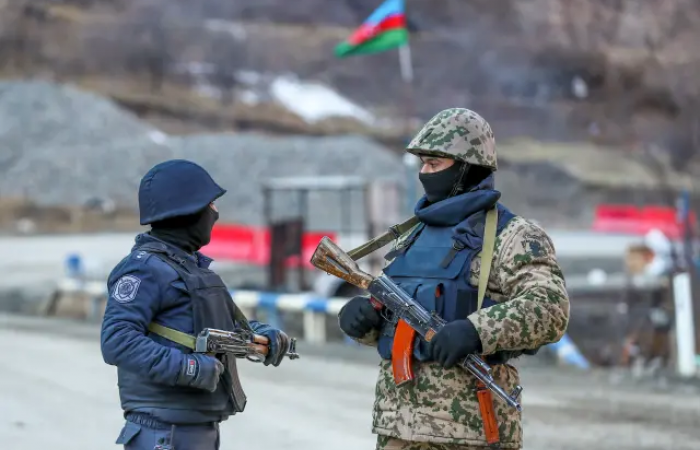
While Azerbaijan gets most of the blame for the ongoing crisis in the “Lachin Corridor,” the international community does not see the elephant in the room: Armenia’s shipment of weapons and illegal mining operations through this corridor intended for civilian use, writes Nurlan Mustafayev in this op-ed for commonspace.eu
Editor's choice
Opinion
Opinion: Armenia - India Relations: Time is right to develop a strategic partnership

Opinion: Armenia - India Relations: Time is right to develop a strategic partnership

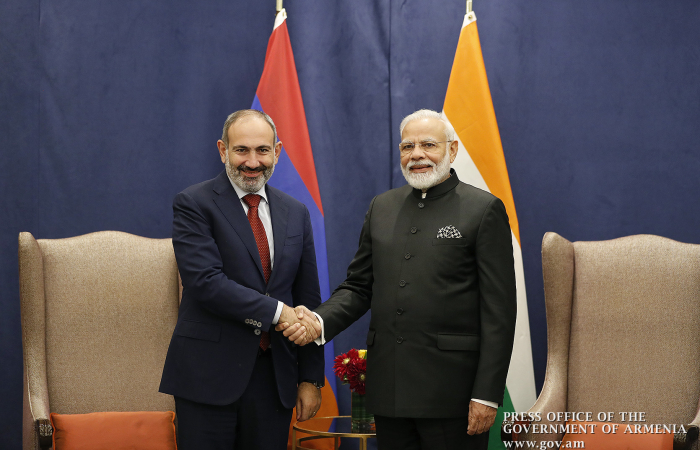
The defeat in the 2020 Nagorno Karabakh war shocked Armenia and Armenians all around the world, and destroyed many deeply entrenched perspectives on Armenia's geo-political realities, writes Benyamin Poghosyan in this op-ed for commonspace.eu. "Armenia should establish new partnerships that will allow Yerevan to decrease its economic and military development gap with Azerbaijan while adding a new layer of deterrence against Turkey in addition to the existing strategic alliance with Russia. In this context, India is the natural choice for Armenia", he argues. All the necessary ingredients are there to boost Armenia – India relations and bring them to the level of strategic partnership. There is an urgent need to institutionalize the ties, and the first step toward that direction could be establishing an Armenia - India high-level cooperation council. It should have annual sessions with the participation of Armenian and Indian Prime Ministers. At the same time, joint strategic planning groups should be established under the council to develop concrete projects in different spheres. 
Editor's choice
Opinion
Opinion: No Peace is possible with zero trust

Opinion: No Peace is possible with zero trust

"If one side of the conflict, regardless of the motives and explanations, takes action to starve the civilian population of the other side, trust will not reach the zero level; it may go beyond zero. Thus, all external actors, who have been involved in the complicated task of creating some trust between Armenians and Azerbaijanis, should clearly express their position – the blockade of the Lachin corridor should be stopped immediately. At the same time, negotiations should continue to address any concerns of Azerbaijan without breaching the November 10, 2020, trilateral declaration, writes Benyamin Poghosyan in this op-ed for commonspace.eu.
Editor's choice
Opinion
Opinion: EU mediation between Armenia and Azerbaijan is needed now more than ever

Opinion: EU mediation between Armenia and Azerbaijan is needed now more than ever

The stalemate in the process of normalising relations between Armenia and Azerbaijan has created new risks. Writing for commonspace.eu in this op-ed, Vasif Huseynov says that "there is widespread concern in the region that the sides might end up in a violent military escalation this year if they fail to sign a peace treaty and agree on a roadmap for the resolution of the remaining disputes concerning the Karabakh region of Azerbaijan and the re-opening of regional transportation links. Under these circumstances, there is a great need for the constructive intervention and active mediation of the EU, without which Baku and Yerevan are unlikely to be able to overcome the difficulties created by the Russian side", he argues.