Region

Global

Stories in this section cover various issues and stories from all around the world.

Editor's choice
Monday Commentary
Monday Commentary: Europe still needs the OSCE

Monday Commentary: Europe still needs the OSCE

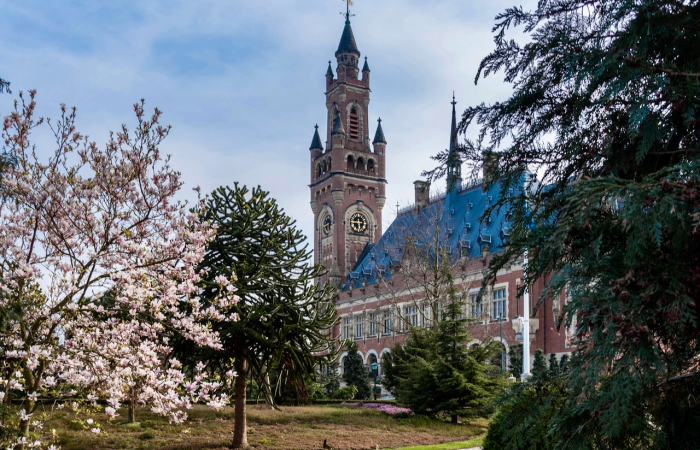
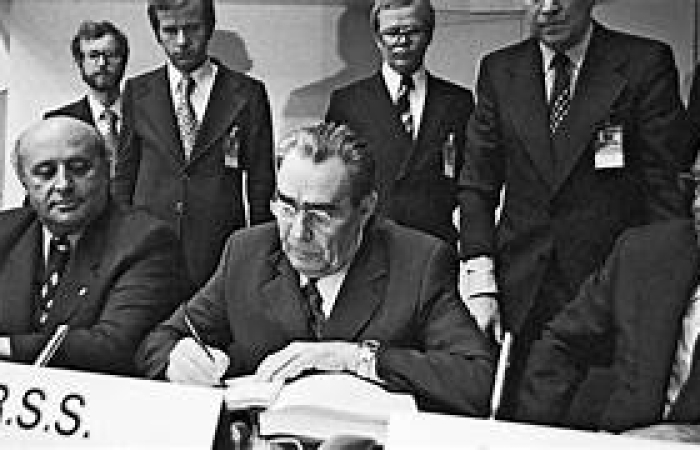
The Ministerial Council of the Organisation for Security and Co-operation in Europe (OSCE) will have its annual meeting in Vienna on 4-5 December. Foreign Ministers from the 57 member states, which also include the United States and Canada, and the Central Asian republics, and 11 partner countries, will congregate to discuss the future of European Security at a time when many believe that war in Europe over the next decade is likely. Ukraine is just a rehearsal for Russia’s ultimate ambitions. British diplomacy used to describe the OSCE as “the organization to manage Russia”. It has not done a good job of that, but this task remains paramount. The Ministerial Council will be the last major business of this year’s chairmanship, Finland, and will launch the new Chairmanship for 2026, Switzerland. The OSCE has been moribund for some time, and Russia’s invasion of Ukraine in February 2022, nearly ended it. But Europe still needs the OSCE, and there is hope that it will take a new lease of life in 2026. Switzerland has held the Chairmanship of the OSCE twice before, successfully. It has the experience, a wide network of embassies, and an able team in Bern, to successfully start what is likely to be a long and laborious journey. The new Chairman-in-office is Swiss Federal Foreign Minister Councillor, Ignazio Cassis. Cassis is also the current Vice President of the Swiss Confederation, and is fluent in Italian, English, German and French. Quite unusual also is the fact that currently the General Secretary of the OSCE is a Turk. Feridun Sinirlioğlu is an experienced Turkish diplomat, who has held the position for a year. Between them, Cassis and Sinirlioğlu will have to craft out the new OSCE, but in the end, it will largely depend on the will of the member states, including Russia. A new, reborn, OSCE, must understand that its core task remains European peace and security. It should resist the temptation of “looking busy” with a lot of secondary things. After peace and security return to Europe, it can consider other tasks. But we are far away from that yet. (Click the image to read the full commentary)
Editor's choice
News
Pope's visit to Türkiye and Lebanon has a strong ecumenical character, and places interreligious dialogue at its centre

Pope's visit to Türkiye and Lebanon has a strong ecumenical character, and places interreligious dialogue at its centre

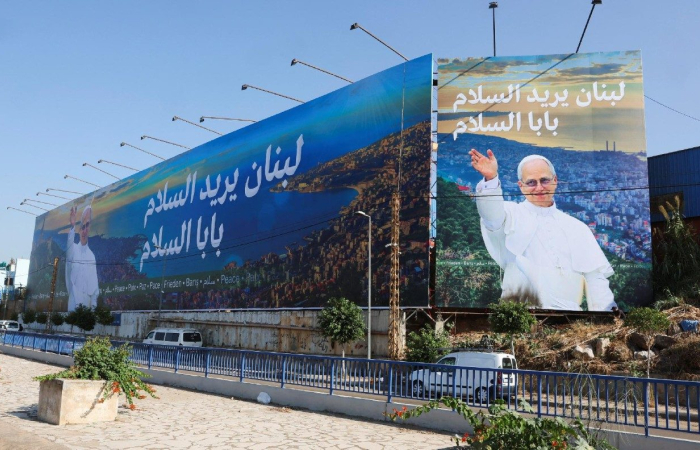
Pope Leo XIV has begun the first overseas trip of his pontificate, a six-day visit to Türkiye and Lebanon, which started yesterday (27 November) and ends on Tuesday (2 December). According to Vatican Radio, the visit "carries a strong ecumenical character and places interreligious dialogue at its centre. It will also be a moment of closeness to Christian communities and local populations across the region".   During nearly a week in the region, Pope Leo XIV will meet civil and religious authorities, visit mosques and ancient churches, pray at Beirut’s port in memory of the victims of the 2020 explosion, and hold private meetings with Presidents Recep Tayyip Erdoğan and Joseph Aoun.   A highlight of the visit will be a visit to Nicaea, where the Pope will mark the anniversary of the Council of Nicaea. Christians of many traditions recognise the Council of Nicaea as a foundation of shared faith. One of the most anticipated moments will be the Pope’s encounter with Lebanese youth in Bkerké, at the Maronite Patriarchate, a meeting expected to carry strong messages of hope in the Jubilee Year. A central event will be the ecumenical celebration in İznik, where the Pope and Ecumenical Patriarch Bartholomew will walk together toward the ruins of the Basilica of St Neophytos. The prayer, held before icons of Christ and the Council, will conclude with the lighting of a candle—a symbolic gesture of unity. The journey will also highlight interreligious engagement.   Memorable moments are expected throughout the trip: a wreath at Atatürk’s mausoleum, prayer inside the Blue Mosque, Mass at Istanbul’s Volkswagen Arena, the planting of a cedar at the presidential palace in Beirut, and prayer at the tomb of St Charbel in Lebanon. The Vatican said that "Pope Leo XIV’s pilgrimage to Türkiye and Lebanon aims to offer a voice of peace, unity, and hope at the heart of the Middle East."

Filter archive

Publication date
Editor's choice
News
Busy time for Aliyev and Pashinyan at the Munich Security Conference

Busy time for Aliyev and Pashinyan at the Munich Security Conference

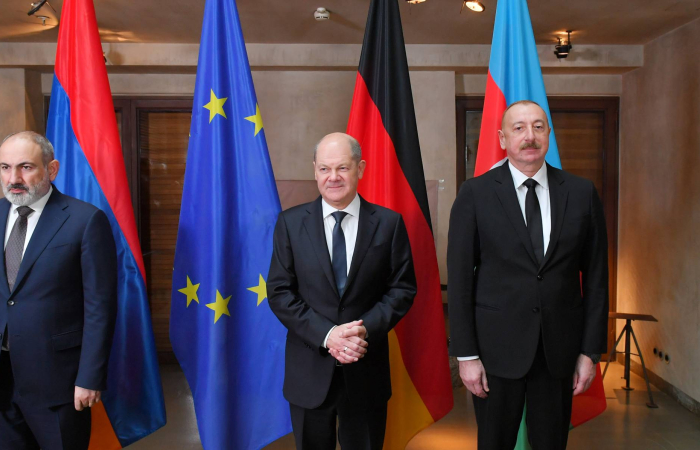
Armenian prime minister, Nikol Pashinyan, and Azerbaijani president, Ilham Aliyev, are this weekend both attending the Munich Security Conference. On the margins of the big event the two leaders have held a series of bilateral meetings with world leaders and statesmen. Of special significance however was their own bilateral meeting, which followed a trilateral meeting hosted by the German Chancellor, Olaf Scholz. In a short read out of the Aliyev-Pashinyan meeting, the website of the Azerbaijani president said "Negotiations on the peace treaty between the two countries, normalization of relations, border delimitation issues were discussed at the meeting. The Ministries of Foreign Affairs were instructed to hold a meeting on the peace agreement and a meeting of the border delimitation commission soon. The mutual compromises and progress achieved during COP29 between the two countries were positively evaluated." The website of the Armenian prime minister makes no mention of the bilateral meeting but highlights the meeting with Scholz, adding that "the process of regulating Armenia-Azerbaijan relations and steps aimed at ensuring peace and stability in the region were discussed. It was agreed to continue the work on the peace treaty." Both Aliyev and Pashinyan have also had bilateral meetings with the German Chancellor, as well as with US Secretary of State, Antony Blinken, and OSCE Chairman-in-Office, Minister of Foreign Affairs of Malta Ian Borg. The meetings highlight the interest of the international community to support Armenia and Azerbaijan in their quest for peace, despite on-going problems and incidents on the ground. For Azerbaijan the meetings in Munich are also an opportunity to prepare for COP29 - the Climate Convention framework meeting which is scheduled to be held in Baku in November. Aliyev met with US Special Envoy on Climate, John Kerry, and also invited him for the Baku event.
Editor's choice
News
Oil markets jittery after Israel rejects Gaza ceasefire

Oil markets jittery after Israel rejects Gaza ceasefire

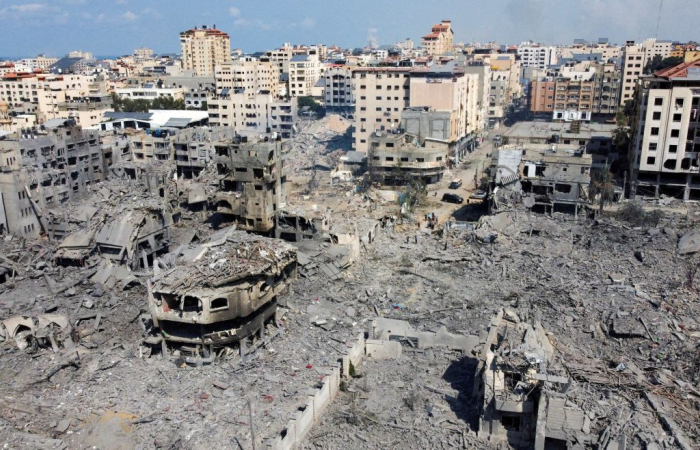
Oil prices were little changed on Friday, staying on track for weekly gains, but the markets remained jittery with tensions persisting in the Middle East after Israel rejected a ceasefire offer from Hamas, according to Reuters. Brent crude futures slipped 1 cent to $81.62 a barrel by 6:34 a.m. Saudi time, while US West Texas Intermediate crude futures rose 3 cents to $76.25 a barrel. Both benchmarks rose about 3 percent in the previous session as Israeli forces bombed the southern border city of Rafah on Thursday after Prime Minister Benjamin Netanyahu rejected a proposal to end the war in the Palestinian enclave. The tensions have kept oil prices elevated, with Brent and WTI both set to gain more than 5 percent for the week. “The move yesterday seemed a bit excessive on the back of not very much at least in terms of fundamentals,” ING’s head of commodities research Warren Patterson said. “I still expect the rangebound trading that we have become accustomed to recently will continue given the comfortable oil balance.” US officials made their most pointed criticism so far of Israel’s civilian casualties in Gaza as it turned the focus of its offensive to Rafah. A Hamas delegation arrived in Cairo on Thursday for ceasefire talks with mediators Egypt and Qatar. While the conflict has propped up prices, there has been no impact on oil production. Non-Organization of the Petroleum Exporting Countries output from Norway and Guyana is increasing while Russia is exporting more crude in February than it planned following a combination of drone attacks and technical outages at its refineries that could undermine its pledge to curb sales under a pact from OPEC and its allies, known as OPEC+ Under the deal, Russia committed to capping crude output at 9.5 million barrels per day. It is also voluntarily cutting crude exports by 300,000 bpd and fuel exports by 200,000 bpd from the average May-June level.
Editor's choice
News
800 western officials say the policies of their governments on Gaza "are contributing to grave violations of international law, war crimes and even ethnic cleansing or genocide"

800 western officials say the policies of their governments on Gaza "are contributing to grave violations of international law, war crimes and even ethnic cleansing or genocide"

The BBC is reporting that more than 800 serving officials in the US and Europe have signed a statement warning that their own governments' policies on the Israel-Gaza war could amount to "grave violations of international law". Many are describing the statement as an unprecedented move that reflects great concern in official circles in western countries about the the position of their governments on the situation in Gaza. The "transatlantic statement", a copy of which was passed to the BBC, says their administrations risk being complicit in "one of the worst human catastrophes of this century" but that their expert advice has been sidelined. It is the latest sign of significant levels of dissent within the governments of some of Israel's key Western allies. One signatory to the statement, a US government official with more than 25 years' national security experience, told the BBC of the "continued dismissal" of their concerns. "The voices of those who understand the region and the dynamics were not listened to," said the official. "What's really different here is we're not failing to prevent something, we're actively complicit. That is fundamentally different from any other situation I can recall," added the official, who spoke on condition of anonymity. The statement is signed by civil servants from the US, the EU and 11 European countries including the UK, France and Germany.
Editor's choice
Commentary
The work of UNRWA must be sustained

The work of UNRWA must be sustained

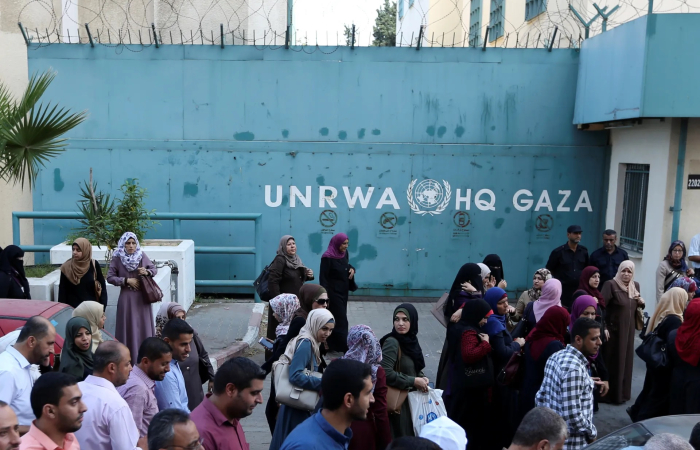
Israeli accusations that staff of the UN Humanitarian agency UNRWA which works in Gaza, were involved in the 7 October attacks on Israel need to be taken seriously, and the UN leadership must flash out any bad apples amongst the many, and restore the reputation of the organisation for professionalism. But the knee-jerk reaction of several Western governments in suspending funding to UNRWA is unacceptable, especially given the dire situation of millions of Palestinians, made much worse by the recent war in Gaza. Stopping the work of UNRWA will make an already significant humanitarian disaster much worse. In this regard, countries like Norway and Spain are to be commended. They kept a cool head and reiterated their commitment and support to UNRWA, whilst others were more hasty in halting or suspending support for the agency. There are two problems here: financial and political. The financial aspect is solvable. Gulf states need to step in and compensate for any shortfall in UNRWA’s budget. Other countries need also to step up. But the bigger problem is political. The support of Western countries for UNRWA gives it the necessary prestige that allows its leadership to negotiate the stormy waters of the Middle East. This should not be lost. Countries like UK, Netherlands, Germany and Italy, need to quickly reconsider their position and restore the funding to UNRWA. UNRWA was established in 1948 as a temporary measure to provide relief to the Palestinian people. That seventy-five years later it is still needed more than ever is a testimony of the failure of the international community to do justice to the Palestinians. From the tragedy and suffering of the last five months a new reality must emerge that must necessarily include the creation of a viable Palestinian state. It is time for the EU and European countries in particular, but also the US, to think strategically and act firmly.
Editor's choice
Opinion
Opinion: The ICJ ruling on the “South Africa v. Israel” case is a step in the right direction, but not decisive enough

Opinion: The ICJ ruling on the “South Africa v. Israel” case is a step in the right direction, but not decisive enough

On Friday (26 January) the International Court of Justice (ICJ) in the Hague ruled on whether emergency measures are required until a final decision is taken on the South Africa’s genocide case against Israel. The judges ruled that Israel must act to stop genocide in Gaza and allow the flow of humanitarian aid and basic services. Although this verdict is legally binding on the parties involved and a step in the right direction, the ICJ lacks enforcement power. The Court needs the U.N. Security Council (UNSC) to enforce its decision through mechanisms such as sanctions or even military intervention, however, the UNSC is unlikely to do so given the United States’ traditional shielding of Israel through the veto power. Moreover, the Court did not demand a ceasefire that would require Israel to stop its operation in the Gaza Strip. This disappointed many who consider an immediate ceasefire by all parties as being essential in order to end the suffering on civilians.
Editor's choice
News
Houthis escalate confrontation in Red Sea and Gulf of Aden, firing missile at US warship

Houthis escalate confrontation in Red Sea and Gulf of Aden, firing missile at US warship

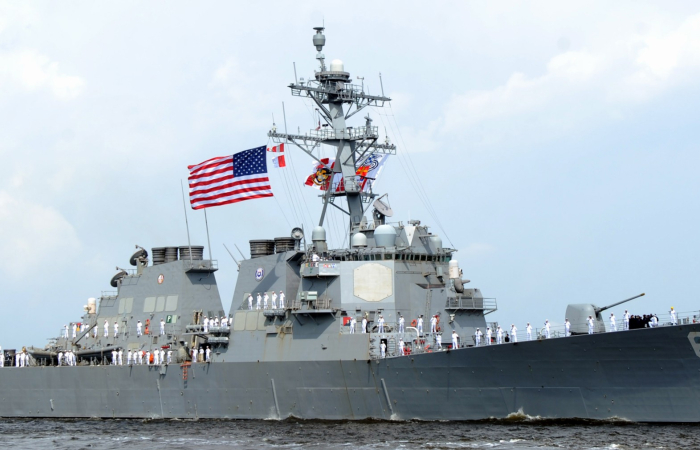
In an incident that is likely to further aggravate the already tense situation in the Red Sea and the Gulf of Aden, Yemen's rebel Houthi Movement on early on Saturday (27 January) fired a missile at an American naval vessel patrolling in the Gulf of Aden. The group, which has been attacking commercial shipping off the coast of Yemen in response to the ongoing conflict between Israel and Hamas, fired an anti-ship missile toward the U.S. destroyer USS Carney, according to a statement from U.S. Central Command. A terse statement from the US Central Command in Tampa said, On Jan. 26, at approximately 1:30 p.m. (Sanaa time), Iranian-backed Houthi militants fired one anti-ship ballistic missile from Houthi-controlled areas of Yemen toward Arleigh-Burke class destroyer USS Carney (DDG 64) in the Gulf of Aden. The missile was successfully shot down by USS Carney. There were no injuries or damage reported.  On Friday, the Houthi rebels also struck an oil tanker with an anti-ship ballistic missile, according to the ships operator, Trafigura. "The crew is continuing efforts to control the fire in one of the ship’s cargo tanks with support from military vessels," the company said in a statement.
Editor's choice
Young voices
The Cambodian spirit remains high despite the danger of landmines

The Cambodian spirit remains high despite the danger of landmines

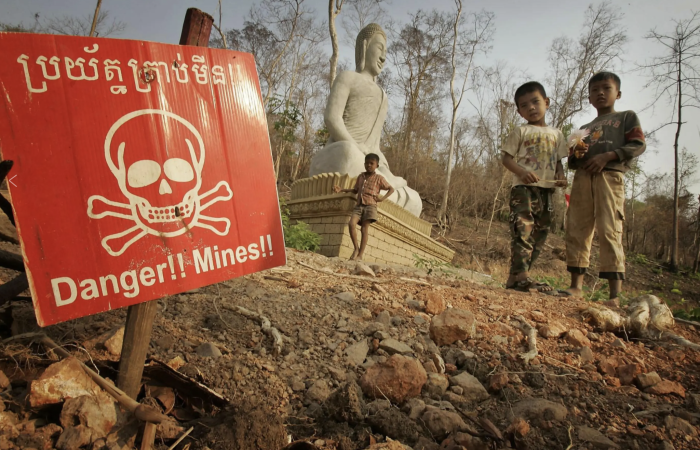
Walking through the temples of Angkor Wat, the sound of musical instruments was making its way through the jungle, complementing the birds. Once I got closer to the musical instruments, I realised that that the singers were victims of landmines, trying to bring awareness to this danger through music. They were not looking for pity or money, simply to share flyers on the history of landmines in Cambodia and its terrible effects that continue to affect civilians. This encounter sparked my interest as Cambodia is rarely mentioned in news or research papers.
Editor's choice
Analysis
Unblocking the Caspian route for Turkmen gas

Unblocking the Caspian route for Turkmen gas

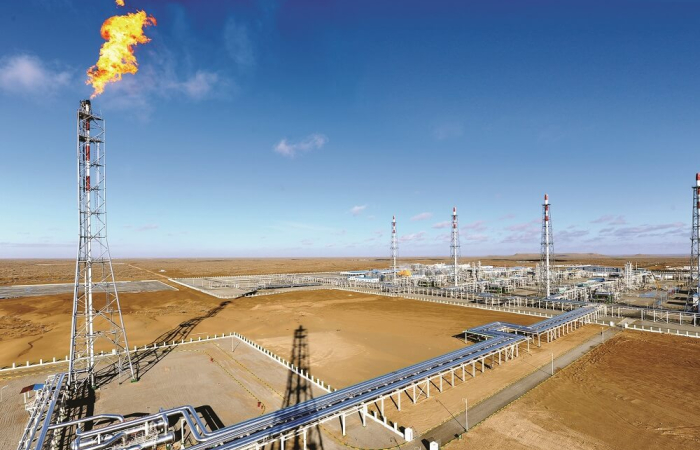
Turkmenistan, for decades considered one of the most closed countries in the world, is moving towards modest attempts at opening up its economy. Western sanctions against Russia which caused a gradual halt to energy supply from Russia to Europe and swelling Russian gas supplies to China, once Turkmenistan’s almost-exclusive client, made Ashgabat face a new reality that challenged its longstanding economic model, resulting in a significant deterioration of living standards and social discontent. Against this background, the country had to start considering options for diversifying its gas export geography and attracting foreign investment, writes Murad Muradov in this analysis prepared for commonspace.eu. The big question remains however whether the long-cherished idea of the Transcaspian pipeline, a link which would bring Turkmenistan’s gas to European markets, will finally come to fruition after many years of aborted attempts and uncertainty. This may be within reach sooner and faster than expected.