


Opinion: what may happen in Nagorno-Karabakh after Armenia-Azerbaijan peace agreement

"If everything remains as it is, the Armenia-Azerbaijan peace treaty will not significantly impact the situation in Nagorno Karabakh," writes Benyamin Poghosyan in this op-ed for commonspace.eu. "Perhaps the only option to avoid this grim scenario is to use the short window of opportunity opened by the Armenian government's readiness to make painful concessions and convince Azerbaijan to accept the necessity of a transitional period with a solid and robust international presence in Nagorno Karabakh. Without this, the peace agreement between Armenia and Azerbaijan will bring neither peace nor stability to the region," he adds. 

The recent intensive negotiations between Armenia and Azerbaijan have raised hopes among politicians, experts, and ordinary people that a peace agreement between the two countries is within reach. Four-day talks in Washington at the level of ministers of foreign affairs, a meeting of leaders in Brussels on 14 May and in Moscow on 25 May, the negotiations at the margins of the second summit of the European political community in Chisinau on 1 June, another session of Armenia-Azerbaijan-Russia trilateral commission on communications led by Deputy Prime Ministers in Moscow on 2 June, the upcoming meeting of foreign ministers in Washington on 12 June, and leaders summit in Brussels scheduled for 21 July.

Armenia-Azerbaijan negotiations never saw such a flurry of meetings, summits, and discussions at this frequency. The process is accompanied by a low-key American shuttle diplomacy, with  State Department officials  arriving regularly on visits to Yerevan and Baku. The draft text of the peace agreement is not published, but it is confirmed that the sides are working on the concrete text of the document, and the sides have agreed on at least part of it. It is challenging to assess if Nagorno Karabakh is mentioned in the document or if it declares the obligation of sides to protect the rights of ethnic minorities according to relevant international agreements and conventions.

However, regardless of the presence or absence of Nagorno Karabakh in the peace agreement, the core reason for the conflict was, and continues to remain, Nagorno Karabakh and its future. Thus, the signature of a peace agreement between Armenia and Azerbaijan does not automatically mean establishing lasting peace and stability in the region. Armenians still live in the territories of Nagorno Karabakh, not controlled by Azerbaijan, and the self-proclaimed Nagorno Karabakh Republic continues to function, despite the devastating results of the 2020 war. Now Azerbaijan controls the entrance to the Lachin corridor connecting Nagorno Karabakh to Armenia, which puts additional pressure on Armenians, as they strive to survive without electricity and gas supplies from Armenia and significantly reduced volumes of goods passing the Lachin corridor. Nevertheless, they are still there, the Nagorno Karabakh Defense Army is there, and Russian peacekeepers will remain in Nagorno Karabakh at least until November 2025. 

"We need time and action, as time without action will lead to nowhere"

Nagorno Karabakh Armenians reject any possibility of living under Azerbaijani jurisdiction. Given the 35 years history of conflict with three major wars and multiple stories of pressure against Armenians in Soviet Azerbaijan well before 1988, their position is quite understandable. The history of other conflicts in different parts of the world tells us that a long transition period is needed to overcome the implications of ethnopolitical conflicts. However, time is not the only criterion here. We need time and action, as time without action will lead to nowhere. Armenia argues for an international presence in Nagorno Karabakh to secure this transition.

At the same time, Azerbaijan categorically rejects this option, arguing that any international presence may become the first stage of the transformation of Nagorno Karabakh into Kosovo. Instead, Azerbaijani authorities demand the dissolution of all state institutions in Nagorno Karabakh, promising to explore the possibility of amnesty, as was offered by President Aliyev in his 28 May speech. Simultaneously, Azerbaijan threatens to use force against the Nagorno Karabakh defense army, wrapping it with the terms of "anti-terrorist operation" or "actions against illegal military units." 

If everything remains as it is, the Armenia-Azerbaijan peace treaty will not significantly impact the situation in Nagorno Karabakh. Armenians will continue to reject Azerbaijani jurisdiction; Azerbaijan may use the peace agreement as a justification for more vigorous demands for the dissolution of the self–proclaimed Nagorno Karabakh Republic state institutions, while Armenia will continue to demand the international presence in Nagorno Karabakh, accusing Azerbaijan of preparing a genocide against Armenians of Nagorno Karabakh, as was publicly done by Armenian Prime Minister many times. As Azerbaijan categorically rejects the option of another frozen conflict emerging in Azerbaijan, with Nagorno Karabakh preserving its “de jure Azerbaijan, de facto independent” status, the peace agreement between Armenia and Azerbaijan may accelerate the conflict instead of bringing peace.

Armenia may have to make painful concessions and convince Azerbaijan to accept the necessity of a transitional period

Some circles may hope that at the end of the day, most Armenians of Nagorno Karabakh will not be able to continue their resistance under the mounting humanitarian crisis and looming military actions of Azerbaijan and will decide to leave their homeland. According to this logic, this solution will get rid of a headache, as tensions between Armenia and Azerbaijan will decrease, the region will become more stabilized, while the remaining few thousand Armenians in Nagorno Karabakh will serve as proof that no "ethnic cleansing or other crimes against humanity took place in Nagorno Karabakh."

However, the history of Nagorno Karabakh tells us another history; most Armenians did not leave their homeland in much worse circumstances, including the initial phase of the conflict in late 1991-early 1992. Thus, they will continue resistance, and in the absence of any agreed solution, sooner or later, this will bring us to a new military escalation, which will make the peace agreement a useless piece of paper, plunging the region into another long period of instability and animosity. Supposing Azerbaijan is able to take Nagorno Karabakh by force, in that case, this will be perceived in Armenia as another humiliation, flame the feelings of revenge, and perpetuate the cycle of violence and wars.

Perhaps the only option to avoid this grim scenario is to use the short window of opportunity opened by the Armenian government's readiness to make painful concessions and convince Azerbaijan to accept the necessity of a transitional period with a solid and robust international presence in Nagorno Karabakh. Without this, the peace agreement between Armenia and Azerbaijan will bring neither peace nor stability to the region.


source: Benyamin Poghosyan is the founder and Chairman of the Centre for Political and Economic Strategic Studies in Yerevan. 
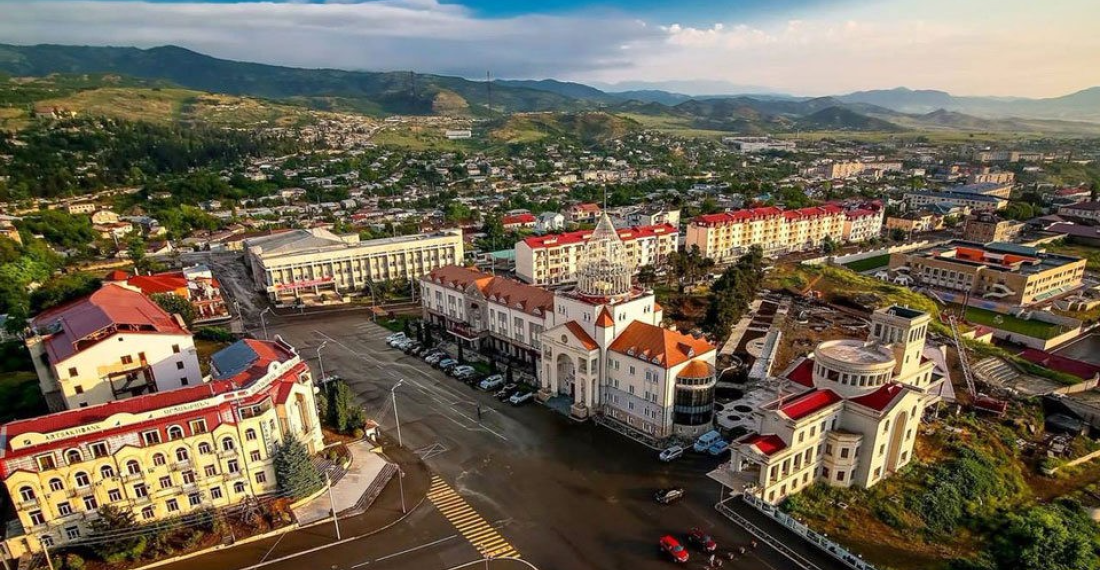
photo: Phoenix Tour

The views expressed in opinion pieces and commentaries do not necessarily reflect the position of commonspace.eu or its partners.

Related articles

Editor's choice
News
Key European countries back Denmark in the face of Trump's continuing insistence on taking over Greenland

Key European countries back Denmark in the face of Trump's continuing insistence on taking over Greenland

 Six major European countries have declared their support to Denmark following renewed insistence by the US that it must have control over Greenland. "Greenland belongs to its people, and only Denmark and Greenland can decide on matters concerning their relations," said the leaders of the UK, France, Germany, Italy, Poland, and Spain, in a joint statement, issued on Tuesday (6 January), together with Denmark. On Sunday, Donald Trump said the US "needed" Greenland - a semi-autonomous region of fellow Nato member Denmark - for security reasons. He has refused to rule out the use of force to take control of the territory, and Danish Prime Minister Mette Frederiksen warned on Monday that an attack by the US would spell the end of Nato. The issue of Greenland's future resurfaced in the wake of the US military intervention in Venezuela, during which elite troops went in to seize the country's President Nicolás Maduro and take him to face drugs and weapons charges in New York. Following the raid, Trump said the US would "run" Venezuela for an unspecified period of time. He also said the US was returning to an 1823 policy of US supremacy in its sphere of influence in the Western hemisphere - and he warned a number of countries the US could turn its attention to them. The US military raid in Venezuela has reignited fears that the US may consider using force to secure control of Greenland. A day after the raid, Katie Miller - the wife of one of Trump's senior aides - posted on social media a map of Greenland in the colours of the American flag, alongside the word "SOON". On Monday, her husband Stephen Miller said it was "the formal position of the US government that Greenland should be part of the US". In an interview with CNN, he also said the US "is the power of Nato. For the US to secure the Arctic region, to protect and defend Nato and Nato interests, obviously Greenland should be part of the US." Asked repeatedly whether the US would rule out using force to annex it, Miller responded: "Nobody's going to fight the US over the future of Greenland." Stressing they were as keen as the US in Arctic security, the seven European signatories of Tuesday's joint statement said this must be achieved by Nato allies, including the US "collectively" - whilst "upholding the principles of the UN Charter, including sovereignty, territorial integrity and the inviolability of borders". Greenland's Prime Minister Jens-Frederik Nielsen welcomed the statement and called for "respectful dialogue". "The dialogue must take place with respect for the fact that Greenland's status is rooted in international law and the principle of territorial integrity," Nielsen said. Trump has claimed that making Greenland part of the US would serve American security interests due to its strategic location and its abundance of minerals critical to high-tech sectors. Greenland, which has a population of 57,000 people, has had extensive self-government since 1979, though defence and foreign policy remain in Danish hands. While most Greenlanders favour eventual independence from Denmark, opinion polls show overwhelming opposition to becoming part of the US.
Editor's choice
News
Donald Tusk: "One for all, and all for one! Otherwise we are finished."

Donald Tusk: "One for all, and all for one! Otherwise we are finished."

Europe is rattled by events in Venezuela, and there are serious concerns that US disregard for international law may have consequences close to home.  The BBC diplomatic correspondent, James Landale, said, the question is how Europe may respond in the longer term to America's military operation in Venezuela. Will it provide a catalyst for the continent to take greater responsibility for its own security in the face of so much instability from what many see as an unreliable ally? Polish prime minister, Donald Tusk, appears to have answered the question, saying on social media: "No-one will take seriously a weak and divided Europe: neither enemy nor ally. It is already clear now. "We must finally believe in our own strength, we must continue to arm ourselves, we must stay united like never before. One for all, and all for one. Otherwise, we are finished." The US seizing of Venezuela's leader has faced strong criticism from both America's friends and foes at an emergency meeting of the United Nations Security Council, held on Monday, 5 January. Many member states agreed with the US that Nicolás Maduro had been an illegitimate and repressive leader. But many also condemned the US military action as a breach of international law and the UN Charter, and they demanded a democratic transition that reflected the will of the Venezuelan people. (click the image to read the full article).

Popular

Editor's choice
News
Key European countries back Denmark in the face of Trump's continuing insistence on taking over Greenland

Key European countries back Denmark in the face of Trump's continuing insistence on taking over Greenland

 Six major European countries have declared their support to Denmark following renewed insistence by the US that it must have control over Greenland. "Greenland belongs to its people, and only Denmark and Greenland can decide on matters concerning their relations," said the leaders of the UK, France, Germany, Italy, Poland, and Spain, in a joint statement, issued on Tuesday (6 January), together with Denmark. On Sunday, Donald Trump said the US "needed" Greenland - a semi-autonomous region of fellow Nato member Denmark - for security reasons. He has refused to rule out the use of force to take control of the territory, and Danish Prime Minister Mette Frederiksen warned on Monday that an attack by the US would spell the end of Nato. The issue of Greenland's future resurfaced in the wake of the US military intervention in Venezuela, during which elite troops went in to seize the country's President Nicolás Maduro and take him to face drugs and weapons charges in New York. Following the raid, Trump said the US would "run" Venezuela for an unspecified period of time. He also said the US was returning to an 1823 policy of US supremacy in its sphere of influence in the Western hemisphere - and he warned a number of countries the US could turn its attention to them. The US military raid in Venezuela has reignited fears that the US may consider using force to secure control of Greenland. A day after the raid, Katie Miller - the wife of one of Trump's senior aides - posted on social media a map of Greenland in the colours of the American flag, alongside the word "SOON". On Monday, her husband Stephen Miller said it was "the formal position of the US government that Greenland should be part of the US". In an interview with CNN, he also said the US "is the power of Nato. For the US to secure the Arctic region, to protect and defend Nato and Nato interests, obviously Greenland should be part of the US." Asked repeatedly whether the US would rule out using force to annex it, Miller responded: "Nobody's going to fight the US over the future of Greenland." Stressing they were as keen as the US in Arctic security, the seven European signatories of Tuesday's joint statement said this must be achieved by Nato allies, including the US "collectively" - whilst "upholding the principles of the UN Charter, including sovereignty, territorial integrity and the inviolability of borders". Greenland's Prime Minister Jens-Frederik Nielsen welcomed the statement and called for "respectful dialogue". "The dialogue must take place with respect for the fact that Greenland's status is rooted in international law and the principle of territorial integrity," Nielsen said. Trump has claimed that making Greenland part of the US would serve American security interests due to its strategic location and its abundance of minerals critical to high-tech sectors. Greenland, which has a population of 57,000 people, has had extensive self-government since 1979, though defence and foreign policy remain in Danish hands. While most Greenlanders favour eventual independence from Denmark, opinion polls show overwhelming opposition to becoming part of the US.

