Azerbaijan has closed the Lachin corridor since December 12, 2022. There are different interpretations of why Azerbaijan did it, and why Baku continues the blockade despite calls from the international community to change its course, writes Benyamin Poghosyan in this op-ed for commonspace.eu. Azerbaijan, Armenia, Russia, and the West, in one way or another, all suffer from the blockade. Ultimately, it is up to the Azerbaijani leadership to decide to re-open the road. "There can be other factors influencing Baku's decision however, one thing is clear – continuing the Nagorno Karabakh blockade harms everyone, and all interested parties should take steps to end it", he argues.
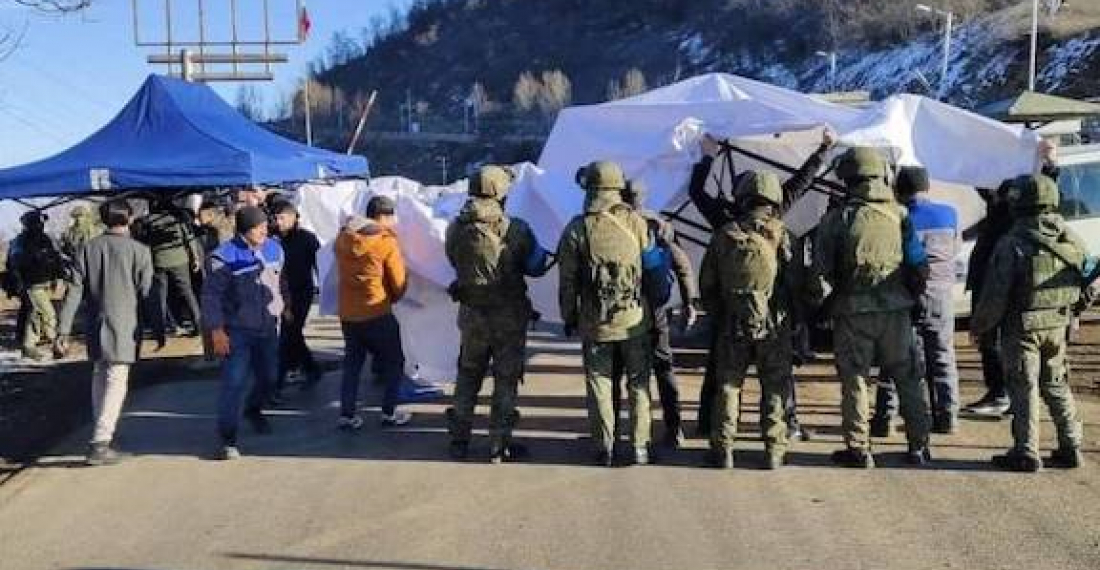
Azerbaijan has closed the Lachin corridor since December 12, 2022. Azerbaijani official rhetoric rejects the very existence of a blockade, sometimes claiming that the road is open for humanitarian cargo, and sometimes saying that it was the Russian troops that closed the corridor. The official line from Azerbaijan is the narrative that those blocking the corridor are "independent eco-activists exercising their civil rights to protest." However, the situation is apparent to anyone with a basic understanding of the Nagorno Karabakh conflict – Azerbaijan imposed a blockade on the self-proclaimed Nagorno Karabakh Republic.
There are different interpretations of why Azerbaijan did it, and why Baku continues the blockade despite calls from the international community to change its course. Some believe that Azerbaijan views the blockade as an effective tool to put pressure on Nagorno Karabakh Armenians and force as many of them out as possible. Others believe that the core target of the blockade is Armenia, and Azerbaijan wants to force Yerevan to sign a peace agreement recognizing the nonexistence of Nagorno Karabakh as an administrative-territorial unit, and granting the "Zangezur corridor" to Azerbaijan. Another explanation is related to Azerbaijani growing concerns about Russian activities. According to this argument, Baku believes Russia sent Ruben Vardanyan to Nagorno Karabakh to increase its influence there, and that the blockade signals to the Kremlin that Azerbaijan will not tolerate political control of Russia over Nagorno Karabakh.
The continuing blockade will not bring Armenia and Azerbaijan closer to the resumption of negotiations
One may agree or disagree with these explanations or put forward other versions. However, as the blockade reaches its two-month anniversary, experts in Armenia, Azerbaijan, and the outside world seek to understand the implications of the blockade and how it may end. For sure, the current situation does not contribute to establishing a conducive environment for Armenia – Azerbaijan peace negotiations. The peace process, which gained momentum in late September and early October 2022, entered a stalemate before the blockade started. The reasons for this impasse are not clear. However, one thing is certain – the continuing blockade of Nagorno Karabakh and the growing humanitarian crisis will not bring Armenia and Azerbaijan closer to the resumption of negotiations. It is difficult to perceive the possibility of restarting negotiations whilst Armenians in Nagorno Karabakh lack basic food, electricity, and gas supply.
The blockade of Nagorno Karabakh and the growing humanitarian crisis spoils the primary pillar of Azerbaijani claims in the negotiation process, according to which Baku is ready to provide all necessary rights and security guarantees to Nagorno Karabakh Armenians without granting them any special status. If Azerbaijan hopes to gain the trust of Armenians, efforts to bring them to the brink of starvation are not the best option to reach that goal.
The blockade of Nagorno Karabakh puts additional pressure on the Armenian government in its efforts to push forward the so-called "peace agenda." The Armenian leadership has spoken about the necessity to pursue a peace agenda since the June 2021 early parliamentary elections in Armenia. Azerbaijani aggression against Armenia in November 2021 and September 2022, and attacks against Nagorno Karabakh in March and August 2022 have significantly shattered any belief in Armenian society that lasting peace is possible with Azerbaijan. The recent moves by the Azerbaijani leadership to support the concept of so-called 'Western Azerbaijan" and the adoption of a strategy for the return of hundreds of thousands of Azerbaijanis to Armenia solidifies the belief in Armenia that Azerbaijan's strategic goal is not to end with Nagorno Karabakh, but to control, even if not to invade, the entire territory of Armenia.
Increased suspicions in Armenia about the viability of the peace process
All these perceptions create concerns among Armenian society that Armenia is being constantly threatened by large-scale invasion and that any peace negotiations with Azerbaijan are equal to the appeasement policy towards an aggressor, which will bring about tragic implications. Thus, especially after September 2022 Azerbaijani aggression against Armenia, the peace agenda and negotiations with Azerbaijan were unpopular in Armenian society. The Lachin blockade and Azerbaijan's efforts to reject even the existence of the blockade have added more suspicions in Armenia about the viability of the peace process. They have made the government's peace agenda less popular.
The Lachin blockade has put Russia, the EU, and the US in a complicated situation. Russia’s image in Armenia received a new blow, as many Armenians did not understand how Russia could not deal with a few hundred protestors blocking the Lachin Corridor. Many believe Russia did not want to end the blockade as it valued its relations with Azerbaijan and Turkey more than its alliance with Armenia. At the same time, some even argue that Russia is a co-organizer of the blockade with Azerbaijan to force Armenia to join the Russia - Belarus Union state or open the "Zangezur corridor."
Everyone, in one way or another, suffers from the blockade
It may seem that the current situation benefits the West, as they may stand-by and watch whilst Armenians are becoming increasingly anti-Russian. However, the blockade also damages the EU and the US image. Many in Armenia ask a simple question, if all talk about the primacy of democracy and human rights for the West is serious, then why have the individual western countries, or the EU as a whole, not imposed sanctions on Azerbaijan for bringing 120,000 civilians to the brink of starvation? For some people in Armenia, the answer is clear – the West appreciates Azerbaijani gas and oil much more than democracy and human rights, and this tarnishes the image of the West in Armenia.
Thus, Azerbaijan, Armenia, Russia, and the West, in one way or another, all suffer from the blockade. Ultimately, it is up to the Azerbaijani leadership to decide to re-open the road. There can be other factors influencing Baku's decision however, one thing is clear – continuing the Nagorno Karabakh blockade harms everyone, and all interested parties should take steps to end it.
Source: Benyamin Poghosyan is Senior research fellow, APRI – Armenia and the founder and Chairman of the Centre for Political and Economic Strategic Studies in Yerevan.
Photo: Azerbaijani activists have been blocking the Lachin corridor since 12 December 2022
The views expressed in opinion pieces and commentaries do not necessarily reflect the position of commonspace.eu or its partners