


Sergey Markedonov is a visiting fellow at the Center for Strategic and International Studies (CSIS), Russia and Eurasia Program, in Washington, DC
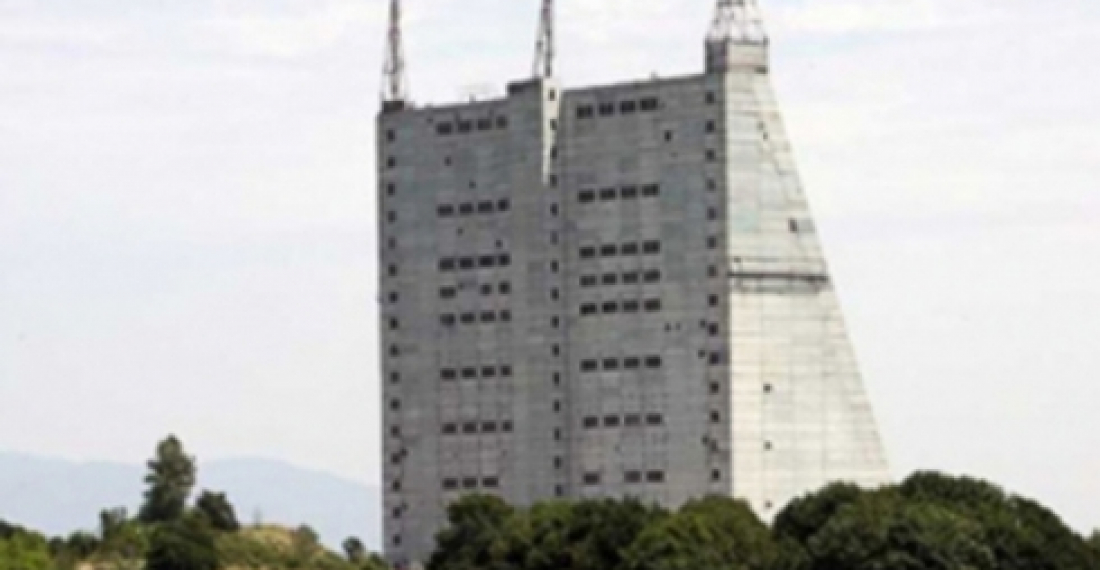
Since the beginning of 2012 Azerbaijan has been almost regularly present in the headlines of news agencies. Complex dynamics of bilateral relations with Iran, growing partnership with Israel, the engagement of Baku in the NATO projects, obtaining the UN Security Council non-permanent member status, the Nagorno-Karabakh conflict resolution and the problems of freedom of speech and human rights - these are some of the exhaustive list of issues that attract interest of politicians and experts. Among above-mentioned issues the perspectives of such an important strategic object, as the Gabala radar station (located in the Northern Azerbaijan) have the great significance.
The construction of this military object started in 1976, i.e. in the period of "Cold War" and global rivalry between USA and USSR. In 10 years it was launched. Before the Soviet Union dissolution the Radar was an important element of the National missile defense system (NMD). It was able to reliably register flights of aircrafts over a wide range of North Africa to Pakistan. After 1991 a very complex period of the former USSR property began (including military supplies and objects). In the relations between Russia and Azerbaijan over the Radar there were many, as a purely legal (formal), and political problems. As for the formalities, the independent Azerbaijan was not a party to the Anti-Ballistic Missile Treaty (ABMT), under which a country could not automatically transfer the other missile sites character. In a political sense, as after coming to power of representatives of the Azerbaijani Popular Front (APF), the Russian military presence was seen as a threat to national independence and the manifestation of the "continued occupation". Then, after Heydar Aliyev's returning to power emotions in relation to Russia greatly subsided (although the first official Russian President's visit to Baku took place in 2001, Boris Yeltsin had never visited newly independent Azerbaijan). However, the Russian military forces units have not been welcome. The significant role in this attitude formation belonged to the Nagorno-Karabakh conflict, in which Moscow's factor in the process of arms and military assistance to Armenia was too overestimated by Baku, although in reality in the process of "nationalization" of the former Soviet Army its supplies were used by both sides. Regardless, Azerbaijan didn't agree on the joint borders protection with the Russians. By the way, this step in the early 1990s was done not only by Armenia but also by Georgia. The continuing presence of Russia's "green caps" lasted till 1998. Anyway in May 1993, last units of the Russian 104th Airborne Division were withdrawn from Ganja, the second largest city of Azerbaijan. No other military units of the armed forces of Russia in Azerbaijan remained.
As a result, Moscow and Baku found a compromising solution which was dictated by the very pragmatic reasons. For Moscow, it was important to maintain important strategic objects of the former Soviet military infrastructure. Not for the alleged "imperial prestige," but for the banal savings of the financial and technical resources. For Baku, relations with Moscow have always been an important component of foreign policy. In contrast, Tbilisi (since 1998-1999) Azerbaijani diplomacy has tried not to put "all eggs in one basket," trying to balance between the West, Russia, Iran and Israel. In this context, the Gabala Radar was seen as an instrument of pressure on Moscow in the process of Nagorno-Karabakh resolution process. The Treaty signed in 2002 identified the Radar as the Azerbaijani property, leased to Russia at an annual fee of $7 million.
And today, the military and strategic value of this object is kept. Gabala station can register missile launches from Iran one of the first Radars. Today USA and its allies consider Tehran the most dangerous geopolitical puzzle. Thus controlling it means to be better prepared for any unexpected scenarios. Moreover the Radar covers also Turkey, Iraq, India, the Middle East region, whose geopolitical capitalization has risen sharply during the so-called "Arab spring." Hence both the regional countries as well as external actors are interested in it. However, the problem is that the lease of the station expires December 24, 2012. Moscow hopes to conclude negotiations to extend the lease until this mid-June, because legally the new Agreement should be ready in six months before the termination of the old contract. If successful, the military facility will be operated by Russia until 2025.
But now it's too early to discuss success or failure of Russian diplomacy. In early April, 2012 Russia's Foreign Minister Sergei Lavrov visited Baku and Yerevan. Although it had a symbolic character (it was dedicated to the twentieth anniversary of establishing diplomatic relations with Armenia and Azerbaijan) the visit included a lot of not only ritual, but also meaningful events. So, in Baku, the Russian minister held talks on the Gabala radar station. But finally neither he nor Elmar Mamedyarov, his Azerbaijani counterpart showed any concrete results for the public. Moreover in the media the fact that Baku has asked Moscow to increase the lease to $ 300 million a year (almost in 43 times!) has been widely circulating. Russia's Deputy Defense Minister Anatoly Antonov officially denied this information, stating that the process of harmonization of the positions has been provided in a constructive way. But different statements by Azerbaijani officials have strengthened those rumors. So last November Deputy Foreign Minister Araz Azimov said that the lease sum existing now is "inadequate to the value and importance of radar for the interests of Russia, regional and international security," and "does not meet the threats and risks to Azerbaijan, allowing the operation of this radar on its territory." In any case, Moscow is trying to defuse the situation and reassure observers. On April 18, 2012 Russia's Deputy Foreign Minister Sergei Ryabkov compared the negotiation process on the Gabala radar station with the "cultivation of grain," and asked the media to give a chance for professional diplomats' work.
Hence it is necessary to identify new "rules of the game"; whether the agreement with Russia, renewed, terminated or substantially reformatted with the possible involvement of "third parties". In the end of 2011 Azerbaijani President Ilham Aliyev approved the composition of the group negotiating on the Radar. Shortly before that, Russian Defense Minister Anatoly Serdyukov stated that Moscow had prepared its proposals to modernize the station, which would include not only technical but also the environmental aspects.
Russia's interest in this situation is clear. Talks with the U.S. on missile defense are at an impasse. Today, experts are very skeptical regarding the participation of Russia in the upcoming Russia-NATO summit in Chicago, because they don't see serious progress in the negotiations on those issues. In this way "Gabala card" looks like an effective instrument for bargaining. Incidentally, back in 2007, Vladimir Putin tried to play it by proposing to the summit of "Big Eight" in Heiligendamm to use Russian radar in Azerbaijan as an alternative to radar tracking, which according to the plans of George W. Bush administration was supposed to be located in the Czech Republic. That time Putin's initiative was not supported. Moreover it was perceived with skepticism, as Russia's instrument of U.S. opposition to its European allies (especially the members of the so-called "new Europe"). Meanwhile, the Gabala radar station has an important regional dimension in addition to the "rocket" and "global" ones. After the "August war" of 2008, Moscow completely lost Georgia (excluding two partially recognized entities). Armenia still remains a major military and strategic ally of Russia in the region. But the interaction with the Allies in the absence of a common border and the hostility of the Georgian side is extremely difficult. In this regard the preservation of the military presence in Azerbaijan gives Russia an extra "anchor", which enables to provide (albeit insignificant) the influence on the foreign policy priorities of Baku. Do not forget that the partnership between Moscow and Baku has also domestic political significance for Kremlin, because the Azerbaijani section of the state border is adjacent to Dagestan, the most unstable region of Russia.
The attention of the U.S. (and NATO) to the radar station in Gabala is also understandable. Integration of this station into the U.S. missile defense system in Europe would make it invulnerable (at least, much better protected) from the missile threat from Iran. Add to this some phobias and fears of the Western politicians about the Russian military and political presence in the former Soviet Union republics. Its minimization is seen in Washington and Brussels as a symbol of strengthening the national independence, which is thought of as synonymous with the democratization of the post-Soviet/Eurasian states. In this regard, it was no coincidence that at the beginning of 2012 Azerbaijan hosted the visit of a delegation of representatives from the Department of State and Pentagon, which, among other things, included discussion of the Radar perspectives.
Naturally, in this situation, Baku will attempt to extract the maximum benefit. On the one hand, Azerbaijan is interested in increasing the rent. However the problem could not be restricted by financial aspects and fiscal reasons. It concerns the increasing geopolitical significance. Money amounts in this case act as tools for the verbalization of geopolitical interests. Baku will attempt to push the solution to their advantage, exploring the limits to which Moscow can reach. The Nagorno-Karabakh issue will also be discussed in the context of the Gabala. According to Azerbaijani military expert Yasar Jafarli, his country is unlikely to make concessions to the U.S. on the issue of the radar to the detriment of Russia. It is likely that we will observe a complicated series of negotiations and backroom trading. As for Moscow, in addition to financial questions it will raise the issue in the negotiations guarantees the functioning of the station in the Russian interests.
Of course there are no reasons for ignoring some other interested players, especially Iran. Tehran has repeatedly stated that any penetration of the Caucasus "non-regional players" is contrary to its interests. And in extreme cases reaction would follow. It is unlikely that Baku will not understand it, in response to these or other U.S. arguments. Especially since the events of 2008 the West's reputation as a defender of its allies in Eurasia was strongly stained. In this situation, Azerbaijani diplomacy would prefer not to tease Tehran on abrupt change of partners in the operation of the Radar.
However, all the cards could be mixed up by some other factors with no direct influence on the Gabala negotiations process like tensions between Tehran and the West, Iran and Israel as well as general situation in the Middle East. Any new aggravation may entail the increasing importance of Azerbaijan as a whole and separate object in its territory in particular. In the meantime Moscow and Baku concentrate on more profitable decisions studying strong and weak sides of each other.



