The danger of deadlock: The imperative for European Union engagemnt in the Nagorno-Karabakh conflict.
 After several years of its most serious economic crisis in its history, the European Union (EU) remains hampered by limited resources, internal dissension and external challenges. More broadly, there is also a related set of pressing problems, ranging from internal instability in the aftermath of austerity measures to lingering disparities and economic imbalance within the euro zone. In terms of foreign policy, the EU has weathered a series of immediate crises, including the threats from Iran's nuclear programme, the Syrian civil war and the broader insecurity of the Middle East.
Yet the EU still stands as an important transformative power, with its unique values-based approach offering a decisive value-added contribution to security and stability. For the EU, its role as a transformative power is based on its reliance on "values as influence," as the nature of its values-based appeal stems from the relevance of its founding principles and its commitment to democracy and human rights. But for the strategically significant Nagorno Karabakh conflict, the EU has under-performed, with a policy approach largely perceived as both inconsistent and incomplete.
The EU's "Benign Neglect" of Nagorno Karabakh
More specifically, EU policy toward Nagorno Karabakh has been defined more as a policy of "benign neglect." Despite a degree of institutional investment by the EU and an individual interest in the region among some member states, there is now an important imperative for greater EU engagement in the Nagorno Karabakh conflict, for several reasons. First, EU engagement is now an imperative due to the deteriorating security situation that, if left unaddressed, will only escalate into a more immediate threat to broader regional stability. And as the fifth anniversary of the Georgia-Russia war approaches, there needs to be greater concern over the increasing tension and inherent instability from the unresolved Nagorno Karabakh conflict.
In contrast to the August 2008 war between Georgia and Russia, however, the escalating risk of renewed hostilities over Karabakh has been obvious for sometime, with no excuse for complacency by the international community. And in light of the current geopolitical landscape, with the US generally over-extended, it is the EU who stands out as the most effective actor, with a new sense of responsibility to engage in defusing the insecurity inherent in the Karabakh conflict. In light of the trend of a possible "war by accident," based on threat misperception and miscalculation rather than any official declaration of war, the outlook for security and stability in the South Caucasus now depends on greater EU engagement.
Fresh Opening & New Opportunity
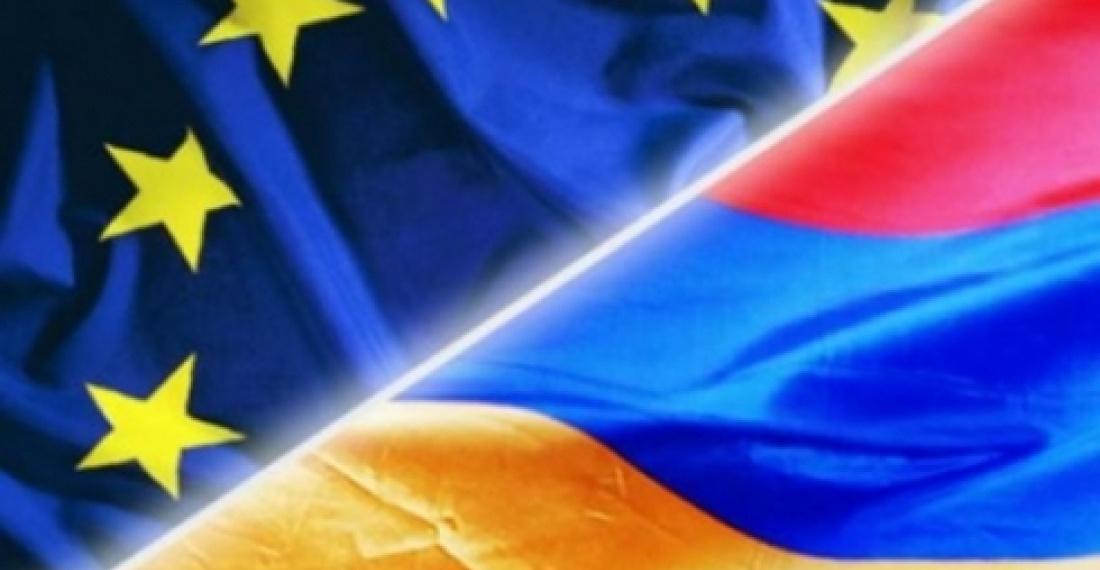
A second factor contributing to the need for EU engagement is a fresh opening and a new opportunity for the EU, especially as the November 2013 Vilnius Summit approaches. More specifically, the EU has garnered a significant degree of greater leverage in Armenia, as the Armenian leadership has prudently prioritized ongoing negotiations with the European Union (EU) to conclude an "Association Agreement," which includes a Deep and Comprehensive Free Trade Agreement (DCFTA), and a Visa Facilitation and Readmission Agreement.
This also endows the EU with much greater legitimacy and leverage, evident in economic terms, with the EU emerging over the past few years as Armenia's main trading partner, and stemming from the Armenian government's eagerness to not miss this strategic opportunity. And Armenia's motivation is based on a more pragmatic recognition of the threats of isolation and insignificance, exacerbated by the closure of two of the country's four borders and from the burden of the unresolved Karabakh conflict. Further, Armenia has also been steadily widening its own strategic options, and has pursued a more prudent policy of engaging the West. Moreover, although Armenia has traditionally relied on its "strategic partnership" with Russia for security, the gradual expansion of Russian power and influence in the region has tended to only magnify the danger of Armenia's over-dependence on Russia.
The need for dynamic diplomacy
Third, the EU needs to engage in the region by adopting a more assertive and dynamic approach aimed at challenging the diplomatic deadlock over the Nagorno Karabakh conflict. Since the early 1990s, international mediation of the unresolved Karabakh conflict has the sole domain of the Organization for Security and Cooperation in Europe (OSCE), through the so-called Minsk Group, a tripartite body co-chaired by France, Russia and the United States. Yet for the past several years, there has been little, if any progress in the negotiations over Karabakh. Obviously, much of the blame can be attributed to the lack of political will in either Armenia or Azerbaijan, as the two sides have remained simply too far apart diplomatically to offer any real chance for conflict resolution. And any criticism of the OSCE Minsk Group must be balanced by the fact that any successful mediation depends first and foremost on a recognition and desire for the peaceful resolution of the conflict by the parties to the conflict themselves.
Yet the current outlook for the Karabakh peace process remains fairly bleak, with no real expectations for any breakthrough. Overall, the current state of the peace process is now based on a "back to basics" policy, with two main objectives: to maintain the Armenian-Azerbaijani dialogue on the presidential and ministerial levels and to prevent the outbreak of hostilities while strengthening an informal cease-fire. In fact, the deadlock has tended to only foster more entrenched positions on both sides, as Azerbaijan is becoming dangerously reckless in expressing its frustration and Armenia is more hesitant to admit the need for compromise and concession.
Against this backdrop, as several leading analysts have also recommended, the EU needs to commit to addressing the Karabakh conflict. And as several EU member states have already recognized, any continued policy neglect of the unresolved Karabakh conflict will only exacerbate an already deteriorating security situation and may undermine the outlook for durable stability over the medium term. For example, as Swedish Foreign Minister Carl Bildt accurately warned, "Karabakh is the only conflict in wider Europe where the EU has no role to play whatsoever."
But while any such EU diplomatic engagement must be careful to stand behind the OSCE Minsk Group, there are several ways to engage and bolster the mediation effort while not harming the mediation mechanism. And in light of a wide array of areas and aspects of mediation, dialogue and confidence-building measures that have not been fully explored or adequately attempted, the EU offers an impressive "toolbox" of measures and instruments that can only fill the void in terms of bolstering and building on the diplomatic efforts to mediate the Karabakh conflict. Moreover, at the very least, such EU efforts may only contribute to a more strategic focus on "conflict transformation," as an essential prerequisite for eventual conflict resolution.
The Broader Context
The context for a call for greater EU diplomatic engagement in the Nagorno Karabakh conflict is neither new nor novel, and conforms to the official EU view. And the call for greater EU engagement is not overly ambitious or unrealistic either, especially as the EU is a global actor with a stated commitment to "promoting integration as a means to support peace and prosperity and to overcome conflicts around the world." Further, the EU's Extern Action Service was itself initially created with a core mission of "peace building and conflict prevention." Within this context, therefore, the EU should consider specific recommendations regarding the Karabakh conflict.
Recommendations for the EU
Carry out conflict analysis. The EU needs to do more in terms of assessing the dynamic nature and shifting aspects of this conflict by relying on the systematic use of conflict analysis in three main areas: (1) to monitor, measure and map the risk of renewed hostilities as tension mounts (or wanes); (2) to identify new trends and emerging actors in the conflict, both external and internal; and (3) to expand the range of policy options and measures, while also adopting a more "conflict-sensitive" programming of external assistance linked to incentives for peace.
Deepen dialogue. As demonstrated by the model of the EU-facilitated Belgrade-Pristina dialogue, the EU should deploy its Mediation Support Team to deepen dialogue as an element of preventive diplomacy on the ground, and to empower civil society organizations that have been excluded from the mediation effort. The EU Mediation Support Team offers a unique range of attributes that have never been applied to Karabakh, but which cover a wide range of practical tools, such as coaching and training, ranging from tailor made on-demand coaching for EU personnel to specialized mediation training, knowledge management, in terms of lessons learned, for example, and much-needed operational and logistical support.
Enhance, empower and expand the EUSR. On both an institutional and individual level, the European Union Special Representative (EUSR) demonstrates the EU's strategic commitment, as both a position and person capable of cross-border engagement. Similar to the model of US "presidential envoys," the EUSR conveys an important degree of diplomatic standing and political credibility. In contrast to the EU ambassadors, who are limited to a single country, the EU Special Representatives are tasked with specific issues, conflict areas or regions, reporting directly to the High Representative of the EU for Foreign Affairs and Security Policy.
Moreover, by serving as an official "voice" and "face" for the EU and its policies, the EUSR is endowed with an active political presence capable of using "shuttle diplomacy" to surpass geographic and jurisdictional limits and boundaries, engaging across the conflict divide and even across the politically sensitive government-opposition political division within both Armenia and Azerbaijan, when necessary. Further, there are elements of the wider mandate for the EUSR that were never sufficiently developed, including the need to implement the mandate in terms of "engaging constructively with main interested actors concerning the region, encouraging and supporting further cooperation, and, as appropriate, their neighboring countries."
Thus, only by engaging in the Nagorno Karabakh conflict, and using its new-found leverage, can the EU fulfill its role as a true transformative power, and more effectively contributing to greater stability and security in the South Caucasus region.
Richard Giragosian is the founding director of the Regional Studies Center (RSC), an independent think tank in Armenia. he contributed this article to the Summer 2013 edition of commonspaceextra.
Grevi, Giovanni and Daniel Keohane, Ed.s, Challenges for European Foreign Policy in 2013. Renewing the EU's role in the world, FRIDE, 2013. Pp. 17-18.
For more, see Richard Giragosian, "Soft and Hard Security in the South Caucasus and Nagorno-Karabakh: A Euro-Atlantic Perspective," in Kambeck, Michael and Sargis Ghazaryan, Ed.s, Europe's Next Avoidable War. Nagorno-Karabakh, (London: Palgrave Macmillan, 2013).
For more, see: Giragosian, Richard, "The Imperative to Ease Tension in the South Caucasus," Caucasus Edition. Journal of Conflict Transformation, December 15, 2012.
The EU's Deep and Comprehensive Free Trade Agreement (DCFTA) represents more than a standard free trade agreement, covering not only the liberalization of trade in all areas, by lifting customs barriers and trade quotas, but also the harmonization of Armenia's trade-related legislation with EU standards and the acquis communautaire.
The OSCE was formerly known as the Commission on Security and Cooperation in Europe (CSCE).
Sammut, Dennis, "Democratisation, modernisation and globalisation. The EU and the hard tasks facing the three South Caucasus nations," Europe Policy Centre (EPC) Policy Brief, February 14, 2013.
For example, see: Sammut, Dennis and Amanda Paul, "Addressing the security challenges in the South Caucasus. The case for a comprehensive, multilateral and inclusive approach," Europe Policy Centre (EPC) Policy Brief, March 2011.
Author meeting with Swedish Foreign Minister Carl Bildt, June 14, 2011, Yerevan, Armenia.
For a more complete look at recommendations, see: Giragosian, Richard, "Challenges for the EU in the resolution of the Nagorno-Karabakh conflict: An Armenian Perspective," European Policy Centre (EPC) Policy Brief, 17 June 2013.