Opinion: The Madrid Principles are Dead. Long Live the Madrid Principles!

This article by Dr. Laurence Broers (Programme Associate) and Siegfried Woeber (Caucasus Projects Manager) at Conciliation Resources was originally published in Russian in the May 2015 issue of the journal Analyticon.

Perhaps few peace proposals offering ways out of decades-long deadlock have as few friends as the "Madrid Principles". Across the Armenian-Azerbaijani conflict, in Baku, Stepanakert and Yerevan, there is a negative consensus among civil society activists, analysts and the informed public alike. The lack of enthusiasm vis-à-vis the Madrid Principles is ironic, because they are by far the most 'durable' of the peace proposals generated by the OSCE Minsk Group, the body mandated to mediate between Armenia and Azerbaijan in the Nagorny Karabakh conflict. They have lain on the negotiating table for some 10 years. This contrasts with the life-spans of previous proposals, which can be counted in months. The longevity of the Madrid Principles assumes even more importance in the context of the severely worsening situation around the Line of Contact (LOC) over the last 18 months or so. What explains the longevity of the Madrid Principles? Why is this peace proposal still with us, neither accepted nor rejected, when its predecessors were taken off the negotiation table in fairly rapid succession?

Three answers might be put forward here. The first is that the Madrid Principles offer some qualitative advantage in the way that they address the concerns and interests of the conflicting parties. For some observers the virtue of the Madrid Principles is that they overcome the fundamental dichotomy between package and step-by-step approaches that shaped early approaches to resolving the Karabakh conflict in the late 1990s. Through the innovations of interim status and a popular vote on final status, they ostensibly allow for normalisation to precede an already-agreed final status determination process, thereby incorporating elements of both the package and step-by-step approaches. But it seems that if in theory the Madrid Principles represent an attempt to bridge differences in the preferred methodologies of the sides, this is not seen in terms of two conflicting parties meeting each other halfway, but in zero-sum terms as dilution of preferred solutions. Moreover, even if current and former senior policymakers and negotiators in Yerevan and Baku acknowledge some virtue in the Madrid Principles, this case has not been made with wider publics. Crucially, it has not been made in Nagorny Karabakh (NK) either, where the Madrid Principles are widely viewed with hostility.      

A second answer is that the presidents of Azerbaijan and Armenia themselves find much that they can agree on in the Madrid Principles. The Principles have already passed through multiple iterations of negotiations, they have been broken down, dissected, and concessions and compromises on many issues theoretically agreed. No-one forces the presidents to retain this proposal. There appears to be implicit agreement on many of the basics: Armenian withdrawals from most of the territories around the former NKAO, rights of return or compensation for refugees and internally displaced communities, a new security package involving an international presence of some kind, and special arrangements guaranteeing secure access along key routes, such as the Lachin road connecting Armenia and NK. Yet it seems that when it comes to the kernel of the conflict, the status of NK, the specification of the details remains elusive. The above-mentioned innovations of the Madrid Principles - an interim status for NK, and the terms of a new plebiscite or popular vote to determine its final status - remain vague.

A third explanation of the longevity of the Madrid Principles is that their significance as a document addressing the content of a peace agreement has been overtaken by their utility as a document legitimating a fragile peace process. A wide range of observers agree that the Karabakh conflict, and in particular the Minsk Group, constitute one small theatre of cooperation against a broader canvas of polarisation, confrontation and rivalry across the former Soviet space. It is in no-one's interests to see the final demise of the Minsk Group. Russian and Western powers continue to see value in the channel of communication, information exchange and cooperation that the Minsk Process represents. President Vladimir Putin has also been able to derive individual credit and affirmation from a mediation role, convening the Armenian and Azerbaijani presidents to meet when LOC confrontation threatens to spin out of control - as he did in 2014 at Sochi. For the Armenian and Azerbaijani presidents, the Minsk Process is one domain where their legitimacy and the nature of their rule is rarely questioned. They enjoy the benefits of a serious mediation process, featuring three members of the United Nations Security Council and three major world powers, whose ear Armenia and Azerbaijan are able to access through the Minsk Group.

In a fluid and risk-laden regional environment, the Minsk Group has become a reliable constant, and all actors find value in its continuation. Yet this functionality might have little to do - any more - with the actual agenda of constructing a peace agreement. At the same time as the Madrid Principles continue to linger on the negotiating table, power-holders in Armenia and Azerbaijan tolerate or actively support policies that work directly against the potential for the Madrid Principles to one day be successfully implemented. Whether it is militarisation, LOC tensions or the embedding of a de-facto administration in expansive borders in Nagorny Karabakh, the passage of time is being marked in ever more solid obstacles to the vision of peace contained in the Madrid Principles.

As one participant in a meeting discussing the Madrid Principles organised by London-based NGO Conciliation Resources observed, "we are on the verge of the point where the situation has so changed, so evolved, that the language and categories we are using are outmoded and no longer adequate to describe the realities we face." In this context the first two explanations as to the longevity of the Madrid Principles - their qualitative addressing of problems on the ground and implicit agreement on a critical mass of issues - recede in significance. As facts on the ground change, so do interests, incentives and constraints. What might be left, at some point in the near future, is the hollow form of a peace process bereft of relevant substance.

Source: This article was written by Dr. Laurence Broers (Programme Associate) and Siegfried Woeber (Caucasus Projects Manager) at Conciliation Resources, and was originally published in Russian in the May 2015 issue of the journal Analyticon. It is published for the first time in English on commonspace.eu. The authors prepared this article as part of Conciliation Resources'' work within the framework of the EU-funded 'European Partnership for the Peaceful Settlement of the Conflict over Nagorno-Karabakh (EPNK)'. The views presented here cannot be taken to reflect the views of the European Union.  

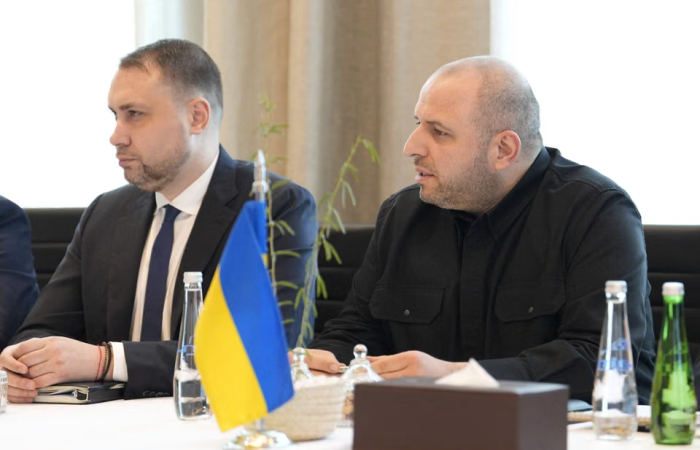
Photo: The current co-Chair of the OSCE Minsk Process, representing France, Russia and the United States. (Picture courtesy of Ambassador James Warlick)


As part of the EU-funded "European Partnership for a Peaceful Resolution of the Nagorno Karabakh Conflict (EPNK)", Conciliation Resources organised a number of expert meetings in its "Karabakh Contact Group" format to discuss alternative ideas concerning displacement, status, access and security/Lachin corridor, and international peacekeeping and security provision. In roundtables in the region in early 2015, local civil society experts were invited to elaborate their views on the Madrid Principles and the current status of the peace process. 



Latest

Editor's choice
Monday Commentary
Monday Commentary: PEACE IN OUR TIME?

Monday Commentary: PEACE IN OUR TIME?

Making peace between Armenia and Azerbaijan was never going to be simple, nor easy, nor quick. It is taking time, writes Dennis Sammut in this Monday Commentary. “There is a sense of realism coming from the leaders of the two countries – President Ilham Aliyev of Azerbaijan and prime minister Nikol Pashinyan of Armenia, that frankly, is necessary and welcome”, he writes. At a time when conflicts are raging all over the world – from Ukraine to the Gulf, from Africa to South Asia, the prospect that Armenia and Azerbaijan had finally, after decades of conflict that left thousands of dead and many more displaced, decided on embarking on a journey of peace was welcomed. Peace between Armenia and Azerbaijan can be top-down up to a point. Both leaders have spent political capital preparing for a peace deal. But both are aware that their people are not ready for peace yet. In fact, in Armenia, most of the elite are negative toward a peace deal with Azerbaijan. Pashinyan needs time to persuade his countryfolk. That is why 2031 is realistic. Ilham Aliyev runs a tighter shop, but he is also not immune to public opinion. Every time someone hits a landmine in Karabakh, which unfortunately happens often, peace comes into question. Which is why Aliyev chooses to sound hardline, more often than not. In pursuing the peace agenda, both Aliyev and Pashinyan need to proceed cautiously. But they are right in making peace the central issue in their agenda. It is the main issue, and the one that will define them in history. So forward, cautiously but resolutely! In pursuing the peace agenda, Aliyev and Pashinyan need to be supported clearly and unambiguously. There are too many people in Baku and Yerevan who are sitting on the sides, waiting. The international community is not doing enough. It is time to be counted. Otherwise, the spoilers will win, and the region will go back to its bad habits. (Click the image to read the full commentary).
Editor's choice
News
 Abu Dhabi Talks Resume as Russia Rejects Ceasefire and Disagreements Over Territory Persist

Abu Dhabi Talks Resume as Russia Rejects Ceasefire and Disagreements Over Territory Persist

Trilateral negotiations between Russia, Ukraine and the United States resumed in Abu Dhabi on Wednesday, November 11. The second day of meetings follows an initial round of discussions that received positive assessments from Kyiv and Washington but exposed continuing divisions over the terms of a potential peace agreement. The talks, brokered by the United States, address prisoner exchanges, security guarantees and possible de-escalation, while territorial disputes remain the central obstacle to an agreement. Ukrainian President Volodymyr Zelenskyy described Tuesday's discussions as “constructive and quite substantive”, while US Secretary of State Marco Rubio referred to them as “very productive”. US envoys Jared Kushner and Steve Witkoff reportedly told participants that Washington had narrowed the differences between the two sides. Kushner also raised the possibility of developing a new European security framework. However, the US administration has provided few details about concrete progress. Meanwhile, Russian Foreign Minister Sergei Lavrov rejected the prospect of a ceasefire, accusing European countries of seeking a temporary truce to facilitate the deployment of foreign troops to Ukraine. He also dismissed the presence of European representatives in Abu Dhabi, saying: “Well, they flew to Abu Dhabi. Let them sit there.” European officials have held separate consultations with Ukrainian and American representatives but remain excluded from the trilateral negotiations, despite Washington signalling that their participation could eventually be considered. Territorial control seems to be an issue that the parties are unable to resolve. Russia continues to demand the entire Donbas region, including territories it has not captured, while Ukraine refuses to relinquish its land. A senior US official indicated that both sides had demonstrated some flexibility privately, but stressed that territorial arrangements could not be resolved before Ukraine's post-war security guarantees were established. Simultaneously, military escalation continues. On November 11, Ukrainian Prime Minister Sergii Koretskyi reported Russian strikes against six major electricity substations across four central regions, as well as railway infrastructure. Russia also reported targeting Ukrainian military-related facilities and a cargo vessel near Odesa. Meanwhile, NATO fighter jets were activated following overnight drone alerts in Lithuania, Latvia and Estonia. European divisions over continued assistance to Kyiv further complicate the diplomatic environment. Germany's Chancellor Friedrich Merz faced opposition from Slovakia, Czechia, Hungary and Bulgaria after proposing to link the EU's next long-term budget to additional financial support for Ukraine. Conversely, Denmark announced a €643 million military assistance package and €20 million for Ukraine's energy sector on Tuesday. As negotiations continue, the contrasting positions of Moscow, Kyiv and their Western partners highlight the considerable obstacles to reaching a settlement. The discussions have opened diplomatic channels, but fundamental disagreements over territory, security arrangements and Europe's future security architecture remain unresolved.

Popular

Editor's choice
Monday Commentary
Monday Commentary: European-Azerbaijan relations need an intensive and multifaceted dialogue that is frank and honest

Monday Commentary: European-Azerbaijan relations need an intensive and multifaceted dialogue that is frank and honest

Last week I visited Baku, Azerbaijan. My visit was relatively short, but very intensive, and had many meetings with stakeholders and colleagues. When I arrived in Baku first time in 1996,  Azerbaijan was a different country: weak, poor, and shaken by defeat in war. For thirty year the Karabakh issue dominated the agenda: the political agenda but also the popular mindset. Now, thirty years later, Azerbaijan has returned to Karabakh, and peace with Armenia is on the horizon. It is a new era for Armenia-Azerbaijan relations, for the South Caucasus, but also for Europe.  But we cannot be complacent: the Peace agreement has been initialed but not signed; borders remain closed; TRIPP is ambitious but remains an idea; and there are spoilers who want to turn the clock back. We must not allow them, and in this Europe and Azerbaijan must work together. Europe’ vanguard organization is the European Union – it is a free union of 27 member states; it is a strong global economic force, and increasingly a diplomatic and military force too. But it remains “work in progress” and can often appear dysfunctional. It often lacks collective and institutional memory. In its dealings with Azerbaijan the EU has made many mistakes – not least opening the delegation here late – in 2008. It sometimes appears condescending. Some utterances from the European Parliament and from some quarters in some member states are not understandable even for me. They irritate the Azerbaijanis, but serve no other purpose But Azerbaijan has also not handled relations with the EU well. It has failed to respond when the hand of friendship reached out; and it confused irritating actions, sometimes by well-meaning people; sometimes by outright spoilers, with strategic action. In short, EU-Azerbaijan relations have suffered from a lack of proper dialogue. This dialogue must be frank, honest and multi-faceted involving different segments of society on both sides.   Is Azerbaijan Europe? When Azerbaijan applied to join the Council of Europe in the 1990s, there were some who opposed, saying this was not Europe. I was one of the people who argued that Armenia and Azerbaijan may be on the periphery of the continent geographically, but were European in essence. Certainly their elites. During the discussion on 4 September in Baku, my friend Farhad Mammedov, mentioned that Azerbaijan is not interested in joining the EU, and was now close to the Central Asian countries in the 5 plus 1 format. Neither things mean that Azerbaijan is not Europe. There are several European countries that are not in the EU, and do not want to be, for example Norway and Switzerland. Iceland has recently voted to stay out of the EU. The UK was a member and left. Europe is bigger than the EU, and the holding of the European Political Community summit in Baku in 2027 proves that. Despite all the rhetoric, I never heard the president of Azerbaijan  saying that Azerbaijan is not Europe, nor have I heard any European president say it either. Not wanting to join the EU and forging close relations with neighbouring regions does not make Azerbaijan any less European. It is only logical that when Europeans talk to Azerbaijan they talk like family. The conversation is often frank. It must also be honest, and Europeans need always to remember this too. A frank, honest and multi-faceted dialogue A frank, honest and multifaceted dialogue will contribute to relations between Azerbaijan and the rest of Europe: it will avoid misperception, which unfortunately is very common on both sides; it will provide a forum where problems can be discussed and resolved, and it will increase mutual trust, so that together common problems can be addressed. (click image to read the full Monday Commentary)
Editor's choice
Monday Commentary
Monday Commentary: “The barren rocks of Aden” and “These lands of Yemen are so ruthless”

Monday Commentary: “The barren rocks of Aden” and “These lands of Yemen are so ruthless”

There are two early 20th-century tunes that mark foreign attempts to occupy and “pacify” Yemen. The Scottish tune “The barren rocks of Aden” marks the mobilisation of Highland soldiers, enlisted to be deployed to the Yemeni port of Aden, that in 1837 became the last colony to be incorporated into the British Empire. The tune talks of the harshness of the terrain, but is celebratory, It was even played as a farewell tune to Sir William Luce at the parade in Sharjah celebrating his end as “British Viceroy” in the Middle East in 1966. The second tune is an Anatolian lament. As Ilker Sezer reminded us this weekend, in his weekly feature on “Turkiye Today”, it “mourns the tragic fate of Ottoman soldiers dispatched to the harsh, remote deserts of Yemen during the fall of the empire, young men who marched away from their villages and never returned home. Most of their names, and numbers, were never recorded. Yet, their fate left a mark on the Turkish psyche.” Subsequent invaders have discovered that Yemen is a grave that cannot be overcome by the strength of modern technology, and that whilst Yemeni society is splintered and divided, building a reliable alliance with Yemeni factions is difficult. These are the harsh lessons facing Saudi Arabia, as the Kingdom faces its biggest challenge in its modern history. The leadership of the Kingdom now has to respond decisively. At stake is their very credibility. This is likely to be a long and messy conflict. Saudi military objectives need to be focused: to box in the Houthis rather than destroy them. This is likely to include: (a) regaining territory lost on the Red Sea coast; (b) control over Bab el Mandeb Strait; (c) some kind of cordon sanitaire on the Saudi-Yemeni border; and if things go well (d) the capture of Sanaa. All this would not eliminate the Houthi problem, but it will contain it. In the end the Saudis will have to continue managing Yemen with a mixture of carrot and stick. For the moment, the stick is likely, but the carrot cannot be forgotten either. (click the image to read the Monday Commentary in full)