Fighting intensifies in Yemen after Houthis target Saudi Arabia

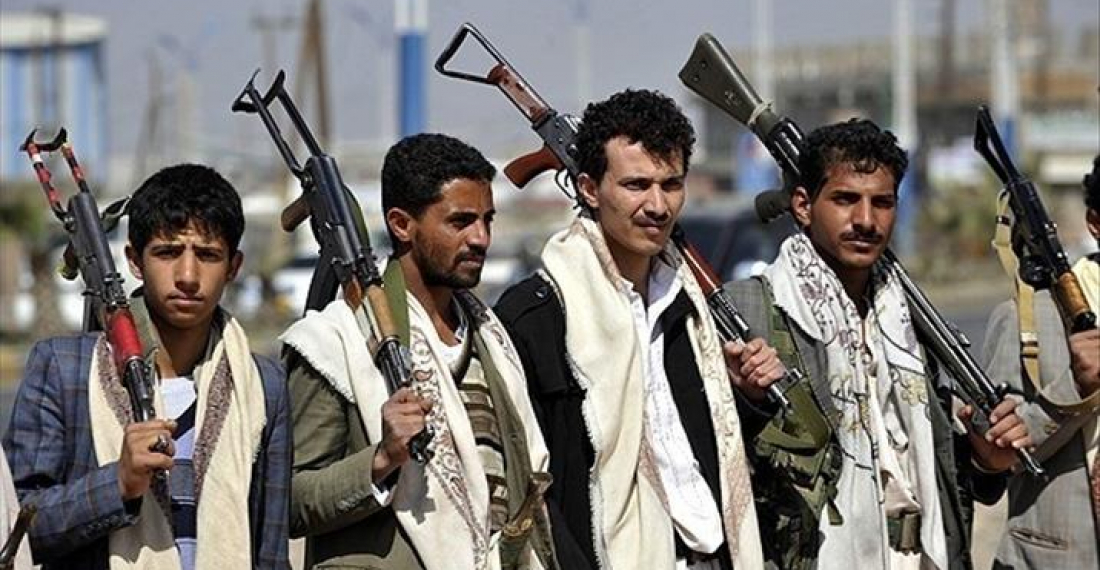
Saudi Arabia has accused Yemen’s Houthi rebels of launching attacks on civilian and economic sites in the kingdom, wounding at least 73 civilians, including women and children.

The accusation came on Tuesday as fighting intensiefied in Yemen, where the Saudi-backed, internationally recognised government has launched a counteroffensive to retake territory from the Iran-backed Houthis.

Major-General Turki al-Maliki, the spokesman for the Saudi-led coalition fighting in Yemen, said in a statement that the Houthi attacks had hit civilian and economic sites in the provinces of Abha, Khamis Mushait, Jizan and Najran.

He did not specify when the attacks took place.

Al-Maliki described the attacks as a “dangerous escalation” and a “blatant violation” of Saudi Arabia’s sovereignty, warning that they posed a direct threat to the kingdom’s citizens and residents.

He said the coalition would take “all necessary operational measures” to confront the attacks and act against the sources of the threat.

The Saudi Ministry of Energy said in a separate statement that several “energy sector facilities and installations” in southern areas of the kingdom were hit early on Tuesday.

The attacks wounded a “number of citizens and residents” and sparked “fires at several locations”, forcing a “temporary halt in some operations”, the statement said.

Saudi’s Ministry of Foreign Affairs said in a statement that Riyadh would “take all necessary measures to defend its sovereignty”, demanding the Houthis halt their attacks.

Russia also weighed in on the Houthis’ latest attacks on Saudi Arabia.

During talks with his Saudi counterpart Prince Faisal bin Farhan Al Saud, Russian Foreign Minister Sergey Lavrov said that Houthi attacks on Saudi Arabia were counterproductive and were damaging the global economy.

Lavrov said it was unacceptable to resolve these issues by military means.

The Houthis released a statement later on Tuesday, saying the attacks were in response to more than 120 strikes launched by Saudi Arabia on Yemen in the last three days.

“Yemeni armed forces carried out a large-scale, long-range military operation … using dozens of ballistic missiles and drones,” the military’s spokesman Yahya Saree said.

Houthi-linked media also accused Saudi Arabia of carrying out a series of strikes in Taiz province.

“The Saudi aggression launched a series of raids on Al-Waziyah district” in Taiz province, Almasirah television claimed.

Earlier, the group had accused Saudi Arabia of carrying out an air strike on a prison in al-Hazm, in the northern al-Jawf governorate, killing at least seven people. It said the “ongoing Saudi aggression against Yemen will not go unpunished”.

Riyadh has not commented on the allegation.

Yemen has been mired in conflict since the Houthis seized the capital Sanaa in 2014, prompting a Saudi-led military intervention the following year.

Fighting between the two sides largely halted after a United Nations-brokered truce in 2022, but resumed following the war that the United States and Israel launched against Iran in February.

Hostilities restarted in July when the Houthis launched missiles and drones towards Saudi Arabia’s Abha international airport, following an attack on Sanaa airport. Later that month, the Houthis announced a naval blockade against Saudi Arabia and began attacking Saudi-linked shipping in the Red Sea.

On Thursday, the Houthis launched a major offensive, attempting to advance through western Taiz and southern Hodeidah towards the port city of al-Makha (Mocha) along the Bab al-Mandeb Strait in the Red Sea.

Fighting was initially concentrated west of Taiz and south of Hodeidah, but has now spread to the provinces of al-Dhalea, Marib, al-Jawf and al-Bayda, as the government seeks to stretch Houthi forces and increase pressure on the group.

The World Health Organization said some 1,078 people have been killed or wounded since August 24, while more than 21,000 people have been displaced since Thursday.

source: commonspace.eu with Al Jazeera (Doha) and agencies
 

Related articles

Editor's choice
News
Medical Students stand for a Landmine Free South Caucasus

Medical Students stand for a Landmine Free South Caucasus

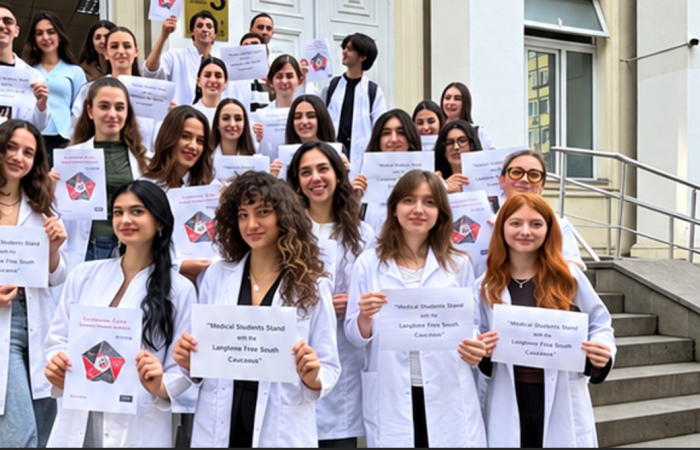
Medical Students in Tbilisi have participated in the campaign LANDMINE FREE SOUTH CAUCASUS 2026. The regional’ Landmine Free South Caucasus’ (LFSC) campaign was initiated by LINKS Europe Foundation in 2018 to address the critical issue of landmine and unexploded ordnance contamination in Armenia, Azerbaijan and Georgia. With significant landmine contamination in the region posing an ongoing threat to life and eliciting high economic costs, LFSC advocated for a regional, holistic approach to complete clearance.  Future Doctors Join the Conversation on Friday, 16 October in Tbilisi. "As part of the Landmine Free South Caucasus 2026 campaign, an informative and interactive meeting was held in Tbilisi with medical students. The session was conducted by George Simonishvili, South Caucasus Co-ordinator for LINKS Europe.  The meeting focused on the humanitarian consequences of landmines and other explosive remnants of war in Armenia, Azerbaijan, and Georgia, with particular attention to the Red Bridge minefield near the borders of the three countries, and emphasised that these dangers remain a current humanitarian challenge. It also underlined that future medical professionals will encounter the long-term effects of explosion injuries and can play a role in awareness and prevention.  Students actively engaged throughout the discussion, showing strong interest in the humanitarian impact and the need for cooperation. Under the slogan "Future Doctors for a Landmine Free South Caucasus," the event encouraged students to support public awareness, solidarity with survivors, and a safer South Caucasus free from landmine threats.  The event was organised by LINKS Europe as part of LFSC26.  "Medical Students Stand for a Landmine Free South Caucasus," "Future Doctors, Safer Futures: Together Against Landmines." "Future Doctors for a Landmine Free South Caucasus".
Editor's choice
News
European Commission Disburses €1.24 Billion to Boost Ukraine’s Defence Industry

European Commission Disburses €1.24 Billion to Boost Ukraine’s Defence Industry

The European Commission disbursed €1.24 billion to Ukraine on Wednesday (October 7) under the defence component of the €90 billion Ukraine Support Loan, earmarked for drones, drone interceptors, ammunition, and missiles produced by Ukrainian entities. European Commission President Ursula von der Leyen said the payment would strengthen Ukraine’s defence industry and its ability to protect people and infrastructure. She described Russia’s ongoing attacks as a deliberate strategy intended to make daily life increasingly difficult for Ukrainians. The Ukraine Support Loan provides an indicative €60 billion for defence and €30 billion for budgetary assistance during 2026–2027. The European Commission plans to disburse €28.3 billion for Ukraine’s defence industrial capacity in 2026, with further payments under the defence component expected in the coming weeks. Funding decisions are based on Ukraine’s evolving requirements and remain subject to agreed conditions and monitoring. According to Ukrainian Prime Minister Serhiy Koretskyi, the latest payment brings Ukraine’s defence financing received through the programme to nearly €13 billion. He said the government would continue working with European partners to ensure the remaining planned funding is delivered on schedule and in full For the remainder of 2026, €32.5 billion in EU financial support remains available to Ukraine. This includes €28.1 billion under the Ukraine Support Loan – €15.4 billion for defence industrial capacity and €12.7 billion in budget support. A further €4.4 billion remains available through the Ukraine Facility, bringing the total budget support available for 2026 to more than €17 billion, subject to Ukraine meeting the relevant conditions. Since 2022, the EU and its member states have provided €228.7 billion in overall support to Ukraine, including €3.8 billion generated from immobilised Russian assets.

Popular

Editor's choice
Interview
Thursday Interview: Murad Muradov

Thursday Interview: Murad Muradov

Today, commonspace.eu starts a new regular weekly series. THURSDAY INTERVIEW, conducted by Lauri Nikulainen, will host  persons who are thinkers, opinion shapers, and implementors in their countries and spheres. We start the series with an interview with Murad Muradov, a leading person in Azerbaijan's think tank community. He is also the first co-chair of the Action Committee for a new Armenian-Azerbaijani Dialogue. Last September he made history by being the first Azerbaijani civil society activist to visit Armenia after the 44 day war, and the start of the peace process. Speaking about this visit Murad Muradov said: "My experience was largely positive. My negative expectations luckily didn’t play out. The discussions were respectful, the panel format bringing together experts from Armenia, Azerbaijan, and Turkey was particularly valuable during the NATO Rose-Roth Seminar in Yerevan, and media coverage, while varied in tone, remained largely constructive. Some media outlets though attempted to represent me as more of a government mouthpiece than an independent expert, which was totally misleading.  Overall, I see these initiatives as important steps in rebuilding trust and normalising professional engagement. The fact that soon a larger Azerbaijani civil society visits to Armenia followed, reinforces the sense that this process is moving in the right direction." (click the image to read the interview in full)