


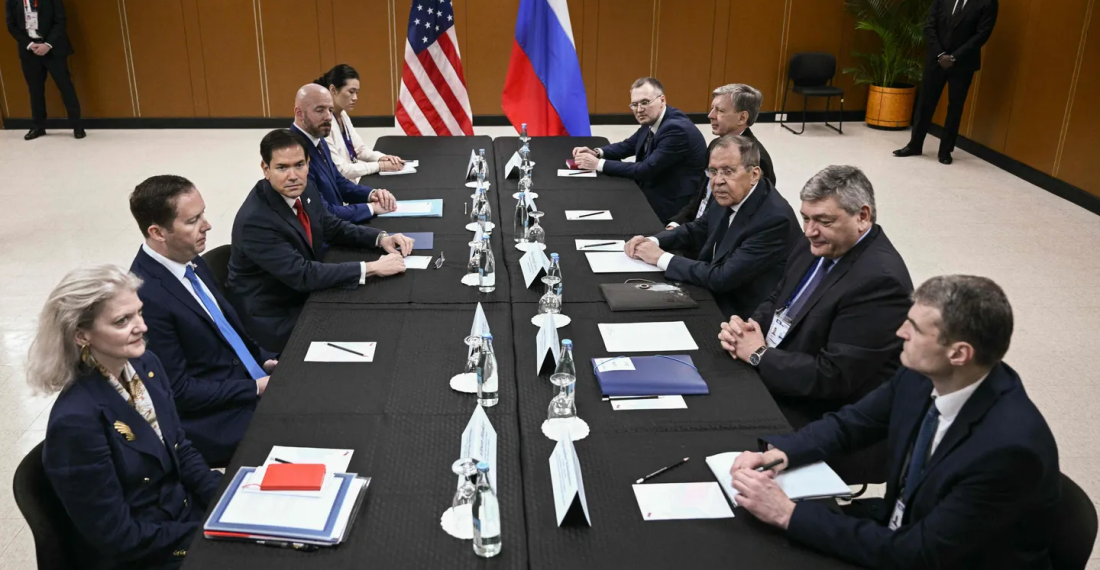
U.S. Secretary of State Marco Rubio and Russian Foreign Minister Sergey Lavrov met in Manila today (Jul 23) for their first face-to-face talks since September, using the sidelines of the meetings of the Association of Southeast Asian Nations (ASEAN) to discuss the war in Ukraine and broader U.S.-Russia relations. The meeting lasted about 30 minutes and came hours after Ukrainian President Volodymyr Zelensky held talks with U.S. envoys aimed at, in his words, "revitalizing diplomacy."
According to the U.S. State Department, Rubio and Lavrov discussed bilateral relations and "the need to end the Russia-Ukraine war." Neither diplomat made public remarks before the meeting, and Russia did not immediately release its own account. Afterward, Lavrov declined to answer reporters' questions.
Speaking a day earlier in Manila, Rubio confirmed that Ukraine would be a central topic. He argued that the conflict had "impeded the ability of Russia and the U.S. to find areas of agreement" and reiterated that Washington wants the war to end. Rubio said the United States remains prepared to play "a constructive role" in facilitating a settlement should an opportunity arise. He also acknowledged that diplomatic efforts had "fallen off" in recent months but suggested that changing circumstances could create space for renewed discussions. Rubio added that some conversations with Moscow would remain confidential to improve prospects for progress.
Lavrov, for his part, said before the meeting that the talks would be worthwhile regardless of the outcome, stating that "it is better to ask questions and get answers." He also indicated he intended to ask Rubio about U.S. President Donald Trump's recent remarks that a settlement in Ukraine was "closer than people realize."
During the meeting, Rubio and Lavrov also addressed broader bilateral issues, including differing interpretations of understandings reached during the August 2025 summit between U.S. President Donald Trump and Russian President Vladimir Putin in Anchorage, Alaska. Moscow has argued that the talks produced understandings on Ukraine that remain valid, while Washington has disputed that any formal agreements on the country's territorial future were reached.
When it comes to peace talks, Russia has long maintained demands that Ukraine cedes territory, while President Zelensky has reiterated on Wednesday (July 22) in a post on X that "peace is necessary – peace with dignity – and Ukraine has long been ready for it."
Beyond Ukraine, Rubio said the two sides would explore other areas where Washington and Moscow might cooperate, despite significant disagreements. He stressed that maintaining dialogue remains important, noting that the United States and Russia are the world's two largest nuclear powers. The ministers' discussions also occurred as ASEAN foreign ministers addressed other regional and international security issues, including the Middle East and tensions in the South China Sea.
Source: commonspace.eu with AP News (New York), Kyiv Post (Kyiv), and Sud Ouest (Bordeaux).



