


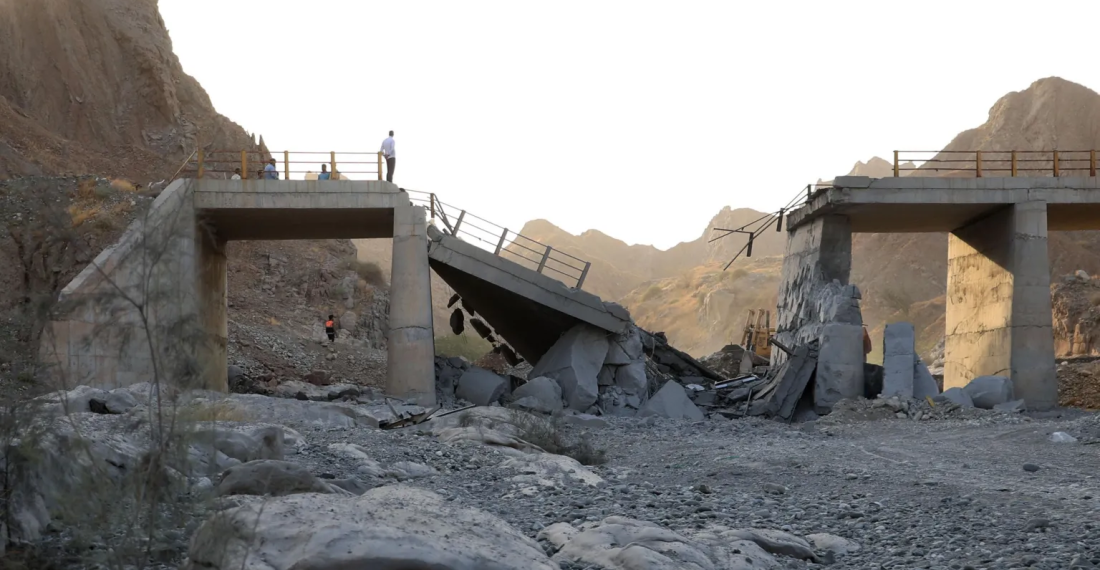
The US launched another round of air strikes against Iran on Saturday night, targeting its coastal surveillance and air defence facilities, US military officials said.
US Central Command (Centcom) said forces successfully hit Iranian military capabilities, while Iranian state media said Qeshm Island in the Strait of Hormuz had been struck.
Centcom said it also targeted Iran's Revolutionary Guards (IRGC) responsible for the attack that killed two US military personnel in Jordan on Friday, where another service member remains missing.
In response to the latest strikes, Iran's army said it carried out drone attacks on two US bases in Kuwait, according to state media.
The US and Iran have ramped up attacks against each other in recent days, with both sides accused of striking critical infrastructure.
On Saturday, Iran said it carried out "large-scale attacks with kamikaze drones" against an American military "depot at Camp Udairi" and another at "Ali Al Salem Air Base in Kuwait", according to the IRGC-affiliated Tasnim news agency.
The US strikes, on the eighth successive night of attacks, were "designed to further degrade Iran's ability to threaten commercial shipping in the Strait of Hormuz", Centcom said.
The strikes were to "swiftly punish Islamic Revolutionary Guard Corps forces who launched attacks against American service members in Jordan last night," the statement continued.
It followed a week of renewed hostilities in which Washington reimposed its blockade of Iranian ports and Tehran declared the Strait of Hormuz closed, as their preliminary ceasefire collapsed less than a month after it began.
In a statement earlier on Saturday, Centcom said: "Two US service members in Jordan were killed in action as US Central Command (Centcom) and partner forces defended against Iranian ballistic missile and drone attacks. Additionally, one service member is currently missing.
"Out of respect for the families, Centcom will withhold additional information, including the identities of the fallen warriors, until 24 hours after the next of kin have been notified."
US Defence Secretary Pete Hegseth responded to the deaths with a post on X that said: "Godspeed, heroes. Their sacrifice only stiffens our resolve."
The US death toll in the conflict has now risen to 16 after an American Navy pilot who went missing earlier this month was declared dead, marking the second increase in the toll this week.
Washington and Tehran struck a preliminary deal to end the war in June, but the agreement unravelled within weeks - with President Donald Trump declaring the agreement "over" on 8 July.
source: commonspace.eu with BBC (London) and agencies
photo: Officials inspect a bridge damaged by a US strike in southern Iran



