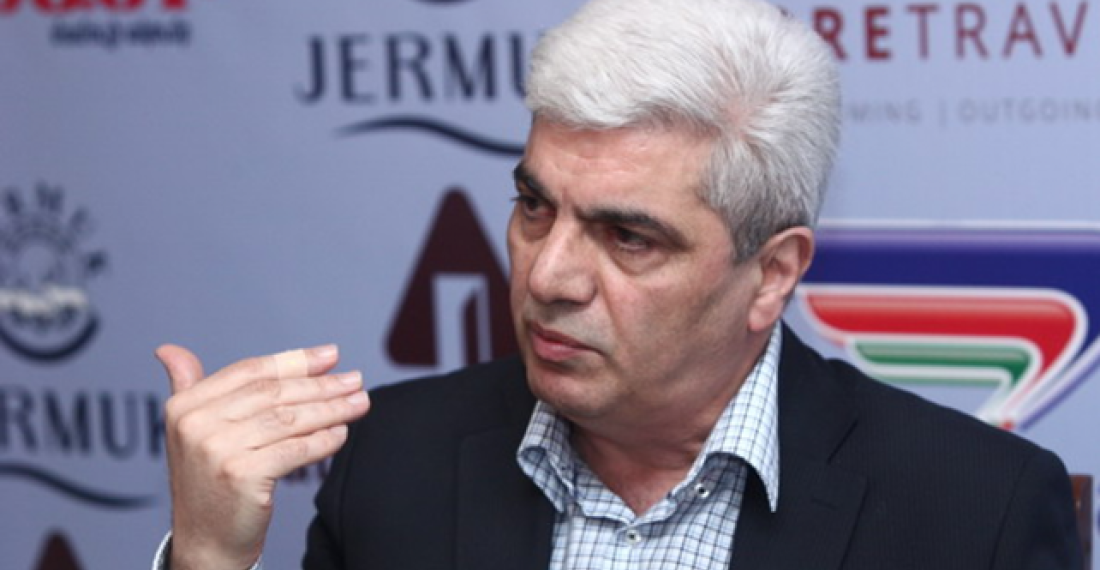
The editorial team of commonspace.eu continues to provide a forum for informed discussion on Europe and its neighbourhood. This week, we welcome Armenian political personality, Dr. Stepan Grigoryan, who reflects on his early entry into Armenian politics under the Iron Curtain, his firsthand experience of its collapse, and his ongoing efforts to combat election interference and propaganda through social media.
The results of Armenia’s parliamentary elections, expected to take place in June 2026, could either establish a path toward long-lasting diplomatic relations with Azerbaijan or risk derailing the peace process entirely, along with its hopes of deepening integration with Western political and economic spheres.
Dr. Grigoryan warns of Kremlin conduits exploiting public anxieties of ongoing negotiations following the landmark peace agreement in August: “Rather than serving as a genuine national opposition… It is these political forces that disseminate fear and uncertainty within Armenian society regarding the ongoing peace process with Azerbaijan.”
However, Stepan Grigoryan is optimistic.
“I think the peace process with Azerbaijan will keep moving forward and Armenia will meet its goals with the EU, provided we don't face the kind of military force that Vladimir Solovyov has hinted at.
Read the full conversation with Dr. Grigoryan below:
Dr. Grigoryan, your career has spanned the most critical decades of Armenia's modern history. For our readers, could you summarise your background in formal diplomacy and how it led you to establish the Analytical Centre on Globalization and Regional Cooperation?
I first entered politics back in 1987–88, when democratic movements were just starting to take hold in Armenia under the Soviet Union. My active participation in these movements led to my election by the citizens of Armenia to the National Assembly in 1990. That parliament was historic—it didn't just declare our independence; it laid the groundwork for a democratic society. That’s when we truly saw the birth of free speech, the right to protest, independent press, and political pluralism.
I transitioned to the Ministry of Foreign Affairs in 1995, serving in our Moscow embassy and later as an advisor to the Foreign Minister until 2000. But the political tide shifted in the early 2000s when new leadership took over—people who didn't share democratic values and took a hardline stance on regional conflicts. That’s why I decided to pivot. Along with my colleagues, I founded the Analytical Centre on Globalization and Regional Cooperation (ACGRC) to keep pushing for democratic reforms from the ground up through civil initiatives.
Over the years, you have built a substantial online following. You recently raised concerns regarding the influence of Russian figures like Vladimir Solovyov and Dmitry Peskov in fuelling domestic tensions ahead of the 2026 Armenian parliamentary elections. As an independent content creator, how do you see your role in countering disinformation and 'hybrid' threats? How do you expect these information dynamics to evolve ahead of the election?
It is no secret that Russia actively employs disinformation, manipulation, and propaganda as key tools to maintain its influence across the post-Soviet space, including Armenia. Russian propagandists become even more active during election cycles, as we witnessed in Moldova in 2025. Armenia is no exception; Russian propaganda targeting European values and democracy is currently in full swing ahead of the June 2026 elections for the National Assembly.
Both Russian television channels and their 'proxies' operating within Armenia are involved in these efforts. It is highly likely that other 'hybrid methods' will be utilized during the June elections, such as voter bribery and the creation of an atmosphere of fear within Armenian society. To combat the disinformation spread against European values and the EU, I have been very active in the Armenian media in recent years and have created my own YouTube channel and content. Furthermore, the ACGRC (Analytical Centre on Globalization and Regional Cooperation) conducts numerous conferences and meetings throughout Armenia's regions to improve public literacy in the fight against disinformation and propaganda.
You have stated that while the issue of delimitation and demarcation of territories like Artsvashen is a long-term technical process, the opposition uses these delays to incite domestic panic and frame the peace process as a series of surrenders.
Given that these border issues likely won't be fully resolved before the 2026 vote, is there a way to ensure that the peace process with Azerbaijan is seen as a path to independence rather than a sequence of 'surrenders' as the former authorities claim? Will the peace process survive in the face of threats from outside and inside Armenia?
Unfortunately, the majority of political opposition parties and their affiliated media outlets in Armenia serve Russian interests. Many of these are the same anti-democratic forces that came to power in Armenia during the 2000s. They act as conduits for Kremlin policy rather than serving as a genuine national opposition. It is these political forces that disseminate fear and uncertainty within Armenian society regarding the ongoing peace process with Azerbaijan. They specifically exploit public anxieties concerning the potential opening of the border with Türkiye.
It must be noted that Armenian Prime Minister Nikol Pashinyan is working quite actively with the public and is successfully communicating his position to the country's citizens. I think the peace process with Azerbaijan will keep moving forward and Armenia will meet its goals with the EU, provided we don't face the kind of military force that Vladimir Solovyov has hinted at.
source: commonspace.eu interviewed Dr Stepan Grigoryan
Follow Dr. Grigoryan on Youtube, Facebook, Patreon, X, and Telegram
Follow the Analytical Centre on Globalization and Regional Cooperation on their website, on Facebook, and on YouTube