Filter archive

Publication date
Editor's choice
Opinion
Opinion: The future of the China-US-Russia triangle after Pelosi's visit to Taiwan

Opinion: The future of the China-US-Russia triangle after Pelosi's visit to Taiwan

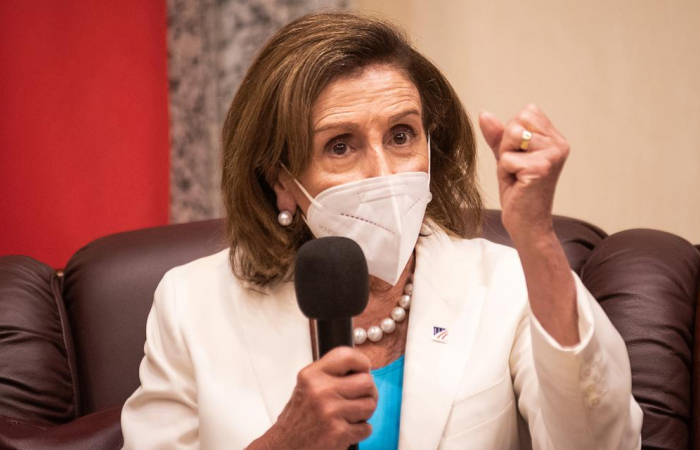
Since February 24, 2022, the international community's focus was concentrated entirely on the war in Ukraine and the growing Russia – West confrontation. It seemed that nothing could change the situation until the end of hostilities in Ukraine. However, on August 2 and 3, almost everyone’s attention shifted from Ukraine to Taiwan. As the Speaker of the US House of Representatives, Nancy Pelosi, stated her intention to visit Taiwan, up to half a million people were watching the trajectory of her plane on air flight tracking sites. The negative reaction of China, including the warning of President Xi during his conversation with President Biden that those who played with fire would be perished by it, created hype around this visit. Many were discussing the possibility of Chinese military jets closing the airspace over Taiwan and preventing Pelosi’s plane from landing in Taiwan, while some enthusiasts were even contemplating the possibility of a US-China direct military clash. As Pelosi landed in Taiwan and met with the Taiwanese President, the global social media was full of amateur assessments about the strategic victory of the US and the confirmation of the US global hegemony. However, as the dust settles down, and information noise and manipulation eventually decreases, a more serious assessment is needed to understand the real consequences of this visit.

Editor's choice
News
Donald Tusk: "One for all, and all for one! Otherwise we are finished."

Donald Tusk: "One for all, and all for one! Otherwise we are finished."

Europe is rattled by events in Venezuela, and there are serious concerns that US disregard for international law may have consequences close to home.  The BBC diplomatic correspondent, James Landale, said, the question is how Europe may respond in the longer term to America's military operation in Venezuela. Will it provide a catalyst for the continent to take greater responsibility for its own security in the face of so much instability from what many see as an unreliable ally? Polish prime minister, Donald Tusk, appears to have answered the question, saying on social media: "No-one will take seriously a weak and divided Europe: neither enemy nor ally. It is already clear now. "We must finally believe in our own strength, we must continue to arm ourselves, we must stay united like never before. One for all, and all for one. Otherwise, we are finished." The US seizing of Venezuela's leader has faced strong criticism from both America's friends and foes at an emergency meeting of the United Nations Security Council, held on Monday, 5 January. Many member states agreed with the US that Nicolás Maduro had been an illegitimate and repressive leader. But many also condemned the US military action as a breach of international law and the UN Charter, and they demanded a democratic transition that reflected the will of the Venezuelan people. (click the image to read the full article).
Editor's choice
News
Keir Starmer: Only Greenland and Denmark should decide the future of Greenland

Keir Starmer: Only Greenland and Denmark should decide the future of Greenland

Only Greenland and Denmark should decide the future of Greenland, British Prime Minister Sir Keir Starmer has told the BBC. It comes after President Trump again said "we need Greenland from the standpoint of national security". Both Greenland's prime minister and Denmark's prime minister strongly rejected the idea over the weekend. Greenland's Prime Minister Jens Frederik Nielsen responded to Trump's latest comments by saying "that's enough now" and described the notion of US control over the island as a "fantasy". Meanwhile, Denmark's Prime Minister Mette Frederiksen had said "the US has no right to annex any of the three nations in the Danish kingdom". Asked whether he would also say to President Trump "hands off Greenland", Sir Keir's response was definitive, when so often in diplomacy answers are caveated and nuanced. "Yes," he replied. "Greenland and the Kingdom of Denmark must decide the future of Greenland and only Greenland and the Kingdom of Denmark. "And Denmark is a close ally in Europe, is a Nato ally and it is very important that the future of Greenland is for the Kingdom of Denmark and for Greenland themselves and only for Greenland and the Kingdom of Denmark."
Editor's choice
Opinion
Opinion: The US strikes Venezuela, Consequences for Ukraine and Europe

Opinion: The US strikes Venezuela, Consequences for Ukraine and Europe

This is a Flash Analysis published on 3 January 2026 by the European Policy Centre in Brussels. Chris Kremidas-Courtney is a Senior Visiting Fellow at the European Policy Centre. As 2026 barely takes its first breath, we are already drifting back into an age where great powers manage their own neighbourhoods and look away from everyone else’s. It’s a world order that prizes control over legitimacy and stability over justice until neither one survives. The most immediate consequence of the US strike on Venezuela may be felt not in Latin America, but first in Ukraine. As foreshadowed in the Trump administration’s National Security Strategy, Washington is intent on rooting its power firmly in the Western Hemisphere while potentially leaving Russia and China greater freedom of action in their ‘backyards’. Seen through this lens, the strike on Venezuela looks more like part of a broader reversion to regional spheres of influence. The emerging message is that the United States will enforce primacy close to home but its willingness to underwrite security beyond its hemisphere is increasingly transactional and politically fragile. This is a 21st century version of the 1823 Monroe Doctrine, in which US hemispheric dominance was paired with strategic disengagement from Europe’s wars. It is also the world Putin has long argued for. It is hard to see an upside for Europe, but there may be one small silver lining. Prior to the strike, Caracas had been demonstrating how a sanctioned regime could survive and adapt by embedding itself into alternative economic and financial networks backed by China, Russia and Iran. That resilience was undermining the credibility of sanctions as a systemic tool, on which the EU relies far more heavily than the United States. By decapitating the Maduro regime, Washington has reasserted that sanctions are not an end state, but a step on an escalation ladder that can still culminate in the use of force. Yet this restoration of the credibility of sanctions comes at a great cost. It risks signalling to other revisionist or embattled regimes that force is the ultimate arbiter. All eyes are now on Moscow, since, as former US National Security Council official Fiona Hill testified in 2019, Russia had informally offered to end its support for Venezuela in exchange for US acquiescence on Ukraine.  Meanwhile, online advocates in China are calling on their regime to emulate the US and take similar steps against Taiwan. Worse still, Venezuela is now politically hollowed out. Any opposition figure who emerges now could be instantly labelled a US proxy. It is not yet clear what the thinking is in Washington about the day after, but the precedents of Iraq and Afghanistan are not encouraging. Once again, Washington has demonstrated its ability to act decisively – but also reminded us of its lack of staying power. For Ukraine, that distinction may prove fatal unless Europe can step up and support Kyiv more decisively in 2026.