


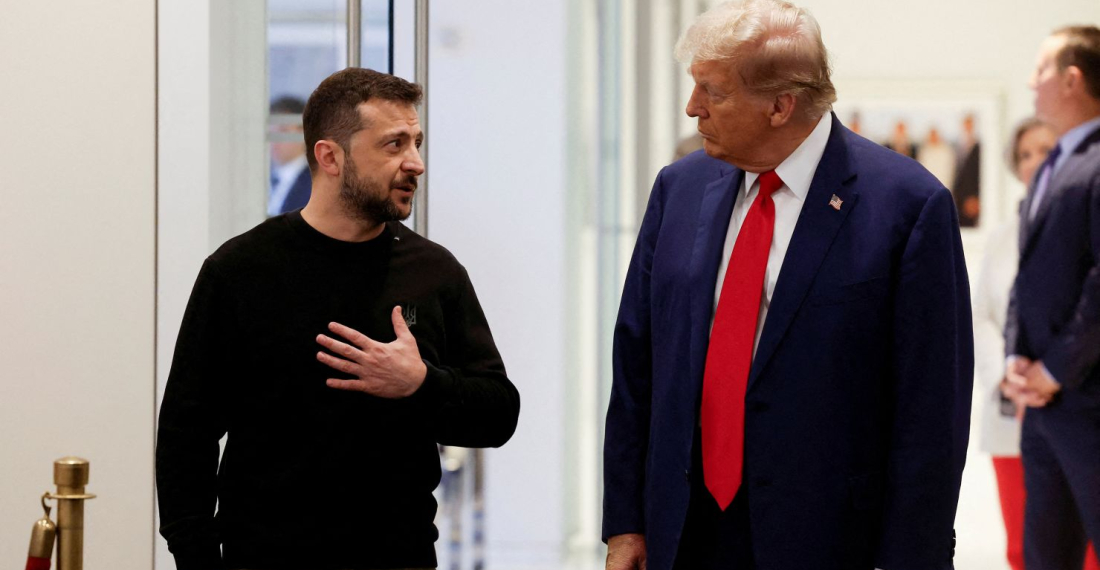
Ukrainian President Volodymyr Zelensky arrived in Washington on Tuesday (July 28) for talks with U.S. President Donald Trump and members of Congress, seeking to strengthen bipartisan backing for Ukraine as the U.S. debates new sanctions on Russia and future military cooperation. The visit comes shortly after the death of Senator Lindsey Graham, one of Kyiv's strongest Republican supporters, leaving a significant gap in Ukraine's network of allies within the Republican Party.
Zelensky is expected to meet Trump at the White House before addressing an invited gathering of all 100 U.S. senators. According to officials familiar with the agenda, Ukraine's priorities include tougher sanctions against Russia, expanding joint drone production, securing additional Patriot air defense capabilities, and discussing prospects for peace negotiations.
The Senate is also preparing to begin consideration of the Lindsey O. Graham Sanctions Act on Russia, legislation that would impose new sanctions on Moscow and potentially levy tariffs on major purchasers of Russian energy. Senate Majority Leader John Thune said he hoped the procedural vote would receive "a very big bipartisan vote" that would "set up a path to get it done." The bill has gained renewed attention following Graham's death, with supporters presenting it as part of his foreign policy legacy.
Kyiv's requests have also evolved since the early stages of Russia's full-scale invasion. Rather than focusing primarily on emergency military aid, Ukraine is increasingly seeking defense production licenses, technology transfers, and joint manufacturing agreements that would allow it to produce more weapons domestically and reduce reliance on future Western deliveries.
Zelensky is simultaneously attempting to broaden support among Republicans aligned with Trump's "America First" movement. Conservative commentator Laura Loomer, who recently visited Ukraine and interviewed the Ukrainian president, said she now supports Kyiv after her trip. "Zelenskyy saw that I was in the country, and then he reached out and asked if I would come" to meet him, she said. Ukrainian officials said the president appreciated that she had taken the time to gain firsthand insight into the war.
However, opposition among some Republican lawmakers remains firm. Representative Tim Burchett, a Republican from Tennessee, rejected the idea that he had shifted his position, stating: "I can't speak for MAGA but I'm not" coming around to supporting Ukraine.
The White House reiterated that Trump remains committed to pursuing an end to the war, saying in a statement that the president and his team "remain committed to continuing to play a constructive role in ending the war between Russia and Ukraine" and are "optimistic that we'll ultimately get a peace deal done."
During his visit, Zelensky is expected to argue that Ukraine's recent battlefield successes – particularly its expanding long-range drone campaign against Russian military and energy infrastructure – demonstrate that sustained military pressure combined with stronger economic sanctions could increase Moscow's willingness to negotiate. Former U.S. Special Representative for Ukraine Negotiations Kurt Volker argued that Trump's view of the conflict may be shifting, saying, "Trump sees that Putin is losing, and he sees that Zelenskyy has actually pulled this all together and is winning."
Source: commonspace.eu with Politico (Washington DC), Kyiv Post (Kyiv) and agencies



