


Yankee come back!

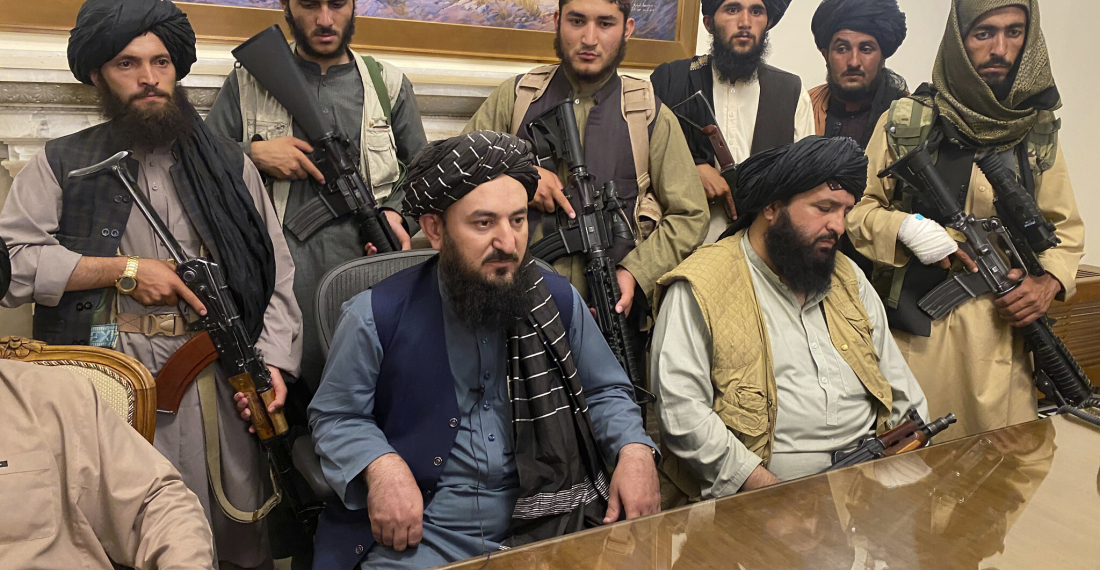
The undignified departure of the international community from Afghanistan continued in earnest on Tuesday morning. The Taliban occupied the Afghan capital, Kabul, on Sunday after president Ashraf Ghani left the country abruptly leaving both his Afghan supporters and international partners stunned.

US president Joe Biden in an address to the nation on Monday morning defended his decision to withdraw American forces from Afghanistan saying that the original mission they had went in there  for had been achieved.

"I stand squarely behind my decision. After 20 years, I've learned the hard way that there was never a good time to withdraw U.S. forces."

Biden admitted that his administration was taken by surprise at the speed of the Taliban advance in the last days:

"I always promised the American people that I will be straight with you. The truth is: This did unfold more quickly than we had anticipated. So what's happened? Afghanistan political leaders gave up and fled the country. The Afghan military collapsed, sometimes without trying to fight."

Biden tried, even if feebly to make a gesture of ongoing interest in Afghanistan

"Now we are focused on what is possible. We will continue to support the Afghan people. We will lead with our diplomacy, our international influence, and humanitarian aid ... We will continue to speak out for the basic rights of Afghan people, for women and girls – just as we speak out all over the world.”

commonspace.eu political editor said that "this has been a dramatic end to American's twenty year old war in Afghanistan. That was itself the result of the even more dramatic events of 9/11 and al-Qaeda's brazen attack on US territory. Al Qaeda at the time operated from Afghanistan under the protection of the Taliban regime of the time. The US mobilised a global coalition to go into Afghanistan and dismantle the Taliban and al-Qaeda networks. At the time it looked like complete victory, but quickly the Taliban regrouped, and now they have been able to fight their way back to Kabul. Once the Americans announced they were leaving, the Afghan army disintegrated at a speed not thought to be possible, its hundreds of thousands of troops making their way back to their villages, waiting for another day.

During the cold war, the slogan Yankee Go Home was often seen or heard in many third world countries fighting against US domination. It is ironic that fifty years later, there are those in Kabul who are now shouting Yankee come back! For many young Afghans the US presence had opened the possibility of a new way of life. At least in Kabul many are sad to see the Americans go. But as president Biden made it clear yesterday, there is no going back. American attempts at state-building in Afghanistan are over, and that has widespread consequences that are yet to fully unfold."


source: commonspace.eu 
photo: The Taliban occupy the presidential office in Kabul on 15 August 2021.

Related articles

Editor's choice
News
Borrell tells the European Parliament that the situation in Afghanistan was critical, but the EU will remain engaged

Borrell tells the European Parliament that the situation in Afghanistan was critical, but the EU will remain engaged

Borrell underlined that the European Union will make every effort to support the peace process and to remain a committed partner to the Afghan people. "Of course, we will have to take into account the evolving situation, but disengagement is not an option.  We are clear on that: there is no alternative to a negotiated political settlement, through inclusive peace talks.
Editor's choice
News
NATO Chief says war is on Europe's doorstep, and warns against complacency

NATO Chief says war is on Europe's doorstep, and warns against complacency

Russia could attack a Nato country within the next five years, the Secretary General of NATO, Mark Rutte, said in a stark new warning. "Nato's own defences can hold for now," Rutte warned in Berlin, but conflict was "next door" to Europe and he feared "too many are quietly complacent, and too many don't feel the urgency, too many believe that time is on our side. "Russia is already escalating its covert campaign against our societies," Rutte said in a speech in Germany. "We must be prepared for the scale of war our grandparents or great-grandparents endured." Earlier this month, Russia's President Vladimir Putin said his country was not planning to go to war with Europe, but it was ready "right now" if Europe wanted to - or started a war. But similar reassurances were given by Moscow in 2022, just before 200,000 Russian troops crossed the border and invaded Ukraine. Putin has accused European countries of hindering US efforts to bring peace in Ukraine - a reference to the role Ukraine's European allies have recently played in trying to change a US peace plan to end the war, whose initial draft was seen as favouring Russia. But Putin was not sincere, Nato's secretary-general said in the German capital, Berlin. Supporting Ukraine, he added, was a guarantee for European security. "Just imagine if Putin got his way; Ukraine under the boot of Russian occupation, his forces pressing against a longer border with Nato, and the significantly increased risk of an armed attack against us." Russia's economy has been on a war footing for more than three years now - its factories churn out ever more supplies of drones, missiles and artillery shells. According to a recent report by the Kiel Institute for the World Economy, Russia has been producing each month around 150 tanks, 550 infantry fighting vehicles, 120 Lancet drones and more than 50 artillery pieces. The UK, and most of its Western allies, are simply not anywhere near this point. Analysts say it would take years for Western Europe's factories to come close to matching Russia's mass-production of weapons. "Allied defence spending and production must rise rapidly, our armed forces must have what they need to keep us safe," the Nato chief said.

Popular

Editor's choice
News
NATO Chief says war is on Europe's doorstep, and warns against complacency

NATO Chief says war is on Europe's doorstep, and warns against complacency

Russia could attack a Nato country within the next five years, the Secretary General of NATO, Mark Rutte, said in a stark new warning. "Nato's own defences can hold for now," Rutte warned in Berlin, but conflict was "next door" to Europe and he feared "too many are quietly complacent, and too many don't feel the urgency, too many believe that time is on our side. "Russia is already escalating its covert campaign against our societies," Rutte said in a speech in Germany. "We must be prepared for the scale of war our grandparents or great-grandparents endured." Earlier this month, Russia's President Vladimir Putin said his country was not planning to go to war with Europe, but it was ready "right now" if Europe wanted to - or started a war. But similar reassurances were given by Moscow in 2022, just before 200,000 Russian troops crossed the border and invaded Ukraine. Putin has accused European countries of hindering US efforts to bring peace in Ukraine - a reference to the role Ukraine's European allies have recently played in trying to change a US peace plan to end the war, whose initial draft was seen as favouring Russia. But Putin was not sincere, Nato's secretary-general said in the German capital, Berlin. Supporting Ukraine, he added, was a guarantee for European security. "Just imagine if Putin got his way; Ukraine under the boot of Russian occupation, his forces pressing against a longer border with Nato, and the significantly increased risk of an armed attack against us." Russia's economy has been on a war footing for more than three years now - its factories churn out ever more supplies of drones, missiles and artillery shells. According to a recent report by the Kiel Institute for the World Economy, Russia has been producing each month around 150 tanks, 550 infantry fighting vehicles, 120 Lancet drones and more than 50 artillery pieces. The UK, and most of its Western allies, are simply not anywhere near this point. Analysts say it would take years for Western Europe's factories to come close to matching Russia's mass-production of weapons. "Allied defence spending and production must rise rapidly, our armed forces must have what they need to keep us safe," the Nato chief said.

