Russian oil companies struggle to find buyers

 Russian oil companies, forced to export record volumes of oil due to Ukrainian strikes on refineries, are unable to find buyers.

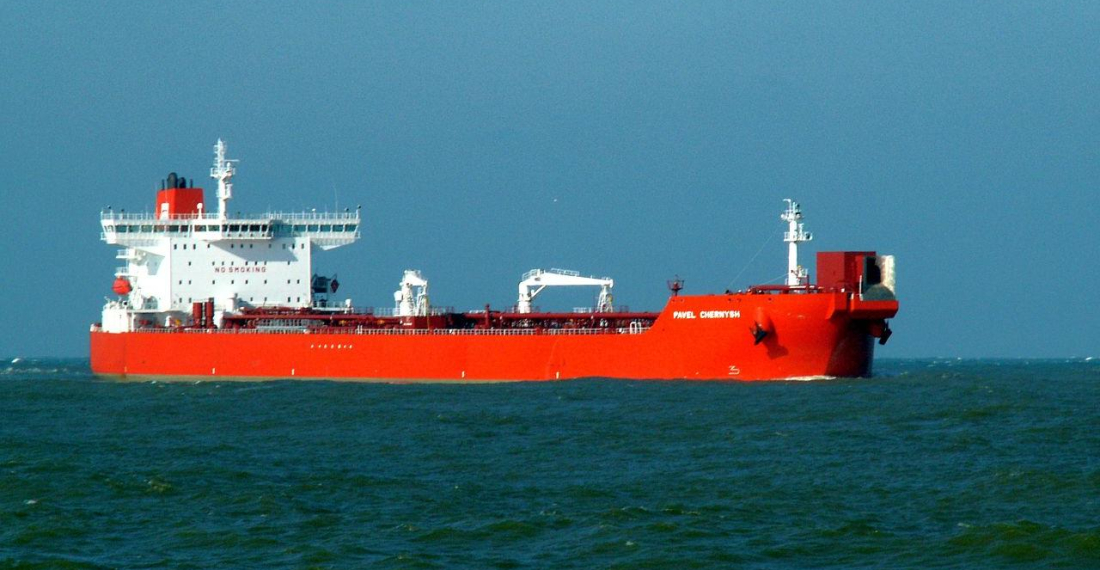
As of July 13, 136 million barrels of Russian oil were stored in vessels converted into floating storage facilities. This volume has increased  by 12 million barrels since the beginning of June and by 23 million since the beginning of May. Some tankers have been idle at sea for weeks, awaiting buyers, Bloomberg reports. Five vessels carrying Urals crude are anchored off the Mediterranean coast of Egypt, while another five are stuck near the Riau Islands, east of Singapore—a popular staging area for illegal shipping. Tankers carrying Sokol and Sakhalin Blend crude, produced in the Far East, have also been forced to remain idle at sea for weeks, awaiting transfer to larger vessels.

Crude oil exports are being driven by Ukraine's strikes on refineries, which have reduced refining output by approximately a third, triggering a fuel crisis and gasoline and diesel shortages in the vast majority of Russian regions. Unable to refine the oil, companies are exporting ever-increasing volumes.

source: commonspace.eu with Bloomberg
Related articles

Editor's choice
News
Armenian and Azerbaijani officials seek to defuse tension

Armenian and Azerbaijani officials seek to defuse tension

Armenian and Azerbaijani senior officials have moved to reduce tensions that erupted following an outcry in Armenia after a visit by foreign diplomats to Karabakh and surrounding regions, and a subsequent reaction in Azerbaijan. Armenia’s Security Council Secretary Alen Simonyan has said that following the events that took place at Gandzasar Monastery, he spoke by phone with Azerbaijani President Ilham Aliyev’s Assistant Hikmet Hajiyev. Responding to a question about whether he plans to publicly respond to Hajiyev’s statements regarding Gandzasar, Simonyan said at a press briefing that not all statements necessarily need to receive a public response. “I think everything has been said, and not everything that is said always needs a response. We need to realize whether this will change something or not. I can say something sharp now, respond in some way, we can all feel good for 15 minutes, but by doing so I could harm the negotiations,” Simonyan said. He stressed that the peace process requires a cautious approach. (click image to read more)

Popular

Editor's choice
Interview
Thursday Interview: Murad Muradov

Thursday Interview: Murad Muradov

Today, commonspace.eu starts a new regular weekly series. THURSDAY INTERVIEW, conducted by Lauri Nikulainen, will host  persons who are thinkers, opinion shapers, and implementors in their countries and spheres. We start the series with an interview with Murad Muradov, a leading person in Azerbaijan's think tank community. He is also the first co-chair of the Action Committee for a new Armenian-Azerbaijani Dialogue. Last September he made history by being the first Azerbaijani civil society activist to visit Armenia after the 44 day war, and the start of the peace process. Speaking about this visit Murad Muradov said: "My experience was largely positive. My negative expectations luckily didn’t play out. The discussions were respectful, the panel format bringing together experts from Armenia, Azerbaijan, and Turkey was particularly valuable during the NATO Rose-Roth Seminar in Yerevan, and media coverage, while varied in tone, remained largely constructive. Some media outlets though attempted to represent me as more of a government mouthpiece than an independent expert, which was totally misleading.  Overall, I see these initiatives as important steps in rebuilding trust and normalising professional engagement. The fact that soon a larger Azerbaijani civil society visits to Armenia followed, reinforces the sense that this process is moving in the right direction." (click the image to read the interview in full)