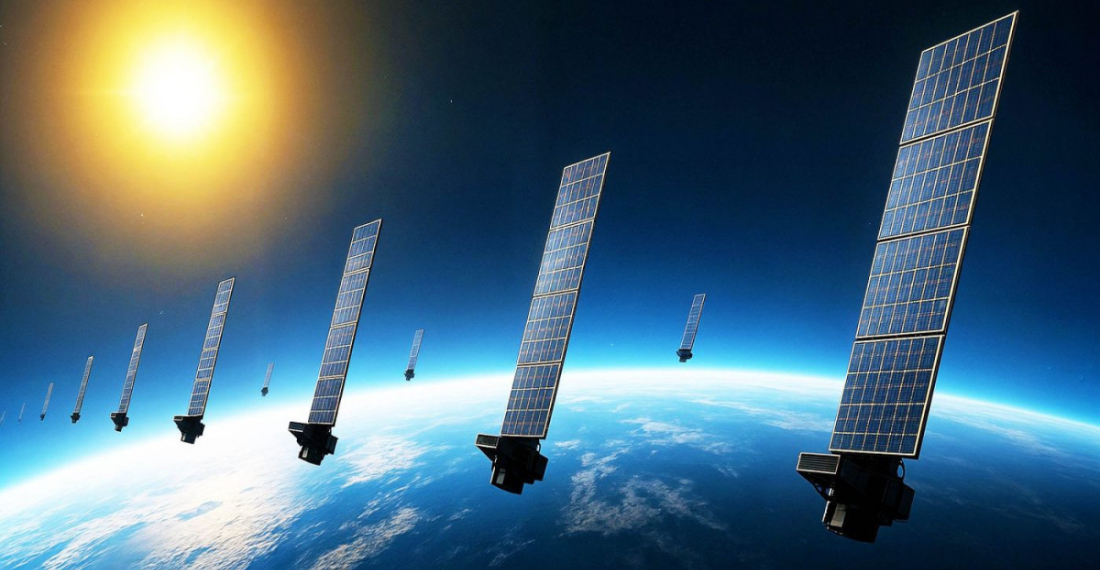
Russia is accelerating the deployment of its Rassvet satellite communications network, with plans to build a constellation of nearly 300 satellites by 2027, Ukraine’s military intelligence deputy chief, Major General Vadym Skibitskyi, said on Monday (August 10). The system is being developed as a domestic alternative to Starlink, which has played an important role in Ukrainian military communications and drone operations since the start of Russia’s full-scale invasion.
In an interview with RBC-Ukraine, Skibitskyi said Russia had already launched 16 Rassvet satellites and was deploying them faster than originally planned. The network currently provides only intermittent coverage when satellites pass over Ukrainian territory. Moscow, however, plans to expand the constellation to 292 satellites by 2027 and 924 by 2035. “When the Russians deploy a full constellation of satellites, this system will work like Starlink,” Skibitskyi said, adding that Ukrainian authorities were already discussing ways to counter it.
Rassvet is being developed by Bureau 1440, a Russian aerospace company that emerged from a satellite-internet project launched by telecommunications operator MegaFon. The programme began testing satellites in 2023 and 2024 before its first operational group of 16 satellites was launched in March 2026. A further group was reportedly placed into orbit in July. Bureau 1440 plans to begin commercial operations in 2027.
The system is designed to use low-Earth-orbit satellites and laser links between spacecraft to provide broadband connectivity. Its satellites operate at roughly 800 kilometres altitude and are intended to provide stronger coverage of Russia’s northern regions, including the Arctic.
For Ukraine, the network's potential military applications are a major concern. Ukrainian experts have warned that Rassvet could eventually support military communications, video transmission, drone control and ground robotic systems. Skibitskyi said Russia’s efforts to build the system followed the loss of access to unauthorized Starlink terminals used by Russian forces, which were deactivated earlier this year following coordination between Ukraine and SpaceX.
Ukrainian officials have acknowledged that Russia still faces significant challenges in scaling the programme, particularly amid sanctions and the technical demands of launching hundreds of satellites. Nevertheless, the rapid expansion of Rassvet indicates that Moscow is pursuing greater independence from foreign satellite communications technology.
Source: commonspace.eu with Kyiv Independent (Kyiv), Reuters (London) and Ukrainska Pravda (Kyiv).