Representatives from the 28 member states of the European Union who represent their countries on the Political and Security Committee of the EU Council have started a visit to the South Caucasus. The unusual fact finding mission is aimed at reaffirming the EU committment to the region.
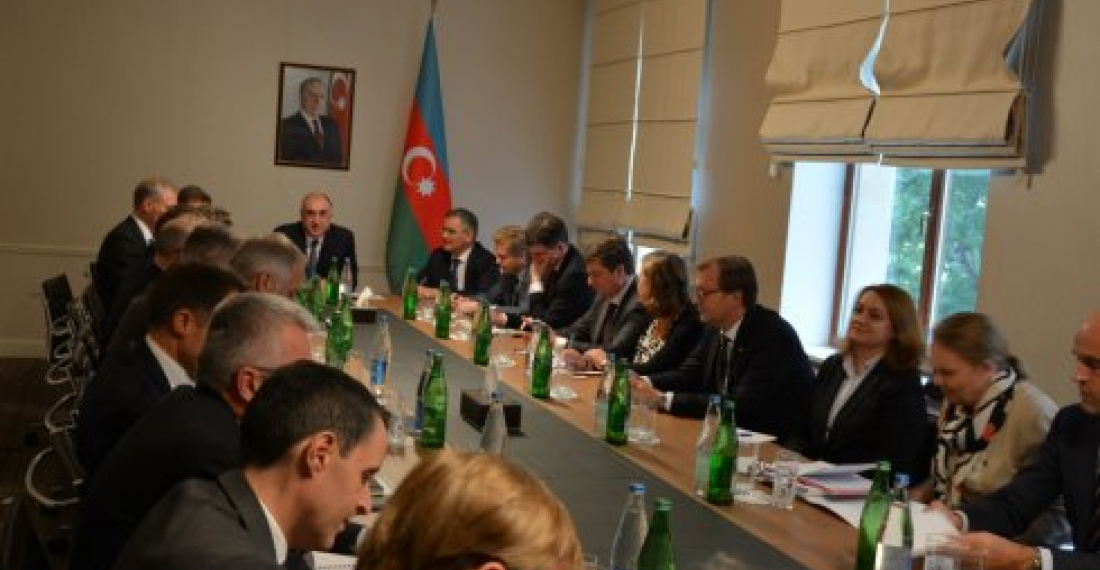
On Wednesday (4 October) the delegation visited Azerbaijan, where it met separately with President Ilham Aliyev and Foreign Minister Elmar Mammadyarov. According to the website of the Azerbaijani Foreign Ministry, during the meeting at the Foreign Ministry, Mammadyarov "talked about the development of cooperation between Azerbaijan and the European Union and the course of negotiations on the draft strategic partnership agreement and stressed that strategic partnership relations were established between 10 countries of the European Union and Azerbaijan. Touching upon cooperation in energy, transport and connectivity areas, the Minister said the new agreement provides an important framework for the comprehensive development of relations between Azerbaijan and the EU, covering political, economic, trade, energy, humanitarian and other spheres."
According to the same source "Elmar Mammadyarov gave detailed information on the current status of the negotiation process on the Armenia-Azerbaijan Nagorno-Karabakh conflict, once again reiterated that resolution of the conflict within the territorial integrity, sovereignty and internationally recognized borders of Azerbaijan is the only settlement option to the conflict. He also talked about the meeting with the OSCE's Minsk Group co-chairs, as well as Foreign Minister of Armenia on the sidelines of the 72nd session of the UN General Assembly and noted that Minsk Group Co-chairs will visit the region in the coming days.
Elmar Mammadyarov said that respect for territorial integrity and inviolability of the borders of the States is a fundamental principle of international relations and stressed that it was also enshrined in the European Union Global Strategy Document."
During the meeting, the Azerbaijani Foreign Minister answered a number questions of the guests about the relations of Azerbaijan with neighboring countries, its position on current issues in the international agenda, the regional security issues as well as the fight against terrorism and other issues of mutual interest.
The delegation is alsol due to visit Georgia and Armenia.
source: commonspace.eu with the press service of the Ministry of Foreign Affairs of Azerbaijan.
photo: Azerbaijan Foreign |Minister Mammadyarov with members of the Political and Security Committee of the Council of the European Union in Baku on 4 October 2017 (picture courtesy of the press service of the MFA of Azerbaijan)