


Opinion: Women, Peace and Security: Words Endure, but Government Action Lags

Twenty-five years ago, the UN Security Council adopted Resolution 1325, which recognised what women around the world had long demonstrated through their actions: that peace cannot be built without them, and that gender justice is essential for true security. Resolution 1325 recognised that women must be included in peace processes, and that conflict affects women and girls differently. Over the years, the Women, Peace and Security (WPS) agenda has produced an extensive body of rhetoric: national action plans, reporting frameworks, new Security Council resolutions and regular open debates.

To date, 115 countries have adopted national action plans to promote the Women, Peace and Security (WPS) agenda. Beyond the national level, organisations worldwide have embedded WPS principles into their structures and policies. These include the European Union, which has integrated the principles into its external action framework; NATO, which has made gender perspectives a core component of its operations; ASEAN, which has developed a Regional Plan of Action on WPS; the Organisation of American States, which promotes WPS through its Inter-American Commission of Women; and the African Union, which continues to support national implementation and regional coordination within the WPS framework.

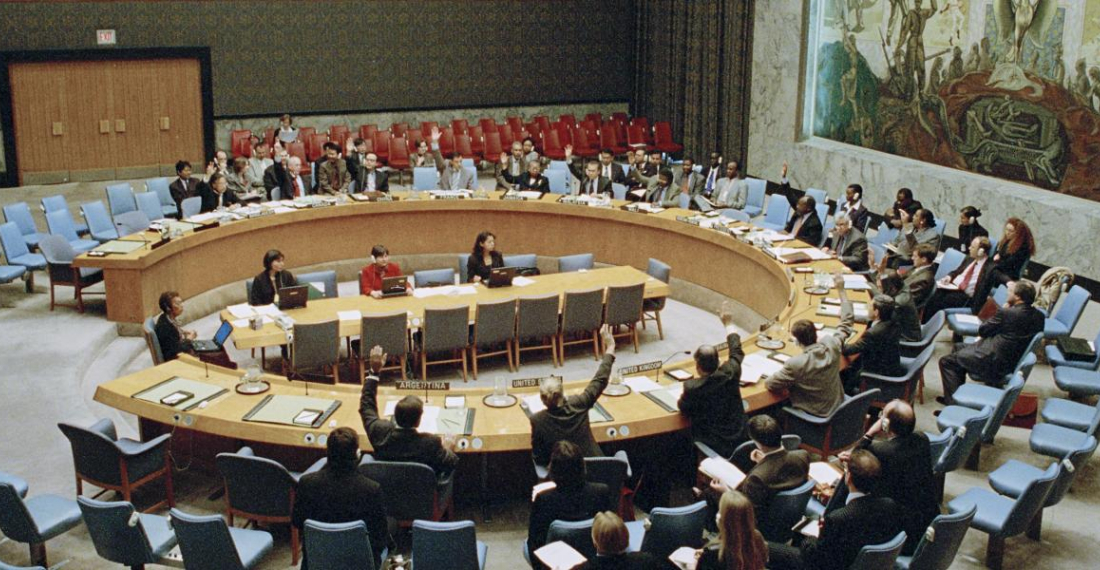
However, amid the multiplication of crises across the globe, while words race ahead, clear, implementable actions from governments lag behind. On Monday (6 October), the UN Security Council held its annual open debate on women, peace and security (WPS). The meeting was opened by UN Secretary-General António Guterres, who observed: 'Too often, we gather in rooms like this one, full of conviction and commitment, only to fall short when it comes to bringing real change to the lives of women and girls caught up in conflict.' He could not have been more right.

Take Gaza, for example. According to the Office of the UN High Commissioner for Human Rights, between 2023 and 2024, seven out of ten women killed in conflicts worldwide died in Gaza. Earlier this year, the Georgetown Institute for Women, Peace and Security found that the Taliban had banned women from most professions in Afghanistan, prohibited them from travelling without a male chaperone and barred girls from studying beyond the age of twelve. Even the most basic freedoms, such as walking in a park, visiting a gym or participating in public life, have been stripped away. The Democratic Republic of the Congo (DRC) has long been described as 'the rape capital of the world'. In Chad, women and girls face overlapping threats from climate stress and armed conflict. In Haiti, they are disproportionately targeted for killing and sexual abuse by gangs. In Sudan, women and girls experience brutal violence and widespread rape while trapped in one of the world's worst humanitarian crises. In Yemen, they are among the first to suffer from resource scarcity, environmental degradation and natural disasters exacerbated by climate change.

Yet, despite these challenges, women in these countries continue to resist and rebuild. In the Democratic Republic of the Congo (DRC), Justine Masika Bihamba coordinates Synergy of Women for Victims of Sexual Violence. She works to improve the lives of rural women, defend human rights, and support victims of war, particularly female survivors of sexual violence. In Israel, women have mobilised 15,000 people to call for an end to the war in Gaza and for a hostage deal to be reached. Bisan Owda, recipient of the 2024 Human Rights Defender Award, has spent the past two years documenting Israeli atrocities in Gaza. In Haiti, the programme 'Positive Masculinity' challenges harmful, traditional stereotypes of masculinity. In Yemen, women in Al-Qabaitah are driving local change through renewable energy projects and entrepreneurship. On 15 August 2025, the fourth anniversary of the Taliban seizing power, the United Afghan Women’s Movement for Freedom led an indoor protest against the Taliban.

These examples demonstrate that, while governments are talking about the need for action, women are refusing to stand still. Across regions, women's movements, journalists, peacebuilders and local organisations continue to take action where institutions hesitate. They document abuses, rebuild communities and campaign for justice, often at great personal risk. Their determination exposes a painful truth: the Women, Peace and Security agenda is not failing due to a lack of commitment from women, but due to a lack of courage and follow-through from governments. While governments may speak of gender equality in peace and security, it is women on the ground who keep the WPS agenda alive. From Kabul to Kinshasa and Gaza to Port-au-Prince, they fulfil the promises of resolutions.

What must governments do:

In order to close the gap between enduring words and lagging government action, the following must be implemented:

  1. Dedicated, predictable funding: National action plans and women's civil society organisations must be backed by multi-year budget lines. Women-led organisations and national plans that actively support women and girls in the affected regions should be funded by donors, multilateral agencies and state budgets.
  2. It's not just about reporting; it's about accountability. States must be routinely held accountable for implementation through independent monitoring and transparent evaluation. The Security Council itself must honour the commitments made at the Open Debate.
  3. Inclusion in peace processes: Women must be meaningfully involved at every stage of peacebuilding and negotiations, as key decision-makers, not just as symbolic participants.
  4. Protection and justice for victims of sexual and gender-based violence: Conflict-related sexual violence must be treated as a central issue, with the capacity to investigate, pressure to be applied to those responsible for the violence, and support to be provided to survivors.

As the WPS agenda enters its second twenty-five years, the question is no longer whether governments understand what needs to be done, but whether they are willing to act urgently and decisively.


Alexandra Dumitrescu is a Senior Research Associate at LINKS Europe Foundation and the news portal commonspace.eu.
 
The views expressed in opinion pieces and commentaries do not necessarily reflect the position of commonspace.eu or its partners

Related articles

Editor's choice
News
UAE says it will withdraw from Yemen, but division emerges in Yemeni presidential council

UAE says it will withdraw from Yemen, but division emerges in Yemeni presidential council

In a move seen as an attempt to de-escalate a crises with Saudi Arabia, the United Arab Emirates, on Tuesday (30th December) announced that it was heeding a call to withdraw its troops from Southern Yemen. UAE says that its presence included counter-terrorism teams that were crucial in fighting against Islamist groups. UAE sources said that parts of Yemen not controlled by the Houthis have had Al Qaeda in the Arab Peninsula (AQAP) operatives using the territory to launch attacks on Europe, the US and Middle East. UAE teams have co-ordinated with American and British special forces and intelligence. The sources added that Emirati forces and their Yemeni allies also helped reverse Houthi gains in the south. including the liberation of Aden port. The small UAE contingent has remained in place since the UAE withdrew most of its military personnel in 2019. The leading English-language newspaper in Abu Dhabi, The National, said that the main UAE force was based at Riyan Mukalla International Airport, with access to fixed-wing aircraft and helicopters, but also operated smaller contingents in the port town Balhaf and Shabwa. "It is understood it also flew a number of drones from the airbase that were able to track terrorist movements, pass information back to its allies and assisted special forces' missions." Meanwhile a division has emerged in Yemen's presidential council after four members denounced what they called the 'unilateral decisions' by the chairman. Four of Yemen’s eight Presidential Leadership Council members on Tuesday denounced an announcement by the council’s chairman accusing him of breaching the governing agreement. Tension between Yemeni leaders has been rising for weeks, underscoring the fragility of the country's already fractured political landscape and further complicating efforts to confront the Iran-backed Houthi rebels. The latest rift took an unprecedented turn on Tuesday morning, marked by a Saudi-led coalition “limited operation” striking combat vehicles Riyadh linked to the Southern Transitional Council, which has three members in the PLC. The PLC Chairman, Rashad al Alimi, on Tuesday said that he was seeking to cancel the joint defence agreement with the UAE. “What has been issued … constitutes a clear violation of the Declaration of the Transfer of Power [agreement], which explicitly stipulates that the Presidential Leadership Council is a collective body whose decisions are taken by consensus, or by majority when consensus is not possible,” the statement by the four members said. “It does not, under any circumstances, allow for unilateral decision-making on sovereign, military, or major political matters." The statement was signed by STC chief Aidarous Al Zubaidi, Faraj Al Bahsani, Tariq Saleh and Abu Zaraa al Muharrami. (click the picture to read the full article).

Popular

Editor's choice
News
UAE says it will withdraw from Yemen, but division emerges in Yemeni presidential council

UAE says it will withdraw from Yemen, but division emerges in Yemeni presidential council

In a move seen as an attempt to de-escalate a crises with Saudi Arabia, the United Arab Emirates, on Tuesday (30th December) announced that it was heeding a call to withdraw its troops from Southern Yemen. UAE says that its presence included counter-terrorism teams that were crucial in fighting against Islamist groups. UAE sources said that parts of Yemen not controlled by the Houthis have had Al Qaeda in the Arab Peninsula (AQAP) operatives using the territory to launch attacks on Europe, the US and Middle East. UAE teams have co-ordinated with American and British special forces and intelligence. The sources added that Emirati forces and their Yemeni allies also helped reverse Houthi gains in the south. including the liberation of Aden port. The small UAE contingent has remained in place since the UAE withdrew most of its military personnel in 2019. The leading English-language newspaper in Abu Dhabi, The National, said that the main UAE force was based at Riyan Mukalla International Airport, with access to fixed-wing aircraft and helicopters, but also operated smaller contingents in the port town Balhaf and Shabwa. "It is understood it also flew a number of drones from the airbase that were able to track terrorist movements, pass information back to its allies and assisted special forces' missions." Meanwhile a division has emerged in Yemen's presidential council after four members denounced what they called the 'unilateral decisions' by the chairman. Four of Yemen’s eight Presidential Leadership Council members on Tuesday denounced an announcement by the council’s chairman accusing him of breaching the governing agreement. Tension between Yemeni leaders has been rising for weeks, underscoring the fragility of the country's already fractured political landscape and further complicating efforts to confront the Iran-backed Houthi rebels. The latest rift took an unprecedented turn on Tuesday morning, marked by a Saudi-led coalition “limited operation” striking combat vehicles Riyadh linked to the Southern Transitional Council, which has three members in the PLC. The PLC Chairman, Rashad al Alimi, on Tuesday said that he was seeking to cancel the joint defence agreement with the UAE. “What has been issued … constitutes a clear violation of the Declaration of the Transfer of Power [agreement], which explicitly stipulates that the Presidential Leadership Council is a collective body whose decisions are taken by consensus, or by majority when consensus is not possible,” the statement by the four members said. “It does not, under any circumstances, allow for unilateral decision-making on sovereign, military, or major political matters." The statement was signed by STC chief Aidarous Al Zubaidi, Faraj Al Bahsani, Tariq Saleh and Abu Zaraa al Muharrami. (click the picture to read the full article).

