The discussions between Georgia, Russia and other parties in the aftermath of the 2008 Georgia-Russia War resumed in Geneva this week where the 52nd round of the Geneva International Discussions were held. The talks were mediated by the three co-chairs of the process representing the EU, the OSCE and the UN.
At the end of the meeting the co-Chair issued the following statement:
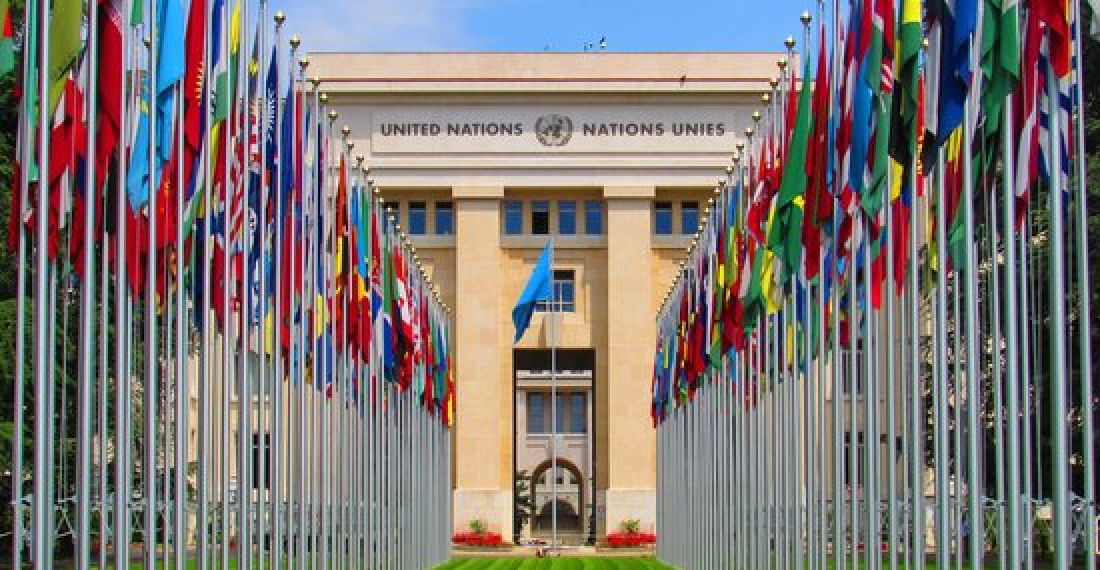
The 52nd round of the Geneva International Discussions (GID) took place in the Palais des Nations on 25 and 26 March 2021. The meeting was held in person, with all requisite pandemic mitigation measures in place.
All participants reiterated the importance of, and their commitment to, the GID process. Two separate working groups focused on security and humanitarian issues. The security situation on the ground was assessed as relatively calm and stable. Participants reviewed a number of issues including detention cases, missing persons, freedom of movement, and the security situation in certain areas.
Particular focus was given to the core agenda item of non-use of force and international security arrangements. Participants had a frank and open exchange of views on the matter.
As the global COVID-19 pandemic continues, the GID Co-Chairs and participants focused on the needs and concerns of conflict-affected people. Participants also discussed possibilities for joint efforts to address the pandemic and mitigate its impact on humanitarian and socio-economic situations and threats to livelihoods.
Since some participants walked out, a discussion on the core issue of Internally Displaced Persons (IDPs) and refugees could not take place.
The Co-Chairs welcomed the continued utilization of the Incident Prevention and Response Mechanism (IPRM) in Ergneti and emphasized the need to resume regular meetings of the Gali IPRM as soon as possible.
While concerns remain about freedom of movement, the Co-Chairs welcomed some steps taken to facilitate crossings in order to give vulnerable people access to social benefits, pensions, and medical care.
Aspects of the “Women, Peace and Security” framework were also discussed. In this context, the Co-Chairs underscored that conflict has a different impact on women and men.
The Co-Chairs again called on all participants to increase efforts to build trust and confidence among them, to address all elements of comprehensive security, and to ensure constructive co-operation with international humanitarian and human rights organizations.
The participants agreed to hold their next meeting in Geneva on 29 and 30 June 2021.