France, Germany and Poland face the brunt of Russian disinformation attacks

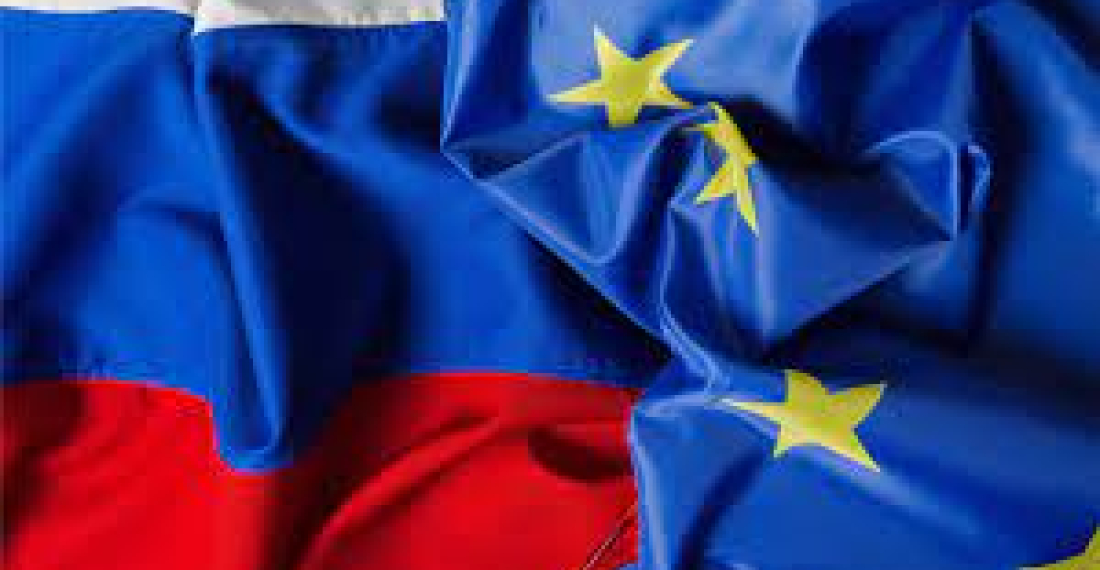
France, Germany, and Poland have become "permanent" targets of Russian disinformation attacks in the lead-up to the European Parliament (EU) elections this week, a senior EU official reported on Tuesday (4 June). The EU has consistently warned that Russia would intensify its disinformation campaigns as the June 6-9 vote approaches. "There are three big countries under permanent attack [from Russia]: France, Germany, and Poland," said EU Commissioner Vera Jourova, citing research by the European Digital Media Observatory, of which AFP is a part. She highlighted an increase in "more massive disinformation attacks on specific topics."

In France, these attacks focus on the upcoming 2024 Summer Olympic Games in Paris. In Germany, they exploit concerns about migration and security, while in Poland, a narrative has emerged online claiming Ukrainian refugees are a "burden." Jourova mentioned a false story that appeared on the Polish state news agency last week, suggesting Poles would be mobilised to fight in Ukraine, which authorities attributed to a likely Russian cyberattack. "Russian propaganda is crafted with a very good understanding of each country's sensitivities and how narratives can be more effectively absorbed," Jourova explained. She added that this propaganda is also spread through the Telegram messaging app in countries like Slovakia, Bulgaria, and the Baltic states. With its 42 million users, Telegram does not yet have to comply with the strictest regulations for "very large" platforms under the EU’s Digital Services Act (DSA). "Telegram is not under our competence yet, but we are now counting the users of Telegram," Jourova noted. 

Speaking to journalists in Brussels after a visit to the United States, where she met with executives from major tech companies, including X and YouTube, Jourova urged "maximum vigilance in these last days" before the elections, emphasising the ongoing risk. She also reminded these companies of their obligations under the DSA. Jourova's comments came a day after Microsoft released a report with similar findings. The US tech giant's Threat Analysis Center indicated that Russia is conducting an intense disinformation campaign aimed at tarnishing the reputation of the International Olympic Committee and inciting fears of violence at the Games. Microsoft President Brad Smith, who was in Brussels to meet with EU officials, including Jourova, echoed her concerns about Russian influence operations. "The number one abusive AI case that people are worried about is the risk of deepfakes influencing elections, especially deepfakes that come from foreign governments," Smith said. "And we’ve definitely seen the Russian government investing in that capability."
Source: commonspace.eu with other agencies

Related articles

Editor's choice
News
Borrell tells the European Parliament that the situation in Afghanistan was critical, but the EU will remain engaged

Borrell tells the European Parliament that the situation in Afghanistan was critical, but the EU will remain engaged

Borrell underlined that the European Union will make every effort to support the peace process and to remain a committed partner to the Afghan people. "Of course, we will have to take into account the evolving situation, but disengagement is not an option.  We are clear on that: there is no alternative to a negotiated political settlement, through inclusive peace talks.
Editor's choice
News
Pope's visit to Türkiye and Lebanon has a strong ecumenical character, and places interreligious dialogue at its centre

Pope's visit to Türkiye and Lebanon has a strong ecumenical character, and places interreligious dialogue at its centre

Pope Leo XIV has begun the first overseas trip of his pontificate, a six-day visit to Türkiye and Lebanon, which started yesterday (27 November) and ends on Tuesday (2 December). According to Vatican Radio, the visit "carries a strong ecumenical character and places interreligious dialogue at its centre. It will also be a moment of closeness to Christian communities and local populations across the region".   During nearly a week in the region, Pope Leo XIV will meet civil and religious authorities, visit mosques and ancient churches, pray at Beirut’s port in memory of the victims of the 2020 explosion, and hold private meetings with Presidents Recep Tayyip Erdoğan and Joseph Aoun.   A highlight of the visit will be a visit to Nicaea, where the Pope will mark the anniversary of the Council of Nicaea. Christians of many traditions recognise the Council of Nicaea as a foundation of shared faith. One of the most anticipated moments will be the Pope’s encounter with Lebanese youth in Bkerké, at the Maronite Patriarchate, a meeting expected to carry strong messages of hope in the Jubilee Year. A central event will be the ecumenical celebration in İznik, where the Pope and Ecumenical Patriarch Bartholomew will walk together toward the ruins of the Basilica of St Neophytos. The prayer, held before icons of Christ and the Council, will conclude with the lighting of a candle—a symbolic gesture of unity. The journey will also highlight interreligious engagement.   Memorable moments are expected throughout the trip: a wreath at Atatürk’s mausoleum, prayer inside the Blue Mosque, Mass at Istanbul’s Volkswagen Arena, the planting of a cedar at the presidential palace in Beirut, and prayer at the tomb of St Charbel in Lebanon. The Vatican said that "Pope Leo XIV’s pilgrimage to Türkiye and Lebanon aims to offer a voice of peace, unity, and hope at the heart of the Middle East."

Popular

Editor's choice
News
Pope's visit to Türkiye and Lebanon has a strong ecumenical character, and places interreligious dialogue at its centre

Pope's visit to Türkiye and Lebanon has a strong ecumenical character, and places interreligious dialogue at its centre

Pope Leo XIV has begun the first overseas trip of his pontificate, a six-day visit to Türkiye and Lebanon, which started yesterday (27 November) and ends on Tuesday (2 December). According to Vatican Radio, the visit "carries a strong ecumenical character and places interreligious dialogue at its centre. It will also be a moment of closeness to Christian communities and local populations across the region".   During nearly a week in the region, Pope Leo XIV will meet civil and religious authorities, visit mosques and ancient churches, pray at Beirut’s port in memory of the victims of the 2020 explosion, and hold private meetings with Presidents Recep Tayyip Erdoğan and Joseph Aoun.   A highlight of the visit will be a visit to Nicaea, where the Pope will mark the anniversary of the Council of Nicaea. Christians of many traditions recognise the Council of Nicaea as a foundation of shared faith. One of the most anticipated moments will be the Pope’s encounter with Lebanese youth in Bkerké, at the Maronite Patriarchate, a meeting expected to carry strong messages of hope in the Jubilee Year. A central event will be the ecumenical celebration in İznik, where the Pope and Ecumenical Patriarch Bartholomew will walk together toward the ruins of the Basilica of St Neophytos. The prayer, held before icons of Christ and the Council, will conclude with the lighting of a candle—a symbolic gesture of unity. The journey will also highlight interreligious engagement.   Memorable moments are expected throughout the trip: a wreath at Atatürk’s mausoleum, prayer inside the Blue Mosque, Mass at Istanbul’s Volkswagen Arena, the planting of a cedar at the presidential palace in Beirut, and prayer at the tomb of St Charbel in Lebanon. The Vatican said that "Pope Leo XIV’s pilgrimage to Türkiye and Lebanon aims to offer a voice of peace, unity, and hope at the heart of the Middle East."