Central Asia joins UN Global Compact Network to Drive Sustainable Business

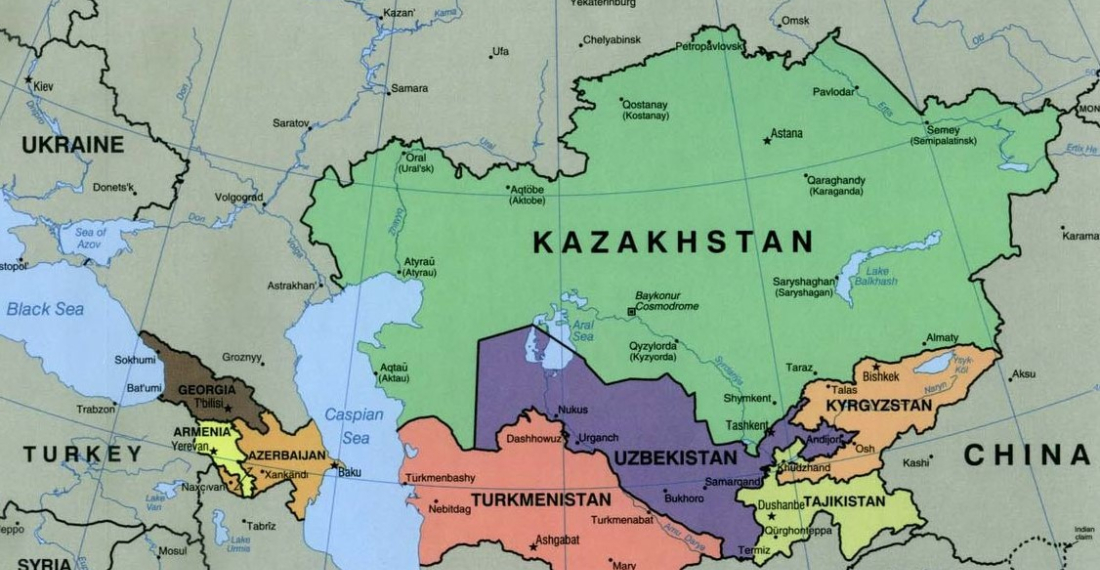
 In a move to increase regional economic integration, the UN Global Compact has established a Central Asia Country Network, uniting companies across Kazakhstan, Kyrgyzstan, Uzbekistan, Tajikistan, and Turkmenistan. Over 140 firms have already signed on, marking a shift from previously isolated efforts toward a coordinated approach to sustainable business and the Sustainable Development Goals (SDGs).

The new network will deliver training, tools, and global partnerships to help businesses improve corporate governance, boost transparency, reduce carbon emissions, and meet rising demands for ethical labour standards. It also aims to build trust across borders via joint training programmes, regional dialogues, and business alliances. In addition, this network promises to offer different opportunities for the youth, which represents more than 60% of the population in the region.

Sanda Ojiambo, UN Global Compact CEO, underscored Central Asia’s importance as a crossroads connecting Europe, Asia, and the Middle East, highlighting the network’s potential to anchor responsible investment and green growth in a politically evolving region.

Moving forward, the network will focus on actionable initiatives, such as linking local firms to SDG-aligned investment, fostering regional cooperation, and translating international sustainability standards into tangible development outcomes.

Source: commonspace.eu with ESG News and agencies.



Related articles

Popular

Editor's choice
Interview
Thursday Interview: Murad Muradov

Thursday Interview: Murad Muradov

Today, commonspace.eu starts a new regular weekly series. THURSDAY INTERVIEW, conducted by Lauri Nikulainen, will host  persons who are thinkers, opinion shapers, and implementors in their countries and spheres. We start the series with an interview with Murad Muradov, a leading person in Azerbaijan's think tank community. He is also the first co-chair of the Action Committee for a new Armenian-Azerbaijani Dialogue. Last September he made history by being the first Azerbaijani civil society activist to visit Armenia after the 44 day war, and the start of the peace process. Speaking about this visit Murad Muradov said: "My experience was largely positive. My negative expectations luckily didn’t play out. The discussions were respectful, the panel format bringing together experts from Armenia, Azerbaijan, and Turkey was particularly valuable during the NATO Rose-Roth Seminar in Yerevan, and media coverage, while varied in tone, remained largely constructive. Some media outlets though attempted to represent me as more of a government mouthpiece than an independent expert, which was totally misleading.  Overall, I see these initiatives as important steps in rebuilding trust and normalising professional engagement. The fact that soon a larger Azerbaijani civil society visits to Armenia followed, reinforces the sense that this process is moving in the right direction." (click the image to read the interview in full)