This article, by Arshaluys Mgdesyan, was first published by the German broadcaster DW (Cologne)
A Russian-born businessman heads the investment fund financing the so-called "Trump Route," a planned corridor through Armenia linking Azerbaijan with Nakhchivan. Who is Konstantin Sokolov, and what role does he play?
Until recently, few people in the South Caucasus had heard of Konstantin Sokolov. Now the 52-year-old Russian-American businessman is at the center of new investment fund backed by US President Donald Trump.
In mid-July, Sokolov — who emigrated from Russia to the US at age 21 and later founded the investment firm IJS Investments in Chicago — was appointed to head a new investment fund of the US State Department.
The TRIPP+ EnterpriseFund, registered in the US as the Trans-Caspian Enterprise Fund and launched with more than $200 million (about €172.5 million) in capital, is expected to invest in countries across the South Caucasus and Central Asia, and help finance the large-scale TRIPP infrastructure project, also known as the "Trump Route for International Peace and Prosperity."
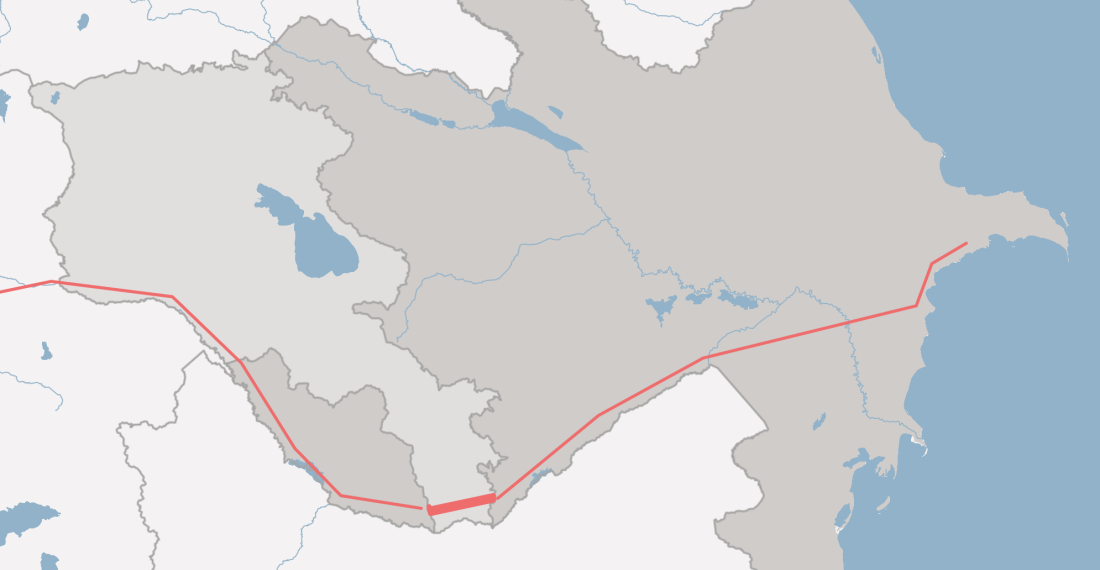
The "Trump Route" is a transit corridor that aims to connect Azerbaijan with its autonomous exclave of Nakhchivan through Armenian territory. The ambitious infrastructure project is part of a peace deal that Armenia and Azerbaijan signed in August 2025 with US mediation. In early June 2026, Washington and Yerevan signed a framework cooperation agreement for the project.
Experts have said construction of the "Trump Route" fits Washington's strategy of creating a trade corridor between Europe and the region that bypasses existing routes through Russia and Iran.
Sokolov buys up Russian assets in Armenia
Long before he was appointed to head TRIPP+, Sokolov had already established a foothold in Armenia.
In 2024, he acquired Viva Armenia, the country's largest telecommunications provider. Despite its subsequent partial nationalization, Sokolov continued to expand his holdings. Recently, his companies also bought up the Armenian subsidiary of Russian telecom giant Rostelecom.
In August 2025, Azerbaijani President Ilham Aliyev (left) and Armenian Prime Minister Nikol Pashinyan (right) signed a joint declaration 'peace road map' after talks with TrumpImage: Azerbaijan Presidency/Anadolu/picture alliance
An even more significant deal, however, was carried out largely out of the public eye: the purchase of the Teghut copper-molybdenum mine. The mine, which holds an estimated 450 million metric tons of ore and has Armenia's second-largest reserves, had been taken over by Russia's state-owned VTB Bank after the company accumulated massive debts. VTB is now under Western sanctions. According to Radio Free Europe/Radio Liberty's Armenian service, the deal was carried out through a third-party company.
"Sokolov wanted to avoid a direct deal with the Russian bank," said Mkrtich Karapetyan, a Radio Liberty journalist who has been investigating the flow of foreign capital into Armenia.
Source: This article, by Arshaluys Mgdesyan, was first published by the German broadcaster DW (Cologne)