


Yemen – the forgotten conflict

The civil war in Yemen has been going on for ten years, and the world has pretended not to notice. It is only when the conflict spills over to neighbouring countries and regions that we see a flurry of activity, usually of the wrong kind. This was the case when targets in the UAE and Saudi Arabia came under attack, or more recently when shipping in the Red Sea was targeted by Yemen’s current ruling group, the Houthis.

The Houthis

The Houthi movement emerged from the Northern Yemeni province of Saada. They are the political and military expression of the Zaidi community, a sect within Shia Islam which claims about 35% of Yemen’s population estimated around 35 million. The Houthi movement, also known as Ansar Allah (Partisans of God), emerged in the 1990s. It is predominantly made up of Zaidi Shias, and their leadership comes mainly from the Houthi tribe.

The Zaidis ruled Yemen for 1,000 years up until 1962 when a revolution toppled the Imam and his government.  The Houthi movement has often advocated for Zaidi revival but they are aware that the Imam, was and remains hugely unpopular.  

Being much more savvy, the Houthis participated in the popular uprising of 2011 by coordinating with other elements of the Yemeni opposition. After the regime of Ali Abdalla Saleh was toppled they participated in the National Dialogue Conference, but rejected its conclusions. As 2014 came to a close, the Houthis repaired their relationship with Saleh who remained influential, and lurked in the background. Together they tipped the balance of power, and the Houthis took control of the Yemeni capital, Sanna. Subsequently, Yemen has had two governments, and a civil war.

Anti-Israel and anti-US stance and rhetoric help the Houthis to achieve legitimacy in the wider Yemeni community and public opinion. However it comes at a cost, The Houthi Movement has been redesignated as a terrorist group by the US and most western governments. The US has also started air strikes against Houthi targets. The Trump White House has apparently given US Central Command a free hand to target Yemen at will. They are conducting operations, using the base on Diego Garcia as a launch pad.

However, these air strikes will not reduce the Houthi control over Yemen. The first time an air force was used against an insurgency was by the British Royal Air Force in Yemen shortly after WW1

They continued to use this tactic until they unceremoniously left (Southern) Yemen in 1967. In all their time the use of air bombardments did not help their position. On the contrary it hardened the attitude of the common people against them. There is nothing to show it will be very different with the Americans in 2025

Ali Abdullah Saleh and the significance of Sanaa

I visited Yemen many times from 1980-2015. Sanaa was a bustling Arab city. Until he was overthrown in 2011/12, the shadow of the president, Ali Abdullah Saleh, lay over the city. His web of corruption, intrigue and political guile left most Yemenis breathless. He managed the country by playing one group against the other. He could be all things to everyone. He even persuaded the Americans he was a democrat. Once I was on a plane in the middle of the night, about to leave Tbilisi, when I turned my head and saw sitting next to me Prime Minister Zurab Zhvania, who I knew very well. “Where are you going?” I asked. “Yemen”, he replied. Apparently, Saleh had persuaded the US group NDI that he was a democrat, and the Americans decided to take Zhvania to Sanaa to share his experience, the Georgian Prime Minister being, at the time, the best example the Americans had of a democratic success story.

Ali Abdullah Saleh may today be dead, but his many relatives are very much alive, and they have networks and financial resources that few others have. Some see Saleh’s relations as a solution to Yemen’s many problems. It's ironic that one sees a sense of nostalgia for Saleh and his time.

Humanitarian Disaster

Yemen today is a humanitarian disaster. The toll of the war is very high. 160,642 are reported killed in the fighting, including many civilians. Nearly 20 million people, more than half the population, need aid to survive. Millions live in poverty, and millions have been displaced. The numbers and the sheer size of the humanitarian disaster is simply staggering. How to help the Yemeni people, without helping the Houthi movement, especially now it has been re-designated as a terrorist group, is the biggest challenge of the international community. The Americans have washed their hands and are moving out. USAID was one of the leading donors, and millions of Yemenis depended on it. Its work and money have abruptly stopped and the Americans are now content with bombing Yemen from the air. Will the European Union and European countries step in to fill the gap? The problem is simply too large.

Civil society is too weak

Yemeni civil society is too weak to play a decisive role. In the short period 2011-14, they blossomed, and were seen as the future. But a decade of Houthi rule in Sanaa has weakened them, some say decisively. But if Yemen is ever to rise from the ashes, civil society will need to be fully involved.

The neighbours

The Houthis have turned to Iran for help, and the Iranians were quick to oblige, providing military and intelligence support. In the west, the Houthis are portrayed as a proxy of Iran but this is an oversimplification. The strength of the Houthis is that they are fully embedded within the Yemeni nation. This makes Yemen difficult to deal with.

Two neighbours tried, and they have now become part of the story: Saudi Arabia and the United Arab Emirates (UAE). They tried to defeat the Houthis militarily, but failed. They now are pursuing their agendas separately.

The Saudis have a long history with Yemen, and are trying to do with money what they failed to do with arms. They support the internationally recognised government but indications are they are also talking to the Houthis. The Saudis have the potential to be game changers but they need to play the long game and be ready for compromise and for messy solutions. It seems Mohammed bin Salman, who a decade ago rushed Saudi Arabia into a full war with the Houthis, has learnt to be more flexible and patient.

The second neighbour is the UAE. It is smaller than Saudi Arabia, but its financial capacity is high. The UAE has concentrated on the South, which until 1990 when Yemen united, was a separate country, and before that a British territory consisting of the Colony of Aden and two protectorates. Here the Houthis have little influence, and the Southern Movement has widespread support, and wants ideally to separate again. The UAE has concentrated its efforts in recent years on this part of Yemen, bypassing the issue of separation, but supporting the South otherwise.

Does Yemen have a future?

It is quite understandable that many are pessimistic about Yemen and its future. The redeeming factor is the Yemeni people. Their resilience is inspiring. There are amongst them extremely clever people. The problems are huge, and the international community must be ready to intervene strategically to support. But in the end the Yemeni problems will have to be solved by the Yemeni people, and this may take time.

Source: Dr Dennis Sammut is the Director of LINKS Europe and Managing Editor of commonspace.eu. 
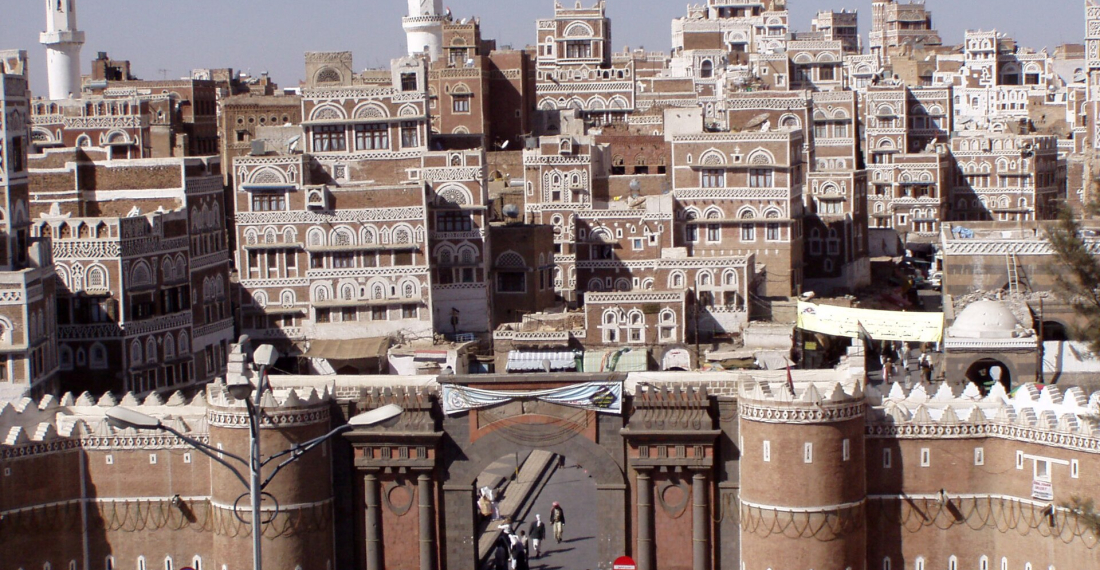
Photo: The Old City of Sanaa, a world heritage site, and Bab al-Yemen decorated by patterns made in brick and white gypsum - Wikipedia

The views expressed in opinion pieces and commentaries do not necessarily reflect the position of commonspace.eu or its partners

Latest

Editor's choice
Monday Commentary
Monday Commentary: PEACE IN OUR TIME?

Monday Commentary: PEACE IN OUR TIME?

Making peace between Armenia and Azerbaijan was never going to be simple, nor easy, nor quick. It is taking time, writes Dennis Sammut in this Monday Commentary. “There is a sense of realism coming from the leaders of the two countries – President Ilham Aliyev of Azerbaijan and prime minister Nikol Pashinyan of Armenia, that frankly, is necessary and welcome”, he writes. At a time when conflicts are raging all over the world – from Ukraine to the Gulf, from Africa to South Asia, the prospect that Armenia and Azerbaijan had finally, after decades of conflict that left thousands of dead and many more displaced, decided on embarking on a journey of peace was welcomed. Peace between Armenia and Azerbaijan can be top-down up to a point. Both leaders have spent political capital preparing for a peace deal. But both are aware that their people are not ready for peace yet. In fact, in Armenia, most of the elite are negative toward a peace deal with Azerbaijan. Pashinyan needs time to persuade his countryfolk. That is why 2031 is realistic. Ilham Aliyev runs a tighter shop, but he is also not immune to public opinion. Every time someone hits a landmine in Karabakh, which unfortunately happens often, peace comes into question. Which is why Aliyev chooses to sound hardline, more often than not. In pursuing the peace agenda, both Aliyev and Pashinyan need to proceed cautiously. But they are right in making peace the central issue in their agenda. It is the main issue, and the one that will define them in history. So forward, cautiously but resolutely! In pursuing the peace agenda, Aliyev and Pashinyan need to be supported clearly and unambiguously. There are too many people in Baku and Yerevan who are sitting on the sides, waiting. The international community is not doing enough. It is time to be counted. Otherwise, the spoilers will win, and the region will go back to its bad habits. (Click the image to read the full commentary).
Editor's choice
News
Ukraine Peace Talks Set to Expand as Russia and Europe Clash Over Post-war Security

Ukraine Peace Talks Set to Expand as Russia and Europe Clash Over Post-war Security

Ukraine and Russia could see European countries join the next round of peace negotiations, following talks between US special envoys Steve Witkoff and Jared Kushner and Russian President Vladimir Putin in Moscow on Thursday (November 12). However, conflicting positions over European military involvement, Ukraine’s territorial future and the continent’s security arrangements highlight the difficulties facing the diplomatic process. Speaking after the meeting, Witkoff said European participation would be an important development, describing the countries concerned as key partners. Kushner also indicated that Washington had noticed a shift in European attitudes and believed their involvement would not obstruct progress. In a statement published on X, he said the expanded discussions would address broader European security arrangements alongside territorial disputes between Russia and Ukraine. The US envoys subsequently travelled to Dublin, where they met Ukrainian President Volodymyr Zelenskyy during a European summit. Zelenskyy welcomed the possibility of European participation and expressed hope that the negotiations would include measures to reduce tensions and establish ceasefires. He also reiterated the importance of European representation in decisions concerning the continent’s security. Moscow, however, has offered a more cautious interpretation of the proposed expansion. Putin's aide, Yuri Ushakov, suggested that European countries should first reconsider their military assistance to Kyiv, arguing that their current actions demonstrated an unwillingness to pursue peace. Putin similarly called on Washington to work with its European allies to establish whether they genuinely wanted peace or continued confrontation with Russia. The Russian president also rejected the prospect of European peacekeeping troops being deployed to Ukraine following a potential agreement, describing such a presence as a continuation of the war. His position reflects wider disagreements over the future European security architecture, with Moscow seeking discussions on the continent's broader security arrangements, while European leaders insist that such negotiations cannot replace a settlement of the war. Simultaneously, Zelenskyy raised concerns about disruptions to Starshield, the US-made satellite communications service used by Ukrainian forces. He described Washington’s discussions with Moscow about Europe's future security as unusual and warned against decisions that could undermine Ukraine's sovereignty. Despite the diplomatic activity, fighting continued. Russian drone attacks killed two people in Ukraine's Sumy region and injured five in Rivne, while a separate attack in Russia's Belgorod region killed one person and injured four. Ukrainian agricultural company Kernel Holding also suspended operations at all its oilseed extraction facilities following repeated Russian attacks.

Popular

Editor's choice
Monday Commentary
Monday Commentary: European-Azerbaijan relations need an intensive and multifaceted dialogue that is frank and honest

Monday Commentary: European-Azerbaijan relations need an intensive and multifaceted dialogue that is frank and honest

Last week I visited Baku, Azerbaijan. My visit was relatively short, but very intensive, and had many meetings with stakeholders and colleagues. When I arrived in Baku first time in 1996,  Azerbaijan was a different country: weak, poor, and shaken by defeat in war. For thirty year the Karabakh issue dominated the agenda: the political agenda but also the popular mindset. Now, thirty years later, Azerbaijan has returned to Karabakh, and peace with Armenia is on the horizon. It is a new era for Armenia-Azerbaijan relations, for the South Caucasus, but also for Europe.  But we cannot be complacent: the Peace agreement has been initialed but not signed; borders remain closed; TRIPP is ambitious but remains an idea; and there are spoilers who want to turn the clock back. We must not allow them, and in this Europe and Azerbaijan must work together. Europe’ vanguard organization is the European Union – it is a free union of 27 member states; it is a strong global economic force, and increasingly a diplomatic and military force too. But it remains “work in progress” and can often appear dysfunctional. It often lacks collective and institutional memory. In its dealings with Azerbaijan the EU has made many mistakes – not least opening the delegation here late – in 2008. It sometimes appears condescending. Some utterances from the European Parliament and from some quarters in some member states are not understandable even for me. They irritate the Azerbaijanis, but serve no other purpose But Azerbaijan has also not handled relations with the EU well. It has failed to respond when the hand of friendship reached out; and it confused irritating actions, sometimes by well-meaning people; sometimes by outright spoilers, with strategic action. In short, EU-Azerbaijan relations have suffered from a lack of proper dialogue. This dialogue must be frank, honest and multi-faceted involving different segments of society on both sides.   Is Azerbaijan Europe? When Azerbaijan applied to join the Council of Europe in the 1990s, there were some who opposed, saying this was not Europe. I was one of the people who argued that Armenia and Azerbaijan may be on the periphery of the continent geographically, but were European in essence. Certainly their elites. During the discussion on 4 September in Baku, my friend Farhad Mammedov, mentioned that Azerbaijan is not interested in joining the EU, and was now close to the Central Asian countries in the 5 plus 1 format. Neither things mean that Azerbaijan is not Europe. There are several European countries that are not in the EU, and do not want to be, for example Norway and Switzerland. Iceland has recently voted to stay out of the EU. The UK was a member and left. Europe is bigger than the EU, and the holding of the European Political Community summit in Baku in 2027 proves that. Despite all the rhetoric, I never heard the president of Azerbaijan  saying that Azerbaijan is not Europe, nor have I heard any European president say it either. Not wanting to join the EU and forging close relations with neighbouring regions does not make Azerbaijan any less European. It is only logical that when Europeans talk to Azerbaijan they talk like family. The conversation is often frank. It must also be honest, and Europeans need always to remember this too. A frank, honest and multi-faceted dialogue A frank, honest and multifaceted dialogue will contribute to relations between Azerbaijan and the rest of Europe: it will avoid misperception, which unfortunately is very common on both sides; it will provide a forum where problems can be discussed and resolved, and it will increase mutual trust, so that together common problems can be addressed. (click image to read the full Monday Commentary)
Editor's choice
Monday Commentary
Monday Commentary: “The barren rocks of Aden” and “These lands of Yemen are so ruthless”

Monday Commentary: “The barren rocks of Aden” and “These lands of Yemen are so ruthless”

There are two early 20th-century tunes that mark foreign attempts to occupy and “pacify” Yemen. The Scottish tune “The barren rocks of Aden” marks the mobilisation of Highland soldiers, enlisted to be deployed to the Yemeni port of Aden, that in 1837 became the last colony to be incorporated into the British Empire. The tune talks of the harshness of the terrain, but is celebratory, It was even played as a farewell tune to Sir William Luce at the parade in Sharjah celebrating his end as “British Viceroy” in the Middle East in 1966. The second tune is an Anatolian lament. As Ilker Sezer reminded us this weekend, in his weekly feature on “Turkiye Today”, it “mourns the tragic fate of Ottoman soldiers dispatched to the harsh, remote deserts of Yemen during the fall of the empire, young men who marched away from their villages and never returned home. Most of their names, and numbers, were never recorded. Yet, their fate left a mark on the Turkish psyche.” Subsequent invaders have discovered that Yemen is a grave that cannot be overcome by the strength of modern technology, and that whilst Yemeni society is splintered and divided, building a reliable alliance with Yemeni factions is difficult. These are the harsh lessons facing Saudi Arabia, as the Kingdom faces its biggest challenge in its modern history. The leadership of the Kingdom now has to respond decisively. At stake is their very credibility. This is likely to be a long and messy conflict. Saudi military objectives need to be focused: to box in the Houthis rather than destroy them. This is likely to include: (a) regaining territory lost on the Red Sea coast; (b) control over Bab el Mandeb Strait; (c) some kind of cordon sanitaire on the Saudi-Yemeni border; and if things go well (d) the capture of Sanaa. All this would not eliminate the Houthi problem, but it will contain it. In the end the Saudis will have to continue managing Yemen with a mixture of carrot and stick. For the moment, the stick is likely, but the carrot cannot be forgotten either. (click the image to read the Monday Commentary in full)

