UN Peacekeeping must be protected in more ways than one
Dr Dennis Sammut is the Director of LINKS Europe Foundation, and Managing Editor of commonspace.eu. He writes Monday Commentary weekly for commonspace.eu.
The news that six members of UNIFIL – the UN Peacekeeping force in Lebanon – have been killed in the last few weeks, has been overshadowed by the broader desperation of the situation in the Middle East.
In March Israel launched an orgy of violence in Lebanon, killing thousands of people, and forcing the displacement of more than a million Lebanese.
Yet, the killing of the six UNIFIL members is a significant indicator of the gravity of the situation facing UN peacekeepers in numerous trouble-spots around the globe. Israel and Hizballah are blamed for the killing of the six UNIFIL soldiers – four Indonesian and two French – in separate incidents. Their death unfortunately is symbolic of a dangerous trend: UN peacekeepers are increasingly specifically targeted. They are in the eyes of belligerents a legitimate target. They are not. Killing peacekeepers is a violation of international humanitarian law. The perpetrators of this crime must be pursued.
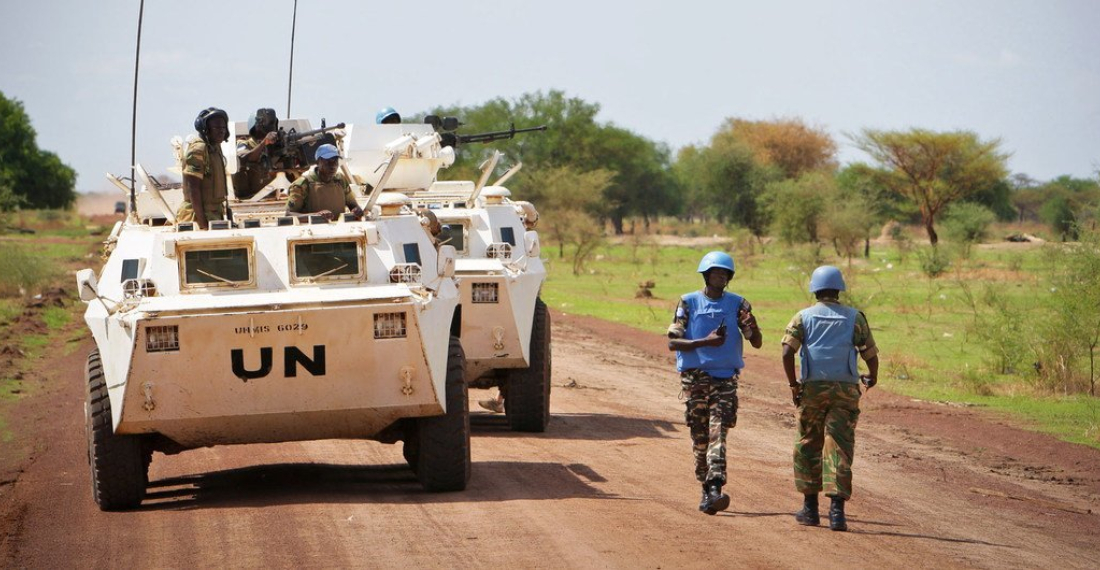
The UN had 11 peacekeeping operations with 61,197 peacekeepers in 2025. This number is set to decrease.
UNIFIL is one of the operations which is set to be closed by December 2026. The peacekeeping mission in south Lebanon was first established by the Security Council in 1978 to confirm Israeli withdrawal from Lebanon and help restore order after Israel's first invasion of the country.
Since then, at least 345 UNIFIL members have died while on duty, including 48 Irish and 42 French.
The UN Department of Peace Operations (DPO) has in its reports to the Security Council, highlighted the difficult environment in which UN peace operations are operating amid ongoing geopolitical tensions. Peacekeepers continue to face increasing risks to their safety and security.
UN peace operations have also increasingly become targets of misinformation, disinformation and hate speech. This underscores the need for enhanced strategic communications in UN peace operations, a means to create better awareness of their role and mandate among local populations. Missions continue to engage with host countries to improve their operating environment and address various restrictions against them in violation of Status of Force Agreements, agreed with host countries, which has become increasingly an issue.
In recent years, there has been growing pressure during mandate renewal negotiations for the removal of thematic and cross-cutting language on human rights; women, peace and security (WPS); and climate, peace and security, among other matters. In this regard, China and Russia have maintained that certain thematic issues are not relevant to the Council’s work and that their inclusion in the mandates of peace operations is unwarranted or even problematic. This trend could become even more pronounced recently, with the Trump administration assuming positions that align more closely with China and Russia on these issues.
Yet, it is financial constraints that are a more existential threat to UN peacekeeping operations.
The impact of the UN’s liquidity crisis on UN peacekeeping operations is a major concern. The UN is expected to run out of cash in July if member states, and particularly the US, do not pay their dues. The Secretary-General has warned that the organisation faces a major risk of “imminent financial collapse”, a situation that would have catastrophic implications for its peacekeeping missions.
The crisis in UN peacekeeping, and the broader UN financial crisis, reflects a deeper problem in the UN, and particularly in the leadership of the UN Security Council, and its legitimacy.
As the authoritative publication, Security Council Report, wrote recently, “Peace operations are among the Council’s most crucial tools, serving as a visible demonstration of its efforts to promote international peace and security. However, ensuring their continued relevance requires addressing several key issues. In this regard, restoring the necessary trust and consensus within the Council, especially among the permanent members, appears to be paramount. While this is easier said than done in the current geopolitical environment, it remains essential to provide political support to peace operations to enable them to fulfil their mandates effectively.”
It is also felt that UN Security Council members need to enhance their efforts towards adopting realistic and achievable mandates for the peacekeeping missions, that align with the needs and expectations of host states and their communities.
Aligning mandates with the resources and capabilities available to peace operations has also been a persistent challenge, which will be more pronounced with the increasing calls for cost efficiency and effectiveness.
UN peace operations are crucial for world peace, particularly in areas and scenarios most vulnerable. They face increasing scrutiny of their effectiveness and disagreements about their objectives.
UN peacekeepers need to be protected on the ground by a robust upholding of international humanitarian law. Peacekeeping operations must have the unwavering support of the UN Security Council, which mandates them, and oversees them. The United Nations is often clumsy and ineffective, and is far from perfect. But it is the only tool the world has to manage our complex world in this dangerous moment. We need to stand up and support it.
Dr Dennis Sammut is the Director of LINKS Europe Foundation, and Managing Editor of commonspace.eu. He writes Monday Commentary weekly for commonspace.eu.