


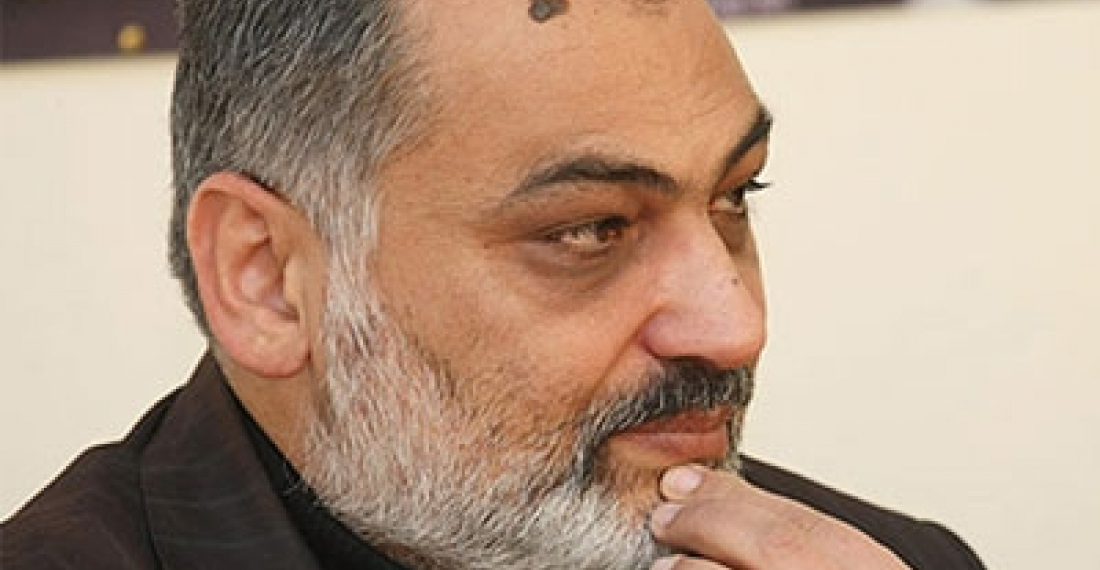
Mr. Safrastyan, what transformation of the geopolitical situation in the Near and Middle East and in Northern Africa will result in?
Today even with an unarmed eye one can notice how quickly the situation has been changing in the Near East and Middle East. The key question still remains - what will happen after all these transformations? To understand, we have to analyze pre-history of the situation, which has led to the present turbulence of the region. I think that all the events that started in the beginning of 2011 and covered the Arab east are evidence of the world entering new stage of civilization.
The West and certain political forces have been trying to control these uncontrolled processes, which started suddenly for everybody including the USA. Even the leadership of the CIA, which had spent big funds to model similar situations, confessed that. After all that work the Americans came to the conclusion that in Egypt as well as Tunisia, which started the Arab revolts, the situation is stable. Thus, the CIA fully failed when coming across the situation in Egypt and Tunisia by 100% contradicting its prediction. The revolutions started from Egypt and Tunisia also because of the pro-western regime in those countries.
However, developments will probably lead to the fact that only Islamists will gain from these revolutions...
There are certain signs that the fruits of the "Arab spring" may be used by Islamist forces. Such signs can already be observed in Egypt, while the West is trying to turn this process to its advantage. Turkey has become very active in the region of late and is even trying to influence the events, especially the situation in Syria. Thus, three forces are fiercely fighting for the fruits of the Arab revolutions: Islamist, pro-Western and Turkish (especially concerning Syria).
Does Turkey have the mission of NATO guide in Syria or it has been acting independently already?
Being a NATO member, Turkey is still playing for the West's team. On the other hand, modern Turkey ruled by Recep Erdogan's party has its own goals in the Middle East and tries to bring them in line with the interests of the West and NATO. At the same time, the unconditional priorities for Ankara are its own goals. In the meantime, Turkey's leadership belonging to various Muslim brotherhoods and orders and using its ties within these brotherhoods has established close relations with pro-Islamic forces fighting against Bashar Assad's regime in Syria. Thus, Turkey is playing an independent role in penetration into the region and bases
on its own ties and opportunities. Turkey's policy in the Middle East, especially over the Arab rebellion period, may be qualified as a striving to implement the idea of neo-Ottomanism, the ideology formulated over the past 2-3 years by the ruling circles of Turley to revive and strengthen Turkey's influence in the region, which was lost after the disruption of the Ottoman Empire. Safrastyan thinks that neo-Ottomanism cannot be considered continuation of the Turkish policy of Pan-Turkism, as Pan-Turkism is an ideology based on the language unity of Turkic speaking peoples. As regards neo-Ottomanism, we deal with Turkey's attempt to revive the lost forms of the Ottoman Empire, which first of all included Arab countries and peoples.
Is it possible given the hatred of Arabs for Turks due to the centuries long Ottoman yoke?
By implementing a policy of neo-Ottomanism in the Middle East and Central Asia Turkey is trying to revive the Ottoman Empire, once comprising Arab nations. The question is if this is possible considering the hatred the Arabs historically feel for the Turks. But in the present-day Egypt, a country torn apart between religion and army and Islamist and secular forces, the role of Turkey will certainly grow as the Turks may play on both sides. Today, Turkey is the only country supporting the anti-governmental movement in Syria, with the leaders of that movement - "Muslim Brotherhood" and others - being actively supported by Ankara.
In the last years Turkey has been steadily improving its relations with the Arab world by aggravating its ties with Israel. As a result, the Arabs will be forced to forget their historical antipathy and to accept Turkey's assistance. All this is part of Turkey's neo-Ottoman policy, and the Turks are quite successful in it and have already obtained certain sway in the Arab world.
Will the Arab developments affect Armenia?
Although Armenia is in the same region with the Arab countries, it has quite different traditions and it is involved in the CSTO security system. The Arab developments will not affect Armenia or will not be felt. It is another matter that the revolutions will affect the state of the Armenian communities in those countries. The authorities of Egypt cannot and does not want to prevent attacks of Muslims on the churches belonging to Copts.
Bashar Asad's regime had been ensuring quite good living conditions for Armenians in Syria. It is difficult to say if the new authorities will do the same. Therefore, our Foreign Ministry must do its best to provide security to our compatriots in the Arab countries.
In response to Erdogan's anti-Israel statements foreign minister of Israel Avigdor Liberman made obscure threats to recognize Armenian Genocide. Is it another trick in the political game of Turkey and Israel?
Actually, today we are witnesses of the split of the Israeli-Turkish strategic union tightened by the USA. In their actions against Turkey Israeli politicians are really trying again to use the factor of the Armenian genocide. This may lead to closer cooperation between the Israeli and Armenian lobbyist organizations on several issues, let's say, in the USA. First of all, this may provide the support of the senators which sympathize with Israel when voting in US Congress on the pro-Armenian resolution which condemns Armenian genocide in Turkey.
As for possibility of the Armenian genocide recognition by Israel, except the political conjecture, the Armenians should take into consideration the myth fixed in every Jew according to which there was only one genocide in the history, the Holocaust. For this reason, even if the draft law on recognition of the Armenian genocide appears on the agenda of the Israeli parliament, though I doubt very much, when discussing it Israeli parliamentarians will undoubtedly take into consideration not only the political aspect of the issue but also the psychological and moral ones connected with exclusiveness of Holocaust in their eyes.
By David Stepanyan



