


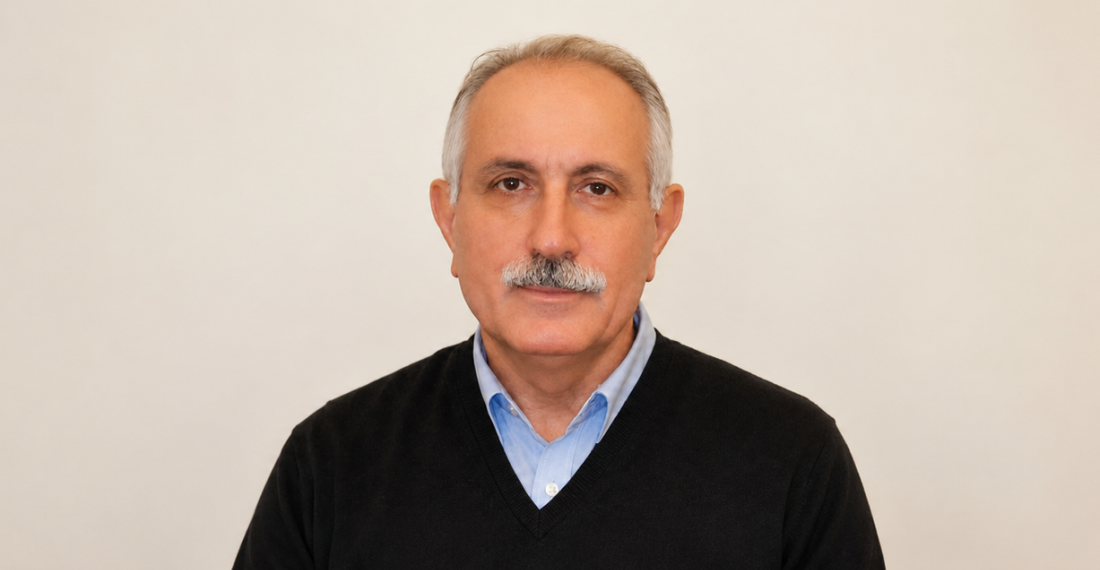
This week, commonspace.eu speaks with Mehman Aliyev, a co-founder of the Turan İnformasiya Agentliyi (Turan Information Agency), Azerbaijan’s first independent news agency, established in 1990 after the Soviet crackdown in Baku known as Black January. Turan has long been one of Azerbaijan’s few independent media voices, reporting on political, economic and social developments in the country. Aliyev himself was detained in 2017 on charges that international watchdogs linked to pressure on Turan’s work; his detention prompted concern from the EU, Council of Europe, Human Rights Watch and press freedom organisations. He is also member of the Armenia-Azerbaijan Expert Strategic Platform, a LINKS Europe initiative to support dialogue in the South Caucasus.
Aliyev reflects on the origins of Turan, the difference between independent and opposition media, and the pressures created by Azerbaijan’s media law. He also discusses the importance of Western pressure in protecting journalists, and looks at the prospects for a durable Armenia-Azerbaijan peace following the initialling of the Washington peace agreement in August 2025.
“Before my arrest, the authorities offered me two options: prison or cooperation. I chose prison and was prepared to spend three to four years there. However, in the end I spent 18 days in detention, due to strong demands from Europe and the United States for my release.
This experience showed that journalists can be protected if there is a clear position from the West. My approach to editorial decisions is not determined by the fear of imprisonment, but by internal processes within the country and in its surrounding environment. Although we are often labeled as an opposition outlet, in reality we are an independent publication.”
This interview was translated with the assistance of George Simonishvili. Read the full text below:
You helped launch Turan in 1990 after leaving state media in the aftermath of Black January. What gap were you trying to fill at that moment, and what has remained constant in Turan’s mission over the last 35 years?
The decision to create an independent news agency was made after the events of January 20, 1990. At that time, I was working as a correspondent for the state agency Azerinform, which was part of the TASS system in Azerbaijan. After January 20, we were removed from our work, and staff sent from Moscow from TASS and the KGB were shaping the information coverage of the Soviet leadership’s military-political operation against the anti-communist movement in Azerbaijan.
As a result, the public in the USSR and abroad received distorted information about what was happening. Under these conditions, I left Azerinform and began working on the creation of an independent source of information from Azerbaijan. At the same time, contacts were established with Moscow bureaus of foreign media and democratically oriented Russian publications.
In Azerbaijan, what do you perceive to be the distinction between “independent” media and “opposition” media? How do you draw that line?
Independent media place at the core of their work the principle of serving the truth through objectivity, pluralism, and reliable information.
Opposition media are primarily oriented toward confronting the authorities and use various means to do so, not always operating within universal professional and ethical standards.
In August 2017, you were detained and later released following charges that international watchdogs related to the work of Turan. Looking back, how did that experience shape your understanding of the pressures facing independent media? Did it influence how you approach editorial decisions today?
Before my arrest, the authorities offered me two options: prison or cooperation. I chose prison and was prepared to spend three to four years there. However, in the end I spent 18 days in detention, due to strong demands from Europe and the United States for my release.
This experience showed that journalists can be protected if there is a clear position from the West. My approach to editorial decisions is not determined by the fear of imprisonment, but by internal processes within the country and in its surrounding environment. Although we are often labeled as an opposition outlet, in reality we are an independent publication.
When the current media law came into force in 2022, it introduced new systems such as the media register, accreditation rules, and formal criteria for who can work as a journalist. From your perspective, how have these changes affected the day-to-day work of independent media?
In a certain sense, the law restricts the creation and activities of independent media and journalists. However, in practice it is applied selectively — when there is a corresponding political decision at the level of the presidential administration.
For example, recent arrests of journalists and the closure of media outlets were not carried out under the media law or decisions of the Media Development Agency. The charges are typically brought under other articles such as illegal entrepreneurship, tax evasion, or smuggling.
At the same time, a number of provisions of the law appear absurd. For instance, despite having a journalism degree, I cannot work as a freelancer without a contract with a media outlet registered in the official registry.
Authorities emphasise that media operate within a legal framework, and point to widespread internet access and a diversity of online platforms. From your experience, how does this formal picture compare with the realities journalists encounter in practice?
This position of the authorities is based on existing legislation, which has been criticised by me, as well as by the OSCE, the Council of Europe, and international journalistic organizations.
Access to the internet in itself does not mean freedom of expression. This freedom remains under control, as evidenced by the recent arrests of journalists and the closure of media outlets.
There has been a period of cautious optimism in Armenia-Azerbaijan relations after the Washington peace agreement was initialed in August 2025. What do you see as the most important next steps to ensure that the agreement leads to a durable and stable peace?
First and foremost, the key priority remains the signing of a comprehensive peace agreement. There is a high likelihood that this can be expected in the second half of the current year, following the parliamentary elections in Armenia, when the political configuration in the country becomes more clearly defined.
Until then, particular importance lies in giving practical substance to the normalisation process. This involves the gradual expansion of transport and economic ties, including the unblocking of communications, the development of transit routes, and the expansion of trade interaction. In the long term, economic interdependence can become one of the most устойчивых факторов мира → one of the most durable foundations of peace.
An equally important direction is the building of trust between societies. This implies a more active role for the media, expert communities, and civil institutions in reducing mutual hostility, overcoming stereotypes, and creating space for dialogue.
Taken together, these steps — the political formalisation of the agreement, economic integration, and humanitarian rapprochement — form the basis for a transition from a fragile ceasefire to a stable and lasting peace.
Follow Turan İnformasiya Agentliyi (Turan Information Agency) here



