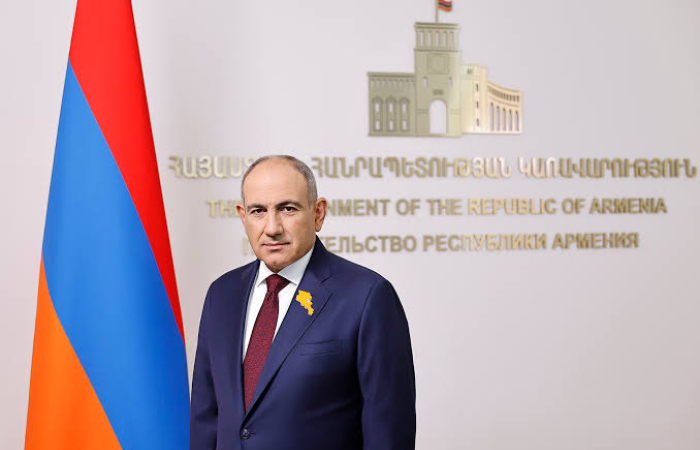
ArmInfo’s interview with Mateusz Piskorski, Director of the European Center of Geopolitical Analysis, PhD in Political Science
Earlier in February you declared that the OSCE Minsk Group has exhausted its potential in the Karabakh peace process. Is there any alternative to the negotiations within the given format?
I just made an assessment of the real achievements of the Minsk Group. That assessment was not very positive, but the fact of existence of the negotiation format probably helps easing tension. Let's study the latest achievements of the Group. The Madrid Principles proved inadmissible, at least, to one of the parties to the conflict. Despite the efforts of the negotiators, the Azerbaijani party has again made provocative operations recently in the course of the presidential race in Armenia. The first and the crucial moment impeding peaceful resolution of the Karabakh conflict is absence of one of the direct parties to the conflict in the format of negotiations. If everyone realizes the existence of a de-facto state, such as NKR, I think, it is worth recognizing Stepanakert's status as a party to the negotiations. The Karabakh conflict directly endangers the interests and security of some other countries. Turkey and Iran are neighboring Karabakh, and Ankara is able to seriously influence the political processes in Baku. As for Tehran, it may also participate in the negotiations being well aware of the sources of the conflict.
At the Roundtable discussions dedicated to the 25th anniversary of the Karabakh Movement you said that the only way to resolve the Karabakh conflict is to recognize independence of Nagorno Karabakh. Did you mean Armenia or the world community?
Since 2008, when the West recognized Kosovo and Russia recognized Abkhazia and South Ossetia, we have been in a completely new situation. I think that President Serzh Sargsyan perfectly understands that at some moment Armenia will have no other way but to recognize the Nagorno-Karabakh Republic. The situation is quite ocmplicate. The president is right when he says that Armenia is facing a dilemma: on the one hand, Armenia knows that if it recognizes Nagorno-Karabakh unilaterally, this may result in growing tensions and even armed clashes, on the other hand, if it is waiting for other countries to do it, this may never happen simply because the others are waiting for Armenia. I think Armenia must still be the first to recognize Nagorno- Karabakh's independence, but only if it is sure that Russia and maybe even Iran will follow its example. Then, Armenia will have to use the potential of the Armenian Diaspora in the West for the similar purposes.
You were observing the Feb presidential election in Armenia as a member of ICES Observation Mission. Do you think that the demands of Raffi Hovanisian's movement are justified and grounded?
Let’s not pretending as if we do not know the rules of political fight. After defeat, any runner-up candidate will blame the winner for election rigging, especially, when the winner is the incumbent president. In the meanwhile, I observed quite calm atmosphere on the voting day in the country, which is not typical for election rigging. In addition, observers registered no serious violations of the Election Code and President Sargsyan has got no serious opponents. At present, Raffi Hovannisian acts in line with PR-game rules. His headquarters is rather professional and they realized that to become an opposition leader a politician must work hard and stay in the focus of Mass Media attention. From the viewpoint of Mass Media, only extremely harsh statements are of utmost interest, as a matter of fact.
What foreign forces are, first of all, interested in formation of “Barevolution” (“Revolution of Greetings”) opposition movement in Armenia? What is their motivation?
All I can say is that there are no preconditions for internal turmoil and fierce political fight in Armenia. Armenia is not on a paradise island, but in the center of one of the most instable regions in the world. Technologies, even logotypes, resemble the Serbian 'Otpor', with the color reminding the Ukrainian 'orange' revolution. They probably use the civil resistance technology developed by Gene Sharp, and Washington took advantage of that. However, Azerbaijan is also interested in destabilization of the situation in Armenia.
Experts say that the USA and EU have already made the first steps to expand their influence in the South Caucasus taking advantage of Russia’s inconsistent and uncoordinated policy…
For the United States the South Caucasus is part of the Greater Middle East or, as Zbigniew Brzezinski calls it, the Eurasian Balkans. And if so, this region must be in a state of constant chaos, on the verge of war. Armenia is part of this scenario, especially as it is one of Russia's few post-Soviet allies. No coincidence that here the United States has its biggest embassy in the region. The U.S. is one of the key geo- political players in this area. Turkey and Iran are also playing, but the key rival is certainly Russia. The EU has almost no levers of influence in the region. Of course, Armenia is closer to the EU than any of the other post-Soviet republics may be: the Armenians have centuries-old cultural ties with Europe and part of its identity. I think the Armenian Diaspora has more levers of influence on the EU than the EU has in Armenia. Of course, this is soft power, but the EU no power here at all. I do not think that the EU will be able to give more money to the dying Eastern Partnership program. Formerly it was just 600mln EUR for six countries for five years. Today only Germany can afford an ambitious foreign policy, but it does not seem to be very much interested in the South Caucasus.
After the presidential election in Armenia the problem of opposition between the Customs Union offered to Yerevan and the EU Association Agreement has become quite relevant. Serzh Sargsyan’s visit to Moscow and Brussels has greatly contributed to that. What possible scenarios do you anticipate in the given area?
From the economic point of view Armenia should consider the option that will strengthen its security. Given the fact that the European Union lacks the relevant instruments and potential, Armenia will shortly start negotiations on joining the Eurasian Union in 2014. I am surprised wit the fact that most of those coming out against the Armenian-Russian cooperation stress that integration is impossible due to the lack of a common border with Russia. In the meantime, they are dreaming of European integration, but forget that the nearest EU country is Cyprus. If the project of opening of the Abkhazian railway succeeds and the Moscow-Tbilisi relations normalize, Yerevan will become quite close to Russia. At the same time Moscow wants to gain certain success on the path of integration of the post-Soviet space, however, it is still hard to hope for success in negotiations with Ukraine. Armenia may have a good moment to gain beneficial conditions for participation in the Eurasian integration project. The EU has exhausted its development potential and the European project for the post-Soviet countries is actually suspended. As for the Eurasian project, it has yet to get into full swing. Though it is not known yet what it can do, nevertheless, thanks to that project, Armenia has at least one extra option.
ArmInfo