
Karabakh: The big debate
Commonspace.eu today publishes the 11th in a series of twenty interviews with key personalities from Nagorno-Karabakh. The interviews give a vivid, even if sombre picture, of the attitude of Armenians and Azerbaijanis from Karabakh whose lives have been deeply affected by the conflict, and whose destiny will be at the heart of any future conflict settlement. Those interviewed sometimes use harsh language. Their opinion is almost inevitably controversial, as are sometimes their biographical notes. However it is through listening to these opinions that a path through the labyrinth that is the Karabakh conflict can be found. A full editorial policy of commonspace.eu is available at the About Us section. The next interview in the series will be with Anar Usubov, a board member of the Nagorno-Karabakh Azerbaijani Community since 2003 and currently works as a Political analyst at the Effective Initiatives Center.
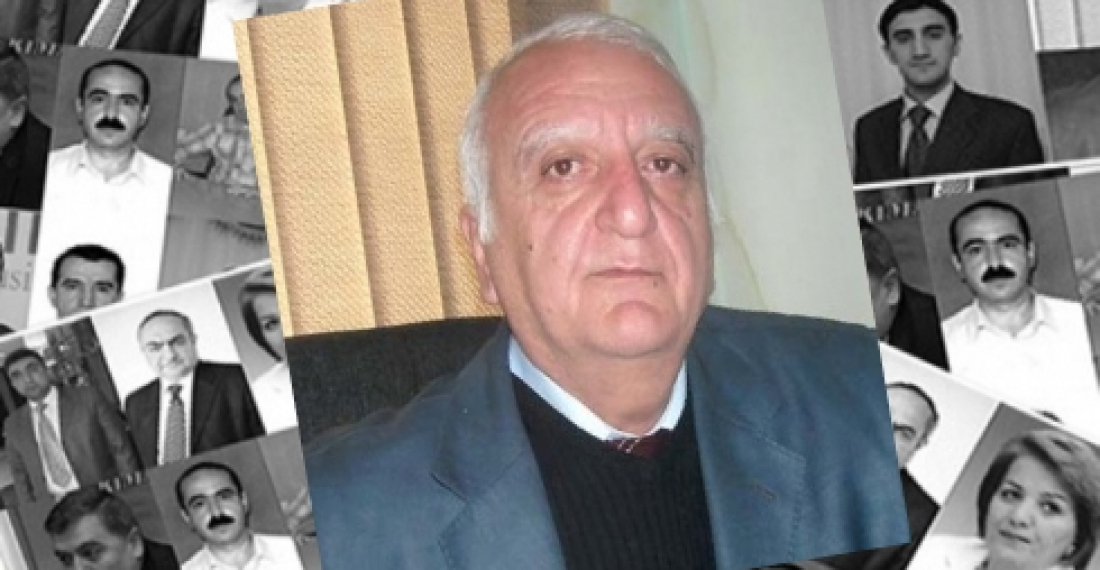
Interview with Hrant Melkumyan

|
Hrant Melkumyan was born in April 4, 1951. He graduated from the Yerevan Polytechnic Institute in 1974, and the Supreme (Communist) Party School in 1986. Melkumyan then began his career as a politician in Stepanakert, becoming the second and then the first secretary of Communist Party Central Committee in NKR. Currently he serves as the Chief of Staff of the Government of Nagorno-Karabakh Republic Biographical notes are provided by the interviewees themselves. |
Can you summarize your overall position on the Karabakh conflict and the conflict resolution process:
There is no such thing as the so called “Karabakh conflict”. In essence, the thing is that at the outset of the 20th century Nagorno-Karabakh was forcefully adjoined to Azerbaijan, which never existed before. Back then there was no such nation as the Azeris. You know, if you dig into the economic history behind Karabakh inclusion into Azerbaijan, you understand the great power politics.
For 70 years Karabakh remained under Soviet Azerbaijani rule. At the beginning, when the Communist leaders of Azerbaijan were Armenians, there was much more freedom for all. The nationalistic policies of Soviet Azerbaijan began in the 1930s, when they started to aggressively settle Azeris in Karabakh lands. For instance, in 1923 only 6% of the population in Karabakh were Azeris, with Armenians numbering 94%. Before our Movement (Sharjoum – in Arm.) started, there already lived around 40,000 Azeris amongst a total number of 180,000 citizens. However the strongest nationalism in Azerbaijan began after Heydar Aliyev came to power.
Once again, there is no "Karabakh conflict". Armenians in Karabakh decided to use the Gorbachev era "perestroika" and "glasnost" to peacefully and legally achieve their goals of free and sustainable development. What happened after that – you know well. Around 500,000 Armenians were expelled from Azerbaijan. Today in NKR we have around 30,000 Armenian refugees from different cities of Azerbaijan. Of course, we cannot draw parallels between their condition now and in the Soviet Azerbaijan, because then they used to have good houses and expensive property. When the conflict began and Azerbaijan used force against the peaceful Armenian population, they were forced to leave their houses and all their property, as well as large territories – like Getashen, Shahumian, etc, which were Armenian territories with Armenian heritage for centuries.
Today NKR is a well-established, democratic statehood with a sustainable system of governance and elected bodies of representation – more democratic than Azerbaijan, and this is obvious for everyone. If Europe is so positive on democracy and always advocates democracy and human rights – it should appreciate our efforts in this regards, with the opposite happening in Azerbaijan. Where Azerbaijan cracks down on opposition rallies, we openly let everyone chant whatever slogans they want, demanding the government to solve various issues.
I suppose you will have more detailed questions further, so I’ll put a full stop here.
In the long term do you want to see Nagorno-Karabakh (a) as an independent state; (b) as part of Armenia (c) as part of Azerbaijan; (d) none of the above but in as yet undefined status. Comment on your choice:
Firstly, as a natural wish of an Armenian, I want Artsakh (Nagorno-Karabakh) to be an integral part of Armenia, as it used to be for many centuries. However since the great powers have not made their minds up on a way forward, I see this opportunity only in the long-run. Not only for me, the majority here also wishes for a re-unification of Armenia and Artsakh.
I would also appreciate some interim subordinate status for Nagorno-Karabakh to the European Union or the Russian Federation, until the issue receives its final settlement through the agreement of the parties. However, the best guarantee for NKR security is our independence, and re-unification with Armenia in the future. Under all scenarios, I exclude your option (c). That is a no-go.
What is your biggest objection/concern to Nagorno-Karabakh being part of Azerbaijan?
Well, the answer to this issue is well known to everyone. If Nagorno-Karabakh becomes a part of Azerbaijan, no single Armenia will be left here in a 10 year period. No Armenian will stay here; all of them will be expelled again. How can we live with a century-long enemy? This is impossible; this truth doesn’t need another proof.
Take the example of Nakhijevan – what happened there with Armenians and Armenian cultural heritage. There are no Armenians living there now as a result of local policies, and the Armenian khachkars of the 13th century were destroyed in 2006. Video footage is available even on the internet.
Whatever happens, we will never surrender.
Are you satisfied with the policy of the de facto Nagorno-Karabakh Republic authorities towards the conflict and its resolution?
I can't say that I am fully satisfied. Since the NKR authorities are not a party to the ongoing negotiations, I can't answer this question “yes or no”. If they were a party, I would be able to observe and point at their behavior and assess the results. But they are not.
Regarding Armenia, I don’t feel I have the right to criticize a foreign state's policies. However, no matter how many documents the president of Armenia signs, if there is no signature from NKR, it doesn’t have any value to me.
Were you directly involved in armed hostilities between 1989-94?
I was not engaged in the armed hostilities directly, as I was into politics then, handling different issues of importance.
How do you evaluate the work of the OSCE Minsk Process?
I do recognize that they are diplomats themselves in the Minsk Group. They are doing their job. However a victim should be differentiated from the hangman (regarding the equal treatment of the parties by the Group).
I am also critical towards the too often replacement of diplomats in the co-Chairmanship. You know, as soon as a diplomat gets the real picture of the issue and starts realizing the possible ways of moving forward, he gets replaced. I therefore have mixed feelings towards this Minsk Group.
Do you have a publicly expressed a position on the Madrid Principles?
I don’t like these Madrid Principles. You know, this is like trying to fool a baby in kindergarten. Don’t those co-Chairs know how the Azerbaijani constitution draws frameworks for a referendum? Is it possible to do so in our case? Can you imagine a Turk voting in favor of NKR independence, if the referendum is conducted also in the territory of Azerbaijan, as Aliyev the Younger argues? I am sure they would not.
Also, I do not object if some Azeris want to live here in NKR. Let them fill corresponding documents, saying that they recognize the domestic legislation and the constitution of NKR, and then they are most welcome to seek their happiness here.
All in all, this Madrid Document is not a workable one.
Do you think it is important/appropriate that the de facto authorities of the Nagorno-Karabakh republic be part of the peace process facilitated by the Minsk Group? If yes should they be there instead of the Armenian Government?
Armenia is the security guarantor of all the Armenians living in the world, including those in NKR. Armenia presently is a member to the UN, the CoE (Council of Europe) as well as other organizations, and shall use those international bodies to seek international recognition of NKR. We are, you know, even a bit late for this campaign. I would also suggest that Diaspora Armenians form their relevant organizations, be that an Assembly, Council or Government in exile (if we consider they are former citizens of Western Armenia) to support NKR in our bid for international recognition of our independence. All this will contribute and ease the process of international recognition for NKR.
Sometimes the possibility is mentioned that the territories around Nagorno-Karabakh under Armenian control since 1994 should be returned to Azerbaijan as part of an interim peace arrangement, leaving the issue of the status of Nagorno-Karabakh to a later date. Do you have an opinion on this issue?
Not a single inch to the enemy. These lands are now inhabited by the people that were expelled from Azerbaijan in 1988-90 as a result of ethnic cleansing policies against the Armenian population. If this issue of territories arises at the negotiations table, we perhaps may open up the issue of return, or consider the compensation of 250,000 houses and apartments of Armenians in Baku, and more in other cities.
It is noteworthy however, albeit still sad, that during the war the only Azerbaijanis killed in NKR were those who had guns in their hands and were actively fighting against the NKR government and killing innocent people. Even in Khojaly – the Defense Army of Karabakh opened up a humanitarian corridor to let the population peacefully leave the area of hostilities, but as they left the area with the Armenian army, the soldiers of the Azerbaijani army - at the direct call of higher commanders from Baku - killed those innocent citizens, and now argue it was Armenians which broke their promises.
What is your opinion with regards to the role of Turkey, Russia, Iran, the United States, the European Union or any other country or international organisation, or the international community in general, with regards to the Karabakh conflict and its settlement:
Even considering my mixed feelings towards the Minsk Group, it is the only effective format to seek a peaceful solution. Even if they don’t work sustainably, they do the most important thing – they keep the peace here. All other international organizations, the United Nations or whatever – they don’t have any role here to play.
Regarding Turkey, once we witnessed the role of Turkey in this particular conflict (let alone the Genocide against Armenians in the early 20thcentury), Turkey cannot have any more roles to play here.
I oppose even the PACE sub-commission on Karabakh, which was established under a direct ruling of the ethnically Turkish parliament member Mr. Mevlut Cavusoglu.
How do you evaluate the role of informal, NGO-level contributions to the peace process? Do you believe that informal contacts have a useful role to play prior to or after a formal agreement?
I highly appreciate track-two diplomacy. This is very much important. You know, the more people communicate with each other the less they want to take arms.
Do you have a position on the desirability or not of free movement of Armenians and Azeris between their two countries before a final peace agreement?
Armenians and Turks will sooner or later recognize that we have been living in the same neighbourhood for a couple of centuries and we have no alternative but to continue living together. Let them come here to Stepanakert and go to Yerevan, and we can travel to Baku as tourists – that’s OK. However we don’t necessarily need to live together under a single roof.
Do you think that Armenian and Azerbaijanis will ever be able to live together peacefully in Karabakh again in the future?
No, not in Karabakh, but we can live peacefully as neighbors in two different countries – NKR and Azerbaijan.
What is your opinion on the issue of return of refugees/IDPs to Nagorno-Karabakh
I am OK with this, they are most welcome. Just let them recognize and respect the Constitution and domestic legislation of the Nagorno-Karabakh Republic. When they become our citizens, we will protect them from any threat, no problem.
(c) commonspace.eu
Read previous interviews in this series: