


Tension returns in Gulf, as US launches third night of attacks, and Iran responds

After a lull of a few days, when Gulf countries hoped that the Memorandum of Understanding signed by Iran and the United States in June, will draw a tine over the events that started on 28th February when Israel and the United States launched an attack on the Islamic Republic, the region is back to high tension and crises.

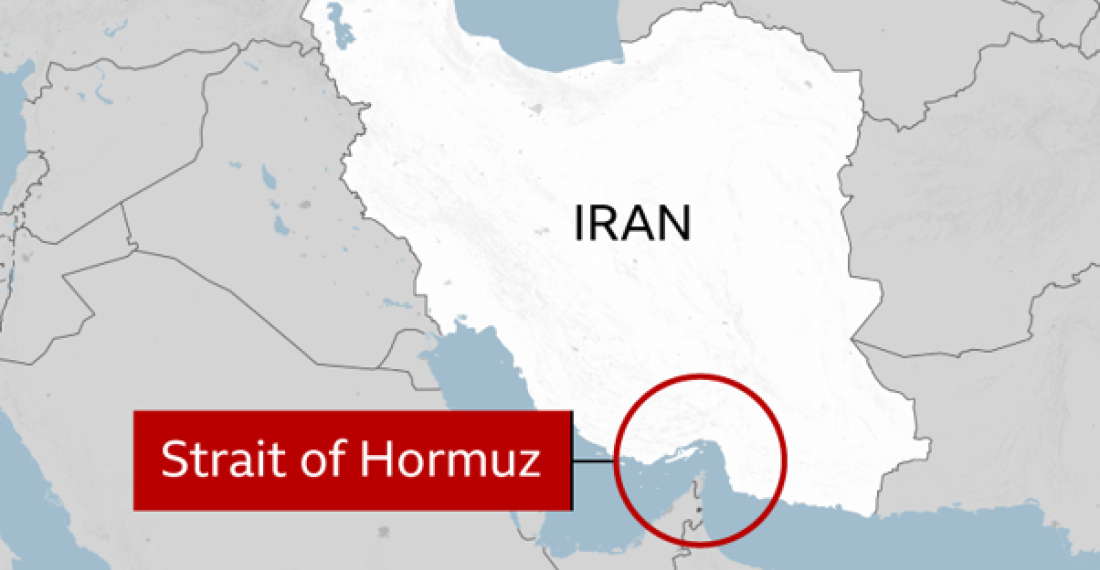
On Monday night, the US launched its third taack on Iranian target, in as many days. Iran responded with attacks on US target in several Gulf countries and Jordan. The UAE also accused Iran of a "brazen" attack on two tankers in the Strait of Hormuz on Monday, killing one and wounding eight, as Donald Trump said the US would impose a 20% charge as part of a new blockade on the waterway.

The US president said they were hitting Iran "very hard" as strikes were launched for the third consecutive night amid escalating attacks between the two countries.

Iran's foreign minister responded to the announcement of a blockade by saying that Tehran would remain the Strait's "GUARDIAN" - using Trump's word.

The dispute over control of the Strait of Hormuz threatens to derail efforts to end their war, but Trump insisted a deal was still possible.

In response to the Emirati claims, the Iranian Revlutionary Guard Corp (IGRC) aid it had hit the tankers and disabled them.

It added that "co-operation with the aggressor enemy" would only lead to regret, damage and delays in opening the Strait - as well as the "creation of an energy crisis in the world".

Oil prices edged higher in Asian trade on Tuesday. Brent crude was up by 0.7% at $83.87 a barrel, while US-traded oil was 0.9% higher at $79.04.

That followed a more than 9% jump in the price of Brent on Monday as the conflict escalated.

Trump earlier told Fox News the US would "probably run" the Strait of Hormuz, claiming that Iran "broke" a deal that was made with the US.

"We are taking over the strait," he said.

Centcom said its forces "will resume blockading maritime traffic entering and exiting Iranian ports" on 14 July.

"The US military continues to support traffic flow through regional waters for all vessels not violating the blockade," a Centcom statement said.

source: commonspace.eu with BBC (London) and agencies
Related articles

Editor's choice
News
Armenian and Azerbaijani officials seek to defuse tension

Armenian and Azerbaijani officials seek to defuse tension

Armenian and Azerbaijani senior officials have moved to reduce tensions that erupted following an outcry in Armenia after a visit by foreign diplomats to Karabakh and surrounding regions, and a subsequent reaction in Azerbaijan. Armenia’s Security Council Secretary Alen Simonyan has said that following the events that took place at Gandzasar Monastery, he spoke by phone with Azerbaijani President Ilham Aliyev’s Assistant Hikmet Hajiyev. Responding to a question about whether he plans to publicly respond to Hajiyev’s statements regarding Gandzasar, Simonyan said at a press briefing that not all statements necessarily need to receive a public response. “I think everything has been said, and not everything that is said always needs a response. We need to realize whether this will change something or not. I can say something sharp now, respond in some way, we can all feel good for 15 minutes, but by doing so I could harm the negotiations,” Simonyan said. He stressed that the peace process requires a cautious approach. (click image to read more)

Popular

Editor's choice
Interview
Thursday Interview: Murad Muradov

Thursday Interview: Murad Muradov

Today, commonspace.eu starts a new regular weekly series. THURSDAY INTERVIEW, conducted by Lauri Nikulainen, will host  persons who are thinkers, opinion shapers, and implementors in their countries and spheres. We start the series with an interview with Murad Muradov, a leading person in Azerbaijan's think tank community. He is also the first co-chair of the Action Committee for a new Armenian-Azerbaijani Dialogue. Last September he made history by being the first Azerbaijani civil society activist to visit Armenia after the 44 day war, and the start of the peace process. Speaking about this visit Murad Muradov said: "My experience was largely positive. My negative expectations luckily didn’t play out. The discussions were respectful, the panel format bringing together experts from Armenia, Azerbaijan, and Turkey was particularly valuable during the NATO Rose-Roth Seminar in Yerevan, and media coverage, while varied in tone, remained largely constructive. Some media outlets though attempted to represent me as more of a government mouthpiece than an independent expert, which was totally misleading.  Overall, I see these initiatives as important steps in rebuilding trust and normalising professional engagement. The fact that soon a larger Azerbaijani civil society visits to Armenia followed, reinforces the sense that this process is moving in the right direction." (click the image to read the interview in full)


