


Tehran comments on its latest peace proposal

Iranian state media reported on Tuesday (19 May) that Tehran’s latest peace proposal, which US President Donald Trump said was delivered to Washington on Monday (18 May), involves ending hostilities on all fronts including Lebanon, the exit of US forces from areas close to Iran, and reparations for destruction caused by the US-Israeli war.

Deputy Foreign Minister Kazem Gharibabadi said Tehran also seeks for sanctions to be lifted, frozen funds to be released, and an end to the US blockade according to IRNA news agency. 

The terms as described in the Iranian reports appeared little changed from Iran's previous offer, which US President Donald Trump rejected last week as “garbage".

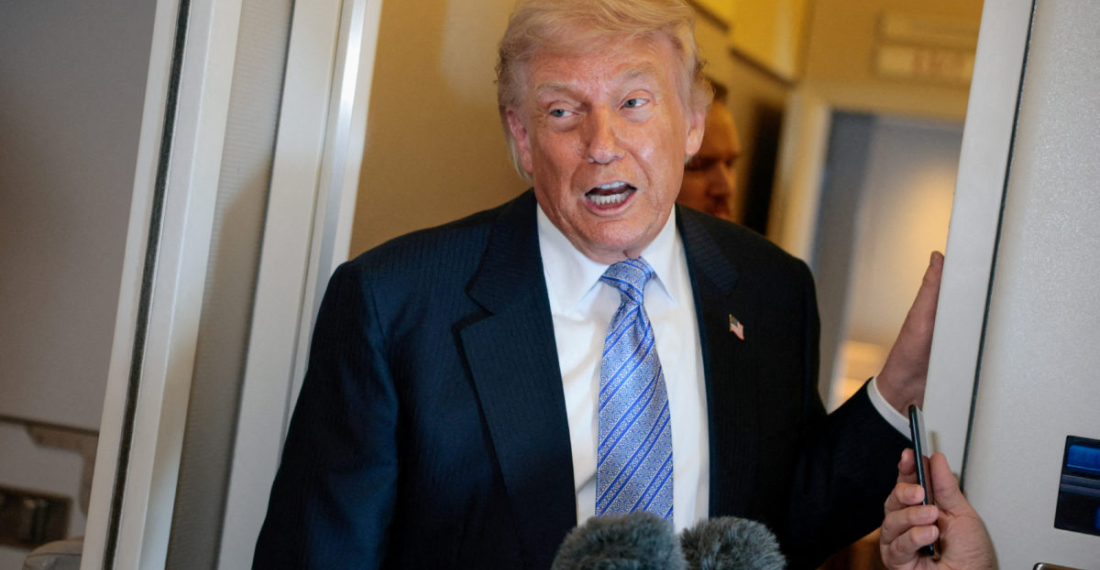
Trump said on Monday that he had paused a planned resumption of attacks after the new proposal was sent, and that there was now a "very good chance" of reaching a deal limiting Iran's nuclear programme.

In a social media post, Trump said the leaders of Qatar, Saudi Arabia and the United Arab Emirates had requested that he hold off on the attack because "a Deal will be made, which will be very acceptable to the United States of America, as well as all Countries in the Middle East, and beyond.”

Speaking to reporters later on Monday (18 May), he said the United States would be satisfied if it could reach an agreement with Iran that prevented Tehran from obtaining a nuclear weapon.

"There seems to be a very good chance that they can work something out. If we can do that without bombing the hell out of them, I would be very happy," Trump told reporters.

A Pakistani source confirmed that Islamabad, which has conveyed messages between the sides since hosting the only round of peace talks last month, had shared ‌the Iranian proposal with Washington.

Source: commonspace.eu with Reuters

Related articles

Editor's choice
News
United States and Iran on the verge of agreement to end hostilities

United States and Iran on the verge of agreement to end hostilities

The United States and Iran signaled on Friday that an agreement to end their war was close, with a senior U.S. administration official saying both sides had agreed on a text and that Washington ​expects to sign an initial deal in the coming days. There are reports that the two sides will meet in Geneva in the coming 3-4 days. iAccording to the BBC, the agreement  includes reopening the Strait of Hormuz, Iran's Foreign Minister has said. Seyed Abbas Araghchi told state TV the deal also includes the lifting of a US blockade of Iran, but that talks on Iran's nuclear programme would begin later. US officials have confirmed some of the details of the agreement, saying economic benefits for Iran would depend on Tehran meeting its obligations. The war began with US and Israeli strikes across Iran on 28 February, prompting Iran to attack Israel and US-allied states in the Gulf - as well as effectively closing the Strait of Hormuz, a key shipping route for the world's oil and liquefied gas. Trump says there is "no such thing as dealing in good faith" when it comes to negotiating with the Iranians Despite having agreed a ceasefire in April, the US and Iran have exchanged intermittent fire, including two rounds of tit-for-tat strikes this week. US President Donald Trump said on Thursday that he had cancelled "scheduled attacks" against Iran, because negotiators had "just made a great settlement" - a deal that was likely be to signed imminently. On Friday, Iranian media published some details from the alleged 14-point deal which Trump said had "nothing to do with the terms that were agreed to" and "bears no relation to the truth".

Popular

Editor's choice
Interview
Thursday Interview: Murad Muradov

Thursday Interview: Murad Muradov

Today, commonspace.eu starts a new regular weekly series. THURSDAY INTERVIEW, conducted by Lauri Nikulainen, will host  persons who are thinkers, opinion shapers, and implementors in their countries and spheres. We start the series with an interview with Murad Muradov, a leading person in Azerbaijan's think tank community. He is also the first co-chair of the Action Committee for a new Armenian-Azerbaijani Dialogue. Last September he made history by being the first Azerbaijani civil society activist to visit Armenia after the 44 day war, and the start of the peace process. Speaking about this visit Murad Muradov said: "My experience was largely positive. My negative expectations luckily didn’t play out. The discussions were respectful, the panel format bringing together experts from Armenia, Azerbaijan, and Turkey was particularly valuable during the NATO Rose-Roth Seminar in Yerevan, and media coverage, while varied in tone, remained largely constructive. Some media outlets though attempted to represent me as more of a government mouthpiece than an independent expert, which was totally misleading.  Overall, I see these initiatives as important steps in rebuilding trust and normalising professional engagement. The fact that soon a larger Azerbaijani civil society visits to Armenia followed, reinforces the sense that this process is moving in the right direction." (click the image to read the interview in full)


