

Saudi Arabia under attack

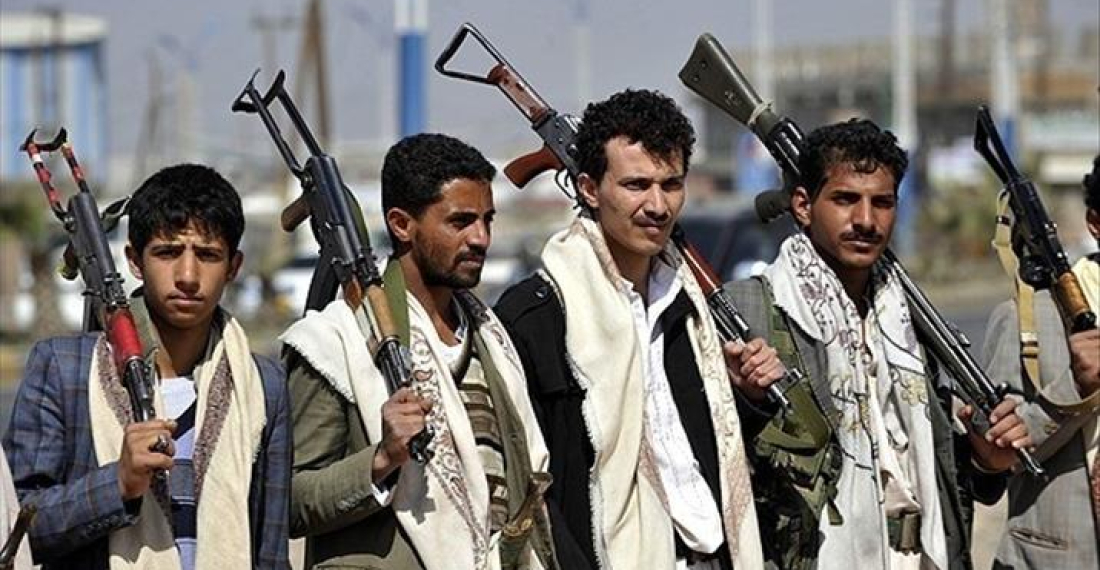
Attacks on Saudi Arabia have increased in the last days., as the conflict between the Kingdom, and the Iran-backed Houthi Movement in Yemen escalates.

Earlier in July, the Houthis declared a maritime siege on Red Sea shipping to and from Saudi Arabia, and launched missiles and drones at the kingdom.

Riyadh has since launched air strikes on Yemen’s key port city of Hodeidah, held by the Houthis.

Yemen’s Houthi movement is aiming to replicate Iran’s ⁠strategy in the Strait of Hormuz by controlling shipping flows in the Red Sea’s Bab al-Mandeb Strait, the Yemeni government’s top diplomat warns.

“The Houthis want to copy the Iranian model , and this will shut down two main straits, the gateways into the ⁠Gulf and Red Sea,” the foreign minister-designate for the internationally recognised Yemeni government, Afrah al-Zouba, told journalists on Monday.

Speaking at the Yemeni embassy in Riyadh, Saudi Arabia, al-Zouba said the Houthis have been emboldened due to the insufficient international response to their activities in the region.

Bab al-Mandeb Strait connects the Red Sea to the Gulf of Aden and the wider Indian Ocean, and – much like the Strait of Hormuz – a significant portion of the global economy depends on the unimpeded flow of maritime traffic through it.

Approximately 30 percent of global container traffic passes through the Red Sea, and 12 to 15 percent of overall global trade.

Yemen’s geography gives whoever controls the country’s west a commanding influence over traffic through Bab al-Mandeb.

Data suggests that shipping through the Red Sea is already declining, with just 11 commodity vessels passing through it on Sunday.

Al-Zouba’s comments come as tensions between the Houthis on one side and Saudi Arabia and Yemen’s internationally recognised government on the other escalate.

The Iranian-backed Houthis have claimed a missile attack on Saudi Arabia, after Riyadh launched strikes on targets linked to the group on Friday.

Early on Saturday, the Houthis' Ansarollah media said on Telegram that a "Yemeni missile strike" had caused fires in the Saudi city of Jizan. Saudi authorities had issued emergency alerts for the province.

The group had vowed retaliation after Saudi Arabia launched air strikes on Houthi targets in the Yemeni port city of Hodeida and a nearby island on Friday.

It came as there were no overnight reports of air strikes in the wider region by the US or Iran for the first time in two weeks.

The US military did not announce fresh strikes on Iran on Saturday, having carried out 13 consecutive nights of attacks on the country. During this time, Iran has also launched drone strikes on US military facilities and bases across the Middle East.

Earlier, a delegation from Oman arrived in Iran's capital Tehran for talks on the Strait of Hormuz, Iran's state-run IRNA news agency reported. Oman controls the strait's southern coastline.

Speaking to reporters at the White House on Friday afternoon, Trump continued to threaten further attacks while saying that negotiations were continuing.

"We are talking to them. I think they're being serious. I think ... they are being by far the most serious that we've seen them, but that doesn't mean we get there," he said.

Asked about his exit strategy for the Iran war, Trump said: "There's a military exit where we just keep going just the way we are, and we can even make it a heavier dose, and it's knocking out everything they have. Or there's a smarter strategy that you make a deal."

But he added: "We're locked and loaded. We're ready to go."

In the Strait of Hormuz on Friday, the US military said it had fired on and disabled a tanker ship in the Gulf of Oman that was attempting to evade the American blockade on Iranian ports.

The vessel attacked by the US is the second commercial ship the US has disabled since it reimposed its blockade earlier this month.

"We disabled the tanker after the crew attempted to run the blockade at least four times prior," Navy Captain Tim Hawkins, spokesman for US Central Command, told AFP.

"The crew was repeatedly warned, didn't comply, and US forces on scene disabled the ship after firing into its engine room," he said. "The ship is no longer transiting to Iran."

Growing concern over new threats to shipping in the Red Sea from Yemen's Houthis helped push the price of crude oil back over $100 (£74.96) a barrel last week - the highest level since May.

But it dropped again on Friday afternoon, with Brent futures down more than US$4 (£3.00) to a little over $96 (£72.07), according to the Reuters news agency, which reported the fall occurred after the successful passage through the Bab el-Mandeb Strait by two Chinese-chartered supertankers.

Following the exchange of fire early on Saturday, the Houthis' Ansarollah media posted on Telegram, "The Saudi enemy's targeting of civilian facilities in Hodeida and Kamaran island constitutes a dangerous escalation," adding: "We affirm that these recent crimes will not go unanswered."

Saudi authorities did not immediately respond.

The US and UK are set to hold a conference in London next week to discuss the Strait of Hormuz, the BBC understands. US Defence Secretary Pete Hegseth and Chairman of the Joint Chiefs of Staff Dan Caine will attend the conference, which was first reported by Axios.

It comes as Israeli Prime Minister Benjamin Netanyahu is scheduled to meet the US president at the White House today Tuesday (28 July).

In June, the US and Iran agreed on a 14-point Memorandum of Understanding (MOU) to halt military operations and reopen the Strait of Hormuz, as well as to reach an agreement to end the war over the following 60 days.

But three weeks after it was signed, Trump declared the ceasefire "over" after Iranian attacks on ships in the strait, and US strikes in response.

source: commonspace.eu with BBC (London), al Jazeera (Doha) and agencies



Related articles

Editor's choice
News
COP 17 in Armenia

COP 17 in Armenia

Armenia is currently hosting the COP17 conference of the Convention on Biological Diversity, which began earlier this week (19 October) and will run until 30 October, bringing around 15,000 participants from 196 different countries to Yerevan. At a leaders' summit held as part of COP17, Prime Minister Nikol Pashinyan expressed realistic ambitions: “We are halfway towards achieving these goals (Kunming-Montreal Global Biodiversity Framework), and we must honestly acknowledge that we are not yet moving in the right direction. Our task now is not to make new promises, but to fulfil the commitments we have already made.” Pashinyan pointed towards Armenia's own records, noting that the whitefish stock in Lake Sevan has increased substantially in the last ten years. Iranian President Masoud Pezeshkian and Georgian Prime Minister Irakli Kobakhidze also addressed the summit, with Turkiye sending its agriculture minister. However, there were no reports of Azerbaijani representatives attending. The conference has given Yerevan a valuable international platform, yet the absence of Azerbaijan is likely to be read as a sign that the peace process in the South Caucasus has not yet been translated into wider regional cooperation. The leaders' summit was opened by Armenian Prime Minister Nikol Pashinyan, who stressed that hosting the conference was a great honour for Armenia. He expressed hope that it would 'be productive and contribute to protecting our planet's biodiversity'. 'We – the citizens of Armenia, the government, state authorities and local governments – owe a debt to our nature,' the prime minister said. He noted that the international community had already developed the concept of 'living in harmony with nature’ and adopted the Kunming-Montreal Global Biodiversity Framework in 2022, setting out goals and specific targets to be achieved by 2030. 'We are halfway towards achieving these goals, and we must honestly acknowledge that we are not yet moving in the right direction. Our task now is not to make new promises, but to fulfil the commitments we have already made,' Nikol Pashinyan said. The COP17 conference is expected to adopt a declaration at leaders' level. More than 30 documents are scheduled for discussion. If approved, the commitments set out in them will become legally binding on countries that are parties to the Convention on Biological Diversity.”
Editor's choice
News
Landmines present to the European Union both a contradiction and a dilemma

Landmines present to the European Union both a contradiction and a dilemma

Finland’s decision to buy one million landmines creates a serious contradiction in the policy of the European Union, and is symbolic of a bigger dilemma facing European countries as they get used to the need to acquire “hard” power to face an increasing threat from Russia. Finland is seeking to acquire one million anti-personnel mines at a cost of 100 million euros. Finland, together with Poland, Latvia, Lithuania and Estonia last year abandoned the Ottawa agreement, the international framework that bans the use of anti-personnel mines, which the EU had been instrumental in establishing and supporting. All five countries cite the threat from Moscow as the reason. Colonel Riku Mikkonen of the Army Command told Finland’s national news agency STT that officials are now gathering information from suppliers regarding the deal, the AFP news agency reports. Helsinki would like domestic manufacturers to supply the mines, with contracts signed by the end of 2027 and production up and running by 2028. “It would be useful in many ways if Finnish companies produced the anti-personnel mines in Finland,” Mikkonen said. About half a dozen Finnish firms qualify, he told STT. “However, at this stage, buying the mines from abroad is not totally ruled out,” he added. LANDMINES PROVIDE THE EU WITH BOTH A CONTRADICTION, AND A DILEMMA Eliminating landmine contamination worldwide is one of the EU’s main soft power postures, and it basks in its record as the biggest funder of anti-landmine action in the world. But the fact that 5 of its 27 member states  have now left the Ottawa Treaty dents the EU moral high ground. It is a contradiction that is too big and important to be ignored. It also presents the European Union with a deeper dilemma. The threat from Russia is changing what the EU has stood for decades, namely a force for good able to mobilise its considerable soft power for the greater good of humanity. How the Union will implement this change will define its future. In the meantime landmines have not become any less lethal, benign, or unimportant. They remain in many parts of the world a major threat to life, an impediment to prosperity, and a potential trigger to further conflict. The 22 EU members states that still adhere to the Ottawa treaty must regroup, and be more assertive in their quest against anti-personnel land mines. All the reasons why they supported the Ottawa treaty in the first place still exist. The message must be clear: NO TO LANDMINES!

Popular

Editor's choice
Interview
Thursday Interview: Murad Muradov

Thursday Interview: Murad Muradov

Today, commonspace.eu starts a new regular weekly series. THURSDAY INTERVIEW, conducted by Lauri Nikulainen, will host  persons who are thinkers, opinion shapers, and implementors in their countries and spheres. We start the series with an interview with Murad Muradov, a leading person in Azerbaijan's think tank community. He is also the first co-chair of the Action Committee for a new Armenian-Azerbaijani Dialogue. Last September he made history by being the first Azerbaijani civil society activist to visit Armenia after the 44 day war, and the start of the peace process. Speaking about this visit Murad Muradov said: "My experience was largely positive. My negative expectations luckily didn’t play out. The discussions were respectful, the panel format bringing together experts from Armenia, Azerbaijan, and Turkey was particularly valuable during the NATO Rose-Roth Seminar in Yerevan, and media coverage, while varied in tone, remained largely constructive. Some media outlets though attempted to represent me as more of a government mouthpiece than an independent expert, which was totally misleading.  Overall, I see these initiatives as important steps in rebuilding trust and normalising professional engagement. The fact that soon a larger Azerbaijani civil society visits to Armenia followed, reinforces the sense that this process is moving in the right direction." (click the image to read the interview in full)