Qatari Prime Minister to visit Iran, as efforts continue to descalate crises

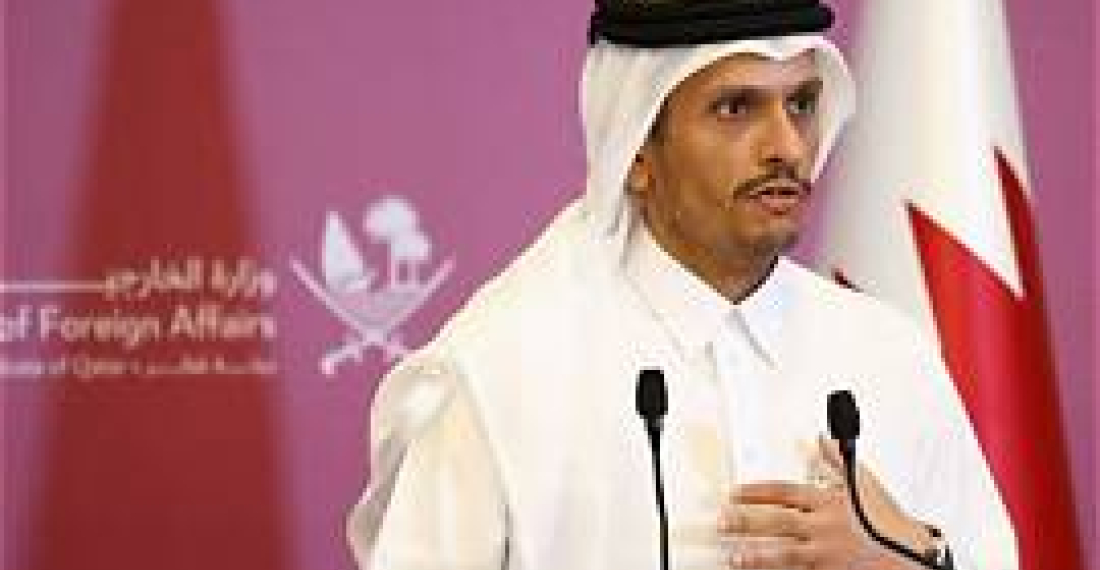
Qatar’s foreign minister and prime minister, Sheikh Mohammed bin Abdulrahman bin Jassim Al Thani, is going to pay a visit to Tehran on Thursday (27 August) to meet with high-level Iranian officials.

The aim of the visit is to de-escalate tensions and create a platform for dialogue.

This visit comes after a very busy week featuring visits from Pakistan’s army chief, followed by Oman’s foreign minister. Qatar hopes that all these discussions may create a platform for dialogue between Iran and the United States.

Omani and Iranian officials sayi that they agreed on a framework for a temporary shipping route in the Strait of Hormuz, which is the most urgent problem in the region for now, alongside efforts to clear mines from the waterway.

Qatar expects these negotiations may open the way to resume talks between Tehran and Washington. However, these expectations should be measured as both sides have different points of view when it comes to communication.

After months of military confrontation, a diplomatic channel exists between these countries, though Iran points out that these talks shouldn’t be taken as a direct resumption of bilateral negotiations, as they are just talks with mediators.

There isn’t a big expectation for an imminent breakthrough in this conflict right now, but all parties hope that diplomacy builds a new platform for dialogue and, hopefully, for the resumption of formal negotiations.

source: commospace.eu with al Jazeera (Doha) and agencies
Related articles

Editor's choice
News
Head of UN agency, UNWRA, accuses Israel of trying to make refugee issue disappear

Head of UN agency, UNWRA, accuses Israel of trying to make refugee issue disappear

Christian Saunders, the head of the UN agency for Palestinian refugees, UNRWA, in an interview with the Qatari news channel, Al Jazeera, pushed back against Israeli claims regarding the seized Qalandiya training centre after authorities alleged the property was owned by the Jewish National Fund and allocated to the Jerusalem Municipality for a planned complex, citing October 2024 legislation restricting UNRWA’s activities. UNRWA firmly rejected the claims, maintaining that the centre is a UN facility protected under international law. “We’re a humanitarian organisation; we’re a development organisation. We are given our mandate by the United Nations General Assembly to provide critical services,” Saunders said. He added that UNRWA would continue doing so “until the General Assembly decides otherwise, or there is a durable solution to the Palestine question”. Saunders said UNRWA was doing what it could to protect its staff and facilities through security assessments, training and risk mitigation. He said the Israelis’ use of force was ill-advised and that the only solution was through dialogue. “I think it is long overdue for the Israelis and the Palestinians to sit down and to resolve these issues. We’re not planning on going anywhere,” Saunders said. Christian Saunders, accused Israel of trying to “eliminate the presence of the United Nations” in the occupied Palestinian territory. Saunders told Al Jazeera that while the raid displaced UNRWA employees and left at least seven Palestinians injured by live ammunition, the broader goal is to make the refugee issue disappear. “If UNRWA is defunded and eliminated, then they are hoping that the issue of the refugees, the Palestine refugees, will go away,” Saunders said. “Which means that the right of return, reparations, and compensation would go away as well.” Israeli forces seized the facility in the Kafr Aqab neighbourhood near occupied East Jerusalem on Tuesday, with far-right National Security Minister Itamar Ben-Gvir participating and declaring that there was “no place for the agency in Jerusalem and Israel”. Prime Minister Benjamin Netanyahu defended the evacuation as lawful under Israeli legislation and accused the agency of aiding Hamas in the October 7, 2023 attacks on Israel. Saunders expressed “disappointment” over the impact on local young people, noting that the facility previously provided essential education and training. Some “340 young people are not going to get the education, not going to get the training they need”, Saunders said, stressing that the programme gives students “the skills and an opportunity to lead a full and dignified life”.

Popular

Editor's choice
Interview
Thursday Interview: Murad Muradov

Thursday Interview: Murad Muradov

Today, commonspace.eu starts a new regular weekly series. THURSDAY INTERVIEW, conducted by Lauri Nikulainen, will host  persons who are thinkers, opinion shapers, and implementors in their countries and spheres. We start the series with an interview with Murad Muradov, a leading person in Azerbaijan's think tank community. He is also the first co-chair of the Action Committee for a new Armenian-Azerbaijani Dialogue. Last September he made history by being the first Azerbaijani civil society activist to visit Armenia after the 44 day war, and the start of the peace process. Speaking about this visit Murad Muradov said: "My experience was largely positive. My negative expectations luckily didn’t play out. The discussions were respectful, the panel format bringing together experts from Armenia, Azerbaijan, and Turkey was particularly valuable during the NATO Rose-Roth Seminar in Yerevan, and media coverage, while varied in tone, remained largely constructive. Some media outlets though attempted to represent me as more of a government mouthpiece than an independent expert, which was totally misleading.  Overall, I see these initiatives as important steps in rebuilding trust and normalising professional engagement. The fact that soon a larger Azerbaijani civil society visits to Armenia followed, reinforces the sense that this process is moving in the right direction." (click the image to read the interview in full)