Iran calls deal to end war a ‘declaration of US defeat’

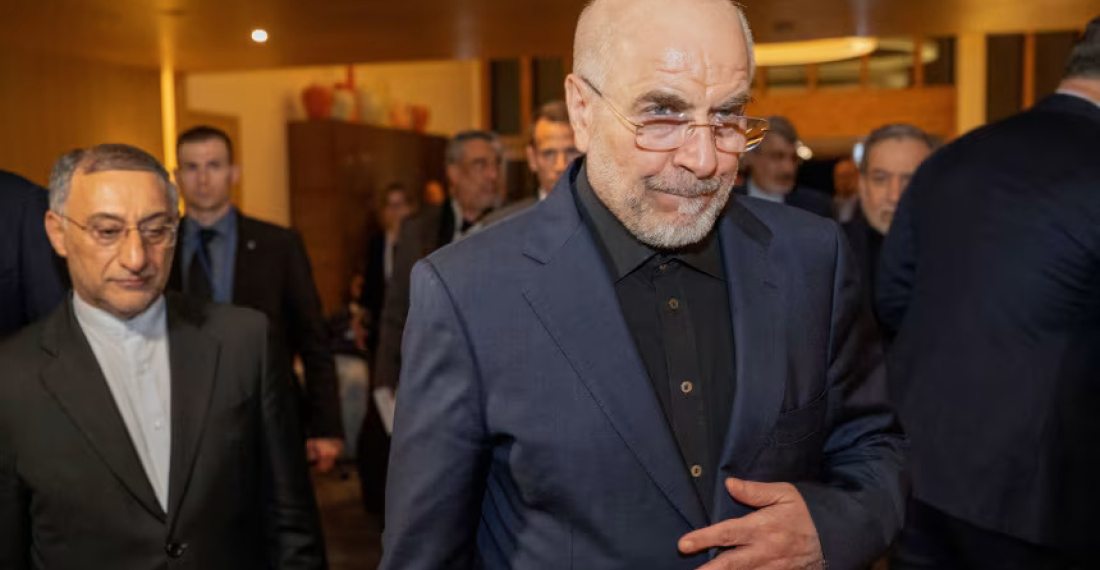
Iranian parliamentary speaker Mohammad Bagher Ghalibaf has described the Islamabad Memorandum of Understanding with the US as “a declaration of America’s defeat”, saying it was achieved through Iranian resistance rather than pressure or coercion.

Speaking on Wednesday (24 June), he said:

"The Islamabad understanding was not the result of pressure and coercion, but rather the result of the resistance and authority of the brave Iranian nation.”

"That is why, the Islamabad Memorandum of Understanding became a declaration of America's defeat," he said, adding that security in the Middle East must be ensured by the countries of the region.

The Islamabad MoU, brokered by Pakistan, sets out a framework to end the war and begin a 60-day negotiation period toward a final agreement. The first round of negotiations ended on Monday (22 June) with conflicting statements, including on nuclear oversight and the Strait of Hormuz. 

The US says Iran has agreed to long-term IAEA nuclear inspections, while Tehran denies any inspection visit has been scheduled. The two sides also disagree over frozen Iranian assets, sanctions relief, Lebanon, and future control of the Strait of Hormuz. Israel and Lebanon are holding separate talks in Washington aimed at ending the fighting between Israel and Iran-backed Hezbollah, which is a key component of maintaining Iran’s interest in negotiating with the US.

"For us, the ceasefire in Lebanon has been and is as important as the ceasefire in Iran, and the end of the war in Lebanon has been as important as the end of the war in Iran," Ghalibaf said.

Talks between the US and Iran are expected to resume next week, likely on Tuesday (30 June). US Secretary of State Marco Rubio is visiting Gulf allies to address concerns about the agreement, while Iran’s President and Foreign Minister have travelled to Pakistan following talks in Switzerland.

Source: commonspace.eu with Reuters, France24, and CNN
Related articles

Editor's choice
News
LAKE ONTARIO: Now and Always

LAKE ONTARIO: Now and Always

US president, Donald Trump, has renamed Lake Ontario into Lake America, but the Canadians will have none of it. Ontario Premier Doug Ford has hit back by installing a large sign on Canada's shoreline with the message: "Lake Ontario. Now and Always." The US president signed an executive order on Thursday seeking to change its name to Lake America and has shared a series of AI-generated videos about the lake that straddles both countries. "Long before President Trump, this lake was called Lake Ontario. Long after President Trump is gone, it will still be called Lake Ontario," Ford said. The war of words was triggered after trade talks collapsed, with the US imposing new 50% tariffs on $20bn (C$28bn) of Canadian goods. Canada will implement "dollar for dollar" counter-tariffs next month. Trump said the decree was effective immediately as he signed the order to rename it Lake America. While he has broad discretion over how the US recognises landmarks, other countries are not required to follow. Canadian officials have dismissed Trump's move. On Saturday, Trump also posted several AI-generated videos on social media, with one showing him kicking over a Lake Ontario sign and replacing it with one that says: "Welcome to Lake America."

Popular

Editor's choice
Interview
Thursday Interview: Murad Muradov

Thursday Interview: Murad Muradov

Today, commonspace.eu starts a new regular weekly series. THURSDAY INTERVIEW, conducted by Lauri Nikulainen, will host  persons who are thinkers, opinion shapers, and implementors in their countries and spheres. We start the series with an interview with Murad Muradov, a leading person in Azerbaijan's think tank community. He is also the first co-chair of the Action Committee for a new Armenian-Azerbaijani Dialogue. Last September he made history by being the first Azerbaijani civil society activist to visit Armenia after the 44 day war, and the start of the peace process. Speaking about this visit Murad Muradov said: "My experience was largely positive. My negative expectations luckily didn’t play out. The discussions were respectful, the panel format bringing together experts from Armenia, Azerbaijan, and Turkey was particularly valuable during the NATO Rose-Roth Seminar in Yerevan, and media coverage, while varied in tone, remained largely constructive. Some media outlets though attempted to represent me as more of a government mouthpiece than an independent expert, which was totally misleading.  Overall, I see these initiatives as important steps in rebuilding trust and normalising professional engagement. The fact that soon a larger Azerbaijani civil society visits to Armenia followed, reinforces the sense that this process is moving in the right direction." (click the image to read the interview in full)