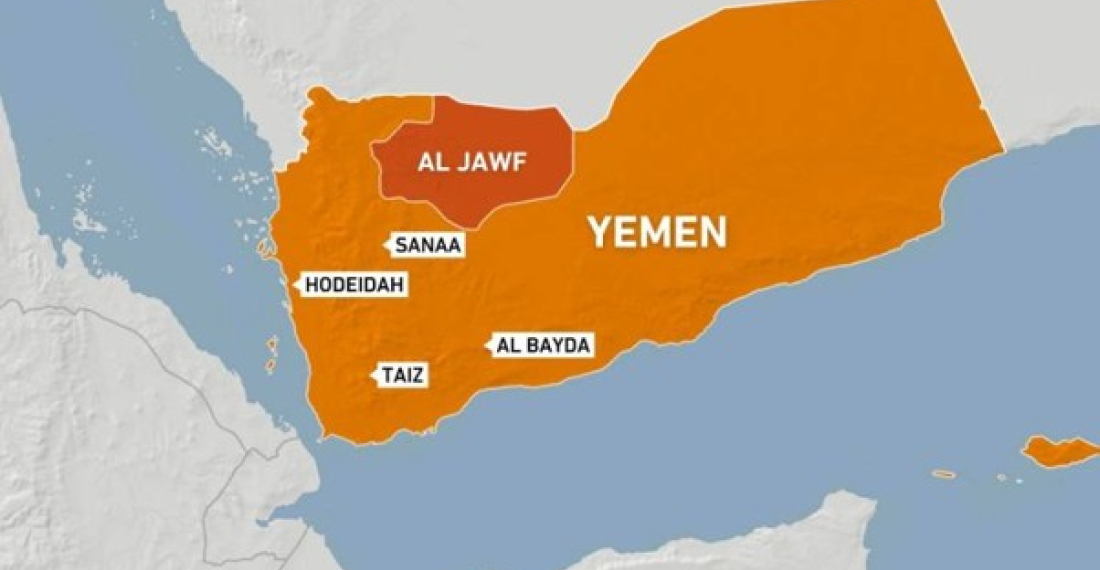
Iran-backed Houthi militants have seized the strategic port city of Mokha on Yemen’s western coast after days of fighting with pro-government forces, further expanding their control along the Red Sea and near the Bab Al Mandeb shipping route.
“Resistance groups have left Mokha and are now deployed south of the city,” a Yemeni official told The National, referring to pro-government forces.
In a statement, Yemen’s Presidential Leadership Council Vice Chairman Tareq Saleh said government forces, including the National Resistance, Giants Brigades and Nation’s Shield forces, as well as units from Taiz, had suffered deaths and injuries during several days of Houthi attacks. “We ordered the formation of an alternative command centre in a safe location to regroup the forces in consultation with the Arab coalition command and the Presidential Leadership Council,” he said.
Yemeni government sources also confirmed the loss of Mokha to Reuters.
Mokha, about 150km south of the Houthi-held port city of Hodeidah, has been a major base for government forces operating along Yemen’s Red Sea coast and seeking to push the rebels out of their positions. The capture marks a significant advantage for the Houthis, giving them control of another strategically important point on Yemen’s western coastline overlooking one of the world’s most important shipping corridors.
It comes amid intensifying clashes between the rebels and government forces across several parts of Yemen, while the Houthis have also escalated attacks on Saudi Arabia and shipping in the Red Sea in support of Iran.
Speaking to Al Jazeera, Wolfgang Pusztai, a defence analyst, says if reports of Houthi fighters capturing the Red Sea coastal city of al-Makha (Mocha) are correct, it would be a major development.
“They are advancing even more than the government forces,” he told Al Jazeera, adding that if the Yemeni rebels are able to cut off the road between Taiz and al-Makha, it would be a “very significant blow against the government”.
“If they take over Mocha, they would control pretty much all of Yemen’s coast on the Red Sea. That means it would be easier to control Bab al-Mandeb.”
He noted that while the Strait of Hormuz is about 50km (30 miles) wide, the Bab al-Mandeb Strait is much narrower at about 20km (12 miles).
“This means they could control it just with artillery; they wouldn’t need to even use missiles or drones to attack ships. This would certainly be a major blow to Saudi Arabian shipping and international shipping,” Pusztai said.
source: commonspace.eu with The National (Abu Dhabi), Al Jazeera (Doha) and agencies