OUR ONLINE AND BESPOKE SERVICES UPGRADED TO RESPOND TO NEW REALITIES AND CHALLENGES

We are pleased to inform that our newsletter Caucasus Concise and Central Asia Concise will be amalgamated into a weekly online publication CAUCASUS AND CENTRAL ASIA CONCISE with effect from 17 September 2026. We will continue to send the publication free of charge to our thousands of subscribers and loyal readers.

Background Information

Since July 1997 the LINKS network has worked for:

  • Peace through dialogue and confidence-building 
  • The EU in friendship and solidarity with its neighbourhood 
  • A Global Europe that provides safety, security and prosperity for its citizens and is a force for good in the world
  • Connectivity as a tool for peace and prosperity
  • An understanding of Radicalisation, and developing a response to it.

Increasingly, we have used our online tools to support our work. Huge changes are taking place in this sector, and we are taking steps to upgrade, innovate, improve and make more resilient, our efforts. Despite funding cuts most of our outlets will remain free of charge as a public service, but some premium services will be charged.

From September 2026, we will implement the following changes:

commonspace.eu, our flagship news and analysis website, will become sleeker, with daily updates and regular features such as Monday Commentary and Thursday Interview. A new website design will be launched later this year.

Caucasus and Central Asia Concise will be our new weekly newsletter, and will replace the existing fortnightly Caucasus Concise and Central Asia Concise. It will contain news, and a selection of items from across the web in the “voices” section.

Analysis Concise (Caucasus and Central Asia) is a new monthly report, sent to a select group of paid subscribers, and offering deep and reliable analysis of issues related to the Caucasus and Central Asia, and how the countries of the region interact with each other, and the wider world. Analysis Concise aims to contribute to a better understanding of the political, economic, cultural and social developments in Armenia, Azerbaijan, Georgia, Kazakhstan, Kyrgyzstan, Turkmenistan, Tajikistan, and Uzbekistan.

Bespoke Service to selected subscribers: Arabia Concise will not be published anymore. Instead, we will offer a bespoke service on request. Items on GCC, Yemen, Iran and the Levent will continue to feature on commonspace.eu. We will also offer a bespoke service on Europe and its neighbourhood to selected subscribers.

For further information, contact george@links-europe.eu or santiago@links-europe.eu

The Management of LINKS Europe Foundation

The Editorial Boards of commonspace.eu and the Concise publications

The Hague, 8 September 2026
 

Related articles

Editor's choice
News
Medical Students stand for a Landmine Free South Caucasus

Medical Students stand for a Landmine Free South Caucasus

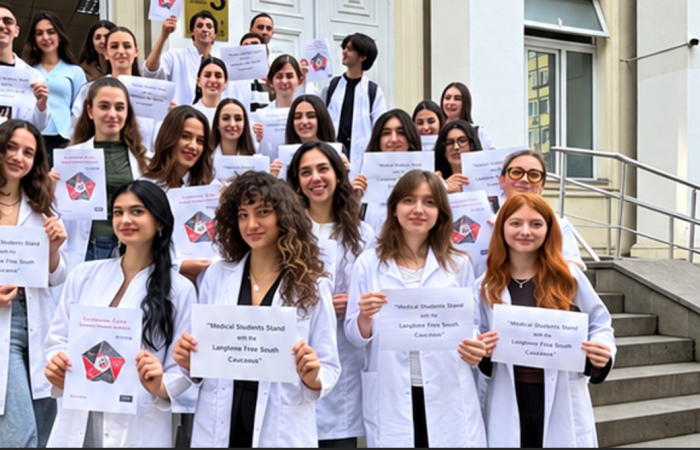
Medical Students in Tbilisi have participated in the campaign LANDMINE FREE SOUTH CAUCASUS 2026. The regional’ Landmine Free South Caucasus’ (LFSC) campaign was initiated by LINKS Europe Foundation in 2018 to address the critical issue of landmine and unexploded ordnance contamination in Armenia, Azerbaijan and Georgia. With significant landmine contamination in the region posing an ongoing threat to life and eliciting high economic costs, LFSC advocated for a regional, holistic approach to complete clearance.  Future Doctors Join the Conversation on Friday, 16 October in Tbilisi. "As part of the Landmine Free South Caucasus 2026 campaign, an informative and interactive meeting was held in Tbilisi with medical students. The session was conducted by George Simonishvili, South Caucasus Co-ordinator for LINKS Europe.  The meeting focused on the humanitarian consequences of landmines and other explosive remnants of war in Armenia, Azerbaijan, and Georgia, with particular attention to the Red Bridge minefield near the borders of the three countries, and emphasised that these dangers remain a current humanitarian challenge. It also underlined that future medical professionals will encounter the long-term effects of explosion injuries and can play a role in awareness and prevention.  Students actively engaged throughout the discussion, showing strong interest in the humanitarian impact and the need for cooperation. Under the slogan "Future Doctors for a Landmine Free South Caucasus," the event encouraged students to support public awareness, solidarity with survivors, and a safer South Caucasus free from landmine threats.  The event was organised by LINKS Europe as part of LFSC26.  "Medical Students Stand for a Landmine Free South Caucasus," "Future Doctors, Safer Futures: Together Against Landmines." "Future Doctors for a Landmine Free South Caucasus".
Editor's choice
News
European Commission Disburses €1.24 Billion to Boost Ukraine’s Defence Industry

European Commission Disburses €1.24 Billion to Boost Ukraine’s Defence Industry

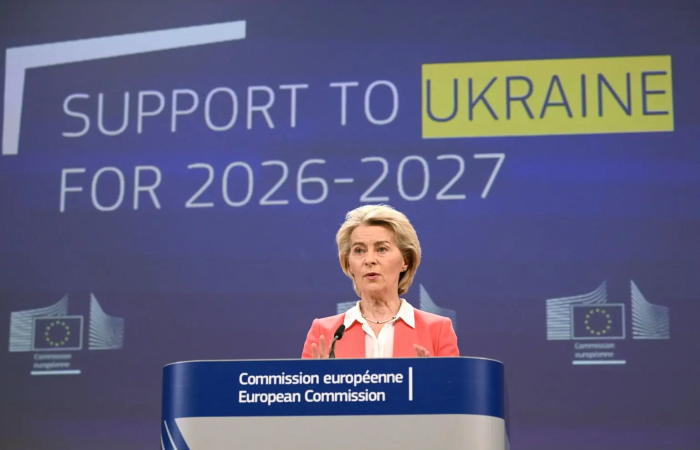
The European Commission disbursed €1.24 billion to Ukraine on Wednesday (October 7) under the defence component of the €90 billion Ukraine Support Loan, earmarked for drones, drone interceptors, ammunition, and missiles produced by Ukrainian entities. European Commission President Ursula von der Leyen said the payment would strengthen Ukraine’s defence industry and its ability to protect people and infrastructure. She described Russia’s ongoing attacks as a deliberate strategy intended to make daily life increasingly difficult for Ukrainians. The Ukraine Support Loan provides an indicative €60 billion for defence and €30 billion for budgetary assistance during 2026–2027. The European Commission plans to disburse €28.3 billion for Ukraine’s defence industrial capacity in 2026, with further payments under the defence component expected in the coming weeks. Funding decisions are based on Ukraine’s evolving requirements and remain subject to agreed conditions and monitoring. According to Ukrainian Prime Minister Serhiy Koretskyi, the latest payment brings Ukraine’s defence financing received through the programme to nearly €13 billion. He said the government would continue working with European partners to ensure the remaining planned funding is delivered on schedule and in full For the remainder of 2026, €32.5 billion in EU financial support remains available to Ukraine. This includes €28.1 billion under the Ukraine Support Loan – €15.4 billion for defence industrial capacity and €12.7 billion in budget support. A further €4.4 billion remains available through the Ukraine Facility, bringing the total budget support available for 2026 to more than €17 billion, subject to Ukraine meeting the relevant conditions. Since 2022, the EU and its member states have provided €228.7 billion in overall support to Ukraine, including €3.8 billion generated from immobilised Russian assets.

Popular

Editor's choice
Interview
Thursday Interview: Murad Muradov

Thursday Interview: Murad Muradov

Today, commonspace.eu starts a new regular weekly series. THURSDAY INTERVIEW, conducted by Lauri Nikulainen, will host  persons who are thinkers, opinion shapers, and implementors in their countries and spheres. We start the series with an interview with Murad Muradov, a leading person in Azerbaijan's think tank community. He is also the first co-chair of the Action Committee for a new Armenian-Azerbaijani Dialogue. Last September he made history by being the first Azerbaijani civil society activist to visit Armenia after the 44 day war, and the start of the peace process. Speaking about this visit Murad Muradov said: "My experience was largely positive. My negative expectations luckily didn’t play out. The discussions were respectful, the panel format bringing together experts from Armenia, Azerbaijan, and Turkey was particularly valuable during the NATO Rose-Roth Seminar in Yerevan, and media coverage, while varied in tone, remained largely constructive. Some media outlets though attempted to represent me as more of a government mouthpiece than an independent expert, which was totally misleading.  Overall, I see these initiatives as important steps in rebuilding trust and normalising professional engagement. The fact that soon a larger Azerbaijani civil society visits to Armenia followed, reinforces the sense that this process is moving in the right direction." (click the image to read the interview in full)