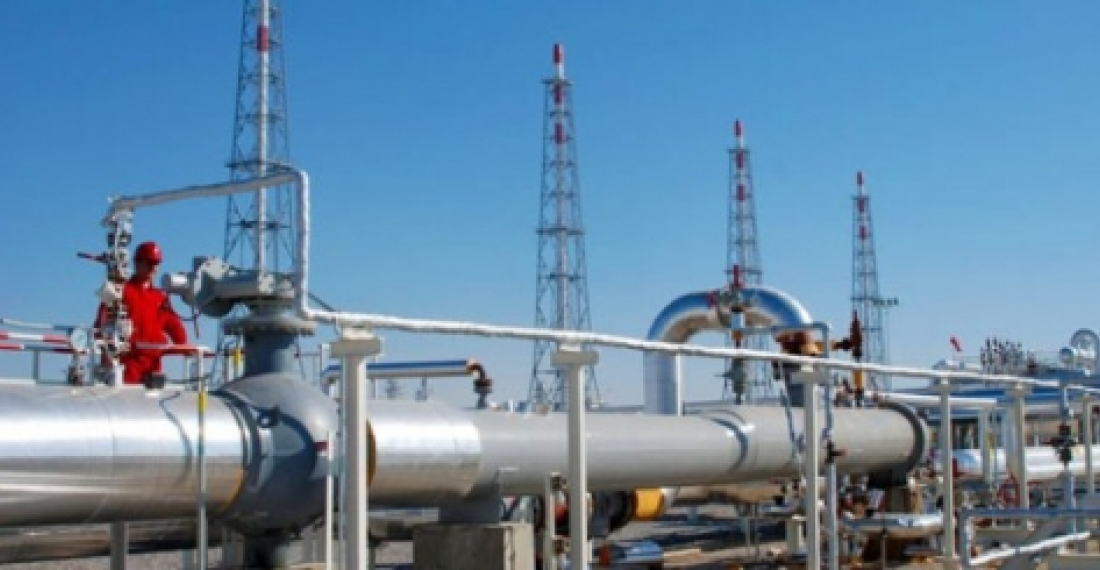
Flow of Azerbaijani gas to Turkey resumes after a technical problem is resolved. Turkey dismissed reports that the interruption was intentional.

Turkish and Azerbaijani media report that the flow of gas from the Shah Deniz field to Turkey has now been fully restored following a sudden break in supply on Tuesday due to a technical problem. The interruption in supply came as Turkey like the rest of the region has been experiencing severe cold weather.

Before the platform's suspension the production volume at the field amounted to 25 million cubic meters of gas per day.  A spokesperson for BP told TREND News Agency that the company had "completed all scheduled work on the platform of Shah Deniz gas-condensate field and was preparing to open the wells." BP Azerbaijan is the technical operator of the field development. The technical fault happened during a routine maintenance in the power system of the Shah Deniz platform. Production from all four wells was subsequently suspended. During the operations on the platform the safety of personnel and equipment was fully ensured.

Reserves of Shah Deniz field are estimated at 1.2 trillion cubic meters of gas. The contract to develop the offshore Shah Deniz field was signed June 4, 1996. Participants to the agreement are: BP (operator) - 25.5 percent, Statoil - 25.5 percent, NICO - 10 percent, Total - 10 percent, LukAgip - 10 percent, TPAO - 9 percent, SOCAR-10 percent.

Speaking to reporters in Parliament, the Turkish Energy and Natural Resources Minister Taner Yıldız said gas flow is expected to return to regular levels by Thursday night at the latest. He highlighted the role cold weather has played in obstructing efforts to fix the technical problems observed not only in Azerbaijan but also in Iran. He compared it to recent power cuts across Europe caused by severe weather conditions. Responding to press speculation in Turkey suggesting the drop in gas supply was intentional, Yıldız answered: "This is unfair to our Azeri and Iranian counterparts and negatively affect our relationship with them." Yıldız added, "We don't believe the reduction of the flow of natural gas is intentional."

Turkey imports 6.6 billion cubic meters (bcm) of gas per year from Azerbaijan, around 16 percent of its total consumption. It also imports around 10 bcm from Iran, Turkey's second largest supplier after Russia. According to the influential Turkish Daily newspaper Todays Zaman Turkey halted gas supplies to Greece following the disruption in supply from Azerbaijan and said it has asked Iran to increase its supply.

source: commonspace.eu with TREND and Todays Zaman

photo: courtesy of Todays Zaman
Related articles

Editor's choice
News
Borrell tells the European Parliament that the situation in Afghanistan was critical, but the EU will remain engaged

Borrell tells the European Parliament that the situation in Afghanistan was critical, but the EU will remain engaged

Borrell underlined that the European Union will make every effort to support the peace process and to remain a committed partner to the Afghan people. "Of course, we will have to take into account the evolving situation, but disengagement is not an option.  We are clear on that: there is no alternative to a negotiated political settlement, through inclusive peace talks.
Editor's choice
News
Thai-Cambodia border clashes enter fourth day

Thai-Cambodia border clashes enter fourth day

Renewed fighting between Thailand and Cambodia has entered its fourth day, with both sides accusing one another of violating international law, as they await a promised phone call from United States President Donald Trump. Cambodia’s Ministry of Defence accused Thailand’s military of carrying out numerous attacks within the country in the early hours of Thursday morning, including deploying tanks and artillery to strike targets in the country’s Pursat, Banteay Meanchey, and Oddar Meanchey provinces. In one such attack, Cambodia accused Thai soldiers of violating international humanitarian law by firing on civilians in Prey Chan village in Banteay Meanchey province. In another, it accused Thai forces of shelling “into Khnar Temple area”, and said Thai forces had also “fired artillery and support fire into the O’Smach area”. “Cambodia urges that Thailand immediately stop all hostile activities and withdraw its forces from Cambodia’s territorial integrity, and avoid acts of aggression that threaten peace and stability in the region,” the Defence Ministry said. Clashes took place on Wednesday at more than a dozen locations along the contested colonial-era demarcated 817-kilometre (508-mile) Thai-Cambodian border, with some of the most intense fighting being reported since a five-day battle in July, which saw dozens killed on both sides. Cambodia’s Ministry of the Interior said homes, schools, roads, Buddhist pagodas and ancient temples had been damaged by “Thailand’s intensified shelling and F-16 air strikes targeting villages and civilian population centres up to 30km [18.6 miles] inside Cambodian territory”. (click the image to read the full story).

Popular

Editor's choice
News
Thai-Cambodia border clashes enter fourth day

Thai-Cambodia border clashes enter fourth day

Renewed fighting between Thailand and Cambodia has entered its fourth day, with both sides accusing one another of violating international law, as they await a promised phone call from United States President Donald Trump. Cambodia’s Ministry of Defence accused Thailand’s military of carrying out numerous attacks within the country in the early hours of Thursday morning, including deploying tanks and artillery to strike targets in the country’s Pursat, Banteay Meanchey, and Oddar Meanchey provinces. In one such attack, Cambodia accused Thai soldiers of violating international humanitarian law by firing on civilians in Prey Chan village in Banteay Meanchey province. In another, it accused Thai forces of shelling “into Khnar Temple area”, and said Thai forces had also “fired artillery and support fire into the O’Smach area”. “Cambodia urges that Thailand immediately stop all hostile activities and withdraw its forces from Cambodia’s territorial integrity, and avoid acts of aggression that threaten peace and stability in the region,” the Defence Ministry said. Clashes took place on Wednesday at more than a dozen locations along the contested colonial-era demarcated 817-kilometre (508-mile) Thai-Cambodian border, with some of the most intense fighting being reported since a five-day battle in July, which saw dozens killed on both sides. Cambodia’s Ministry of the Interior said homes, schools, roads, Buddhist pagodas and ancient temples had been damaged by “Thailand’s intensified shelling and F-16 air strikes targeting villages and civilian population centres up to 30km [18.6 miles] inside Cambodian territory”. (click the image to read the full story).