


Central Asia affected by the two southern border wars, and Kazakhstan votes to replace the country’s constitution

Already navigating competing geopolitical pressures since Russia’s 2022 invasion of Ukraine, Central Asian countries now face new spillover effects from two southern conflicts. The first conflict affecting the region is the “open warfare” between Afghanistan and Pakistan that has been ongoing since late February. At the core of the conflict is Pakistan’s claim that the Afghan Taliban is allowing the militant group, Tehrik-e-Taliban Pakistan (TTP), to operate from Afghan territory, an allegation that the Afghan Taliban consistently denies. Although Pakistan and Afghanistan have agreed to a ceasefire for Eid al Fitr, the situation remains highly volatile. While none of the five republics have been directly involved in this conflict, they all face its spillover economic and security burdens.  

Despite the Taliban's return to power in Afghanistan in 2021, Central Asian states have continued to advocate for cautious economic integration and the development of trade routes through Afghanistan, viewing these as potential means to reduce instability in the country. The republics view Afghanistan as a critical gateway to accessing markets in India and have long discussed possibilities of rail and energy links connecting Central Asia to South Asia. However, the conflict has led the five republics to question whether these trade routes are strategically viable. In addition, concerns around border security, illicit trafficking, and the potential of a high influx of refugees fleeing war have become priorities for Uzbekistan, Tajikistan, and Turkmenistan, which share a border with Afghanistan. 

The second conflict that is affecting the region is the war launched by Israel and the United States against Iran, which began on 28 February. As with the conflict between Afghanistan and Pakistan, the landlocked republics’ trade routes are the ones mainly affected. The war in Iran significantly disrupts two key transport corridors: the International North–South Transport Corridor (linking Russia, the Caspian Sea, Iran, and India) and the southern branch of the Eurasian East–West corridor passing through Iran. 

While the previous issue of Central Asia Concise has discussed the negative impact of this conflict on the five republics, it is important to recognise that the rising oil prices as a result of the Hormuz Crisis have had a positive impact on Kazakhstan, which is a major oil exporter. Turkmenistan may also benefit, albeit to a lesser extent. Its economy is heavily dependent on natural gas exports, primarily to China, and while it is not a significant oil exporter, gas pricing is partly linked to oil and broader energy market trends. As a result, higher oil prices can translate into increased revenues, though the effect is more indirect. Uzbekistan is in a more mixed position; it produces some oil and gas but not at levels that make it a major exporter, and it remains partly dependent on energy imports. As a result, higher oil prices generate limited gains alongside economic pressures for Uzbekistan. For the energy-importing economies of Kyrgyzstan and Tajikistan, rising oil prices create economic pressures.  

The five republics will need to strengthen cooperation on both economic and security matters to mitigate the spillover effects of these two conflicts.

Kazakhstan votes to replace its constitution

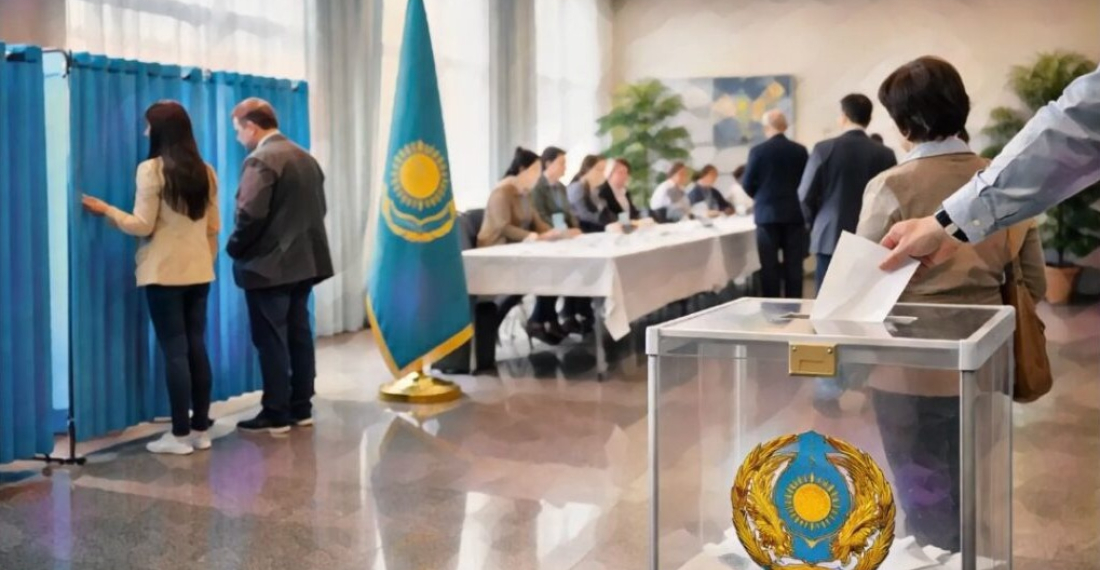
In the midst of these conflicts, on Sunday (15 March), Kazakhstan held a national referendum on a new constitution, marking an important political moment for the country. Voters were asked whether they approve of the proposed constitution, which suggests modernizing governance by clarifying the roles of state institutions, recreating the office of the vice president, strengthening legal frameworks, and improving the protection of fundamental rights. According to the Central Election Commission of Kazakhstan, more than 85 percent voted in favour of the new constitutional draft, with preliminary figures indicating that more than 72 percent of Kazakhstan’s eligible voters took part.

Kate Mallinson argues in her article for Chatham House that when it comes to the proposed changes in Kazakhstan, “China is likely to welcome the transition to a more stable and institutionalized system more akin to its own. But Russia will be wary that the new constitution cements Kazakhstan’s sovereignty and territorial integrity in the face of increasing Russian attempts to assert its influence.” 

Human Rights Watch has warned that certain proposed changes could weaken checks on executive power and introduce new restrictions on civil society, including limits on foreign funding for political parties and NGOs, as well as increased reporting requirements. Moreover,  there are concerns as the draft removes the reference to international law taking precedence over domestic law. 

Proponents of the new constitution argue that the new constitution would “initiate a process of moving Kazakhstan away from authoritarianism towards a system featuring stronger checks and balances.” Whether the new constitution achieves these goals depends on how its 95 provisions will be interpreted and applied.  

Source: This briefing was first published on Central Asia Concise on 19 March 2026

Related articles

Editor's choice
News
Armenia and EU agree on strategic co-operation, but the 7 June elections will define the future

Armenia and EU agree on strategic co-operation, but the 7 June elections will define the future

This article is part of the Armenia Season on commonspace.eu between 1 May and 15 June 2026. The first Armenia-EU summit was held in Yerevan on 5 May 2026. Alex Verge, was commonspace.eu special correspondent at the summit in Yerevan, and he filed this report: In a landmark diplomatic moment, Armenian Prime Minister Nikol Pashinyan hosted the first-ever bilateral summit between Armenia and the European Union at the presidential residence in Yerevan on 5 May. While it did not deliver any major announcements, the summit reflected the ongoing deepening of the bilateral  relation and a show of support from Europe for Pashinyan, who is seeking re-election in parliamentary elections in June. EU Commission President Ursual von der Leyen and European Council President Antonio Costa were representing Europe at the summit. Both gave significant credit to Pashinyan personally for his role in bringing Armenia closer to the EU, underlining shared values and commitments to democracy, rule of law, peace and stability.  The current prime minister has indeed overseen a significant rapprochement. In 2025, the Armenian parliament adopted a law that officially mandated the government to pursue EU integration. Accession remains a very distant prospect however. Pashinyan himself commented at the summit that Armenia faced a long road before it could align itself to EU standards, including regarding judiciary independence, and that there was no guarantee that the EU wanted to expand further. He added that a deeper bilateral relationship was highly valuable in and of itself. Alongside the European Political Community gathering that took place the day before, the EU summit will have contributed to the international credibility of Pashinyan and may therefore serve his re-election prospects well. Domestically, it remains to be seen whether Pashinyan will receive similar support from the Armenian electorate come the June parliamentary elections. Outside the presidential palace, a crowd was gathered to call for the release of Armenian prisoners of war held by Azerbaijan - one of the number of issues where large parts of Armenian society have been critical of their current government. Much more than this weekend’s summits, it will be the elections in June that will shape the trajectory of Armenia’s foreign policy. This article is part of the Armenia Season on commonspace.eu between 1 May and 15 June 2026. The first Armenia-EU summit was held in Yerevan on 5 May 2026. Alex Verge, was commonspace.eu special correspondent at the summit in Yerevan, and he filed this report. Press the image to read the full report.
Editor's choice
News
First Armenia-EU summit held in Yerevan - important agreements signed

First Armenia-EU summit held in Yerevan - important agreements signed

The first Armenia–EU Summit was held in Yerevan on Tuesday, 5 May 2026. It marked a historic milestone in bilateral relations, featuring the signing of a number of strategic documents and new initiatives aimed at deepening cooperation. Armenian Prime Minister Nikol Pashinyan, European Commission President Ursula von der Leyen, and European Council President António Costa, together with other participants, witnessed the signing of the EU–Armenia Connectivity Partnership — a major step forward in strengthening transport, energy, and digital links. Fully aligned with the EU’s Cross-Regional Connectivity Agenda and Armenia’s Crossroads of Peace initiative, it will boost trade, create jobs, reinforce resilience, and support regional stability. The partnership will be institutionalised through a High-Level Dialogue on Connectivity, alongside a High-Level Transport Dialogue, also launched at the summit. Additionally, the EU is boosting economic growth in the country by launching a Call for Expressions of Interest, inviting companies in the EU, the European Economic Area, and Armenia to develop strategic investment projects in Armenia. The signing of the first Letters of Intent with selected private sector partners in the fields of digital infrastructure, semiconductor skills, innovation ecosystems, and private investment mobilisation aims to bring a tangible positive impact to Armenia. The first progress report on Armenia’s implementation of the visa liberalisation action plan was formally handed to the Armenian side. This first report acknowledges good progress and provides recommendations on the next steps in its implementation. In addition, leaders witnessed the initialling of a working arrangement between the European Border and Coast Guard Agency (Frontex) and the Armenian Ministry of Internal Affairs, which will enhance cooperation on border and migration management, supporting Armenia in the implementation of the visa liberalisation action plan. On security and defence, leaders welcomed the establishment of an EU Partnership Mission in Armenia. (This article is part of the Armenia Season on commonspace.eu)

Popular

Editor's choice
Interview
Thursday Interview: Murad Muradov

Thursday Interview: Murad Muradov

Today, commonspace.eu starts a new regular weekly series. THURSDAY INTERVIEW, conducted by Lauri Nikulainen, will host  persons who are thinkers, opinion shapers, and implementors in their countries and spheres. We start the series with an interview with Murad Muradov, a leading person in Azerbaijan's think tank community. He is also the first co-chair of the Action Committee for a new Armenian-Azerbaijani Dialogue. Last September he made history by being the first Azerbaijani civil society activist to visit Armenia after the 44 day war, and the start of the peace process. Speaking about this visit Murad Muradov said: "My experience was largely positive. My negative expectations luckily didn’t play out. The discussions were respectful, the panel format bringing together experts from Armenia, Azerbaijan, and Turkey was particularly valuable during the NATO Rose-Roth Seminar in Yerevan, and media coverage, while varied in tone, remained largely constructive. Some media outlets though attempted to represent me as more of a government mouthpiece than an independent expert, which was totally misleading.  Overall, I see these initiatives as important steps in rebuilding trust and normalising professional engagement. The fact that soon a larger Azerbaijani civil society visits to Armenia followed, reinforces the sense that this process is moving in the right direction." (click the image to read the interview in full)


