Is Armenia the same as Kaliningrad? A statement by an Advisor of Putin reflects a common Russian approach to "union".

A statement by a senior official of the Putin administration in which he compared Armenia to Kaliningrad is full of inaccuracies, but it reflects ideas that lay behind Russian current thinking on the creation "unions".

On Sunday (8 September), Academician Sergei Glazyev, an Advisor of the Russian President Vladimir Putin, was interviewed by the Russian Radio Stateion, "Echo Moskovie",  on the Russian backed Customs Union and Eurasian Union. The interview focused mainly on Ukraine, but in the middle, Glazyev was also asked about Armenia.

The interviewer reminded Glazayev that Armenia has no borders with other members of the Customs Union,

Interviewer:... But Armenia has no borders with the Customs Union .

Glazyev: But we have the Kaliningrad region, which has no borders [with Russia] .

Interviewer: This is another state [Armenia] after all.

Glazyev: For us, in fact, there is no difference whether it is the state, or region of a state. The main thing is a common custom territory [custom union]. Kaliningrad region which has no common borders is the part of the common custom territory already for five years.

Interviewer : but it has exit to the sea, unlike Armenia, so you could deliver goods by sea.

Glazyev : I 'll tell you a funny story. As you know Armenia also was planning to sign an association agreement with the European Union.

Interviewer: that is why I asking you this question.

Glazyev : Do you know what was written in it ? It is the same as the Ukrainian [text of the agreement] . The impression is that it is the same one document , and on the point you mention that there is no sea in Armenia and there is the one in Ukraine. But in the Ukrainian agreement with Europe is said that Ukraine is committed to implement EU rules on fisheries and aquaculture , we understand that. And when the same thing is said in the Armenian agreement - what is it talking about ?

(You can hear Glazyev's interview in full here.)

Commonspace.eu political editor said in a comment about the Glazyev interview:

"This interview reflects a simplistic, but common Russian approach to building "Unions". The idea that sovereign countries and regions of Russia are one and the same thing and can all be pooled together to create a Union - customs, economic or even political, without much further ado, if the man at the top so decides is not only outdated, but dangerous, including for Russia itself. Some, even Russians, fear that Russia is embarking on projects that will in the future need to be underpinned at great financial costs, and will involve Riussia in endless political entanglement. Kaliningrad may be an exclave of the Russian Federation, but in all other ways it is part of it. There are no different laws and constitutions; Kaliningrad answers to Moscow and is subject to the decisions of the Russian Government and Parliament. Is it the same with Armenia?

Glazyev does not even try to answer the question about the geographic differences between Kaliningrad and Armenia. Kaliningrad has a famous port and a long coastline, close to the rest of Russia. Armenia is landlocked. Instead Glazyer tries to make some flimsy remarks with reference to something in the proposed EU-Armenia Association agreement about fisheries and aquaculture. What is the point here? Armenia is land locked but it has a small fisheries and aquaculture industry too, around Lake Sevan. Probably it is one area where co-operation with Europe could have helped Armenia, but as with many other things top down "union" initiatives are not interested in the details, only in grand schemes.

There is one big lesson that the Customs Union and the Eurasian Union can learn from the European Union: the process is long and complicated, and is largely technical not political. Success is not when you force a country to join, but when you have countries queuing to join because they can see the benefit. If Russia wants its "unions" of the future to be more successful than those of the past, it must learn these lessons."

source: commonspace.eu with Echo Moskovie

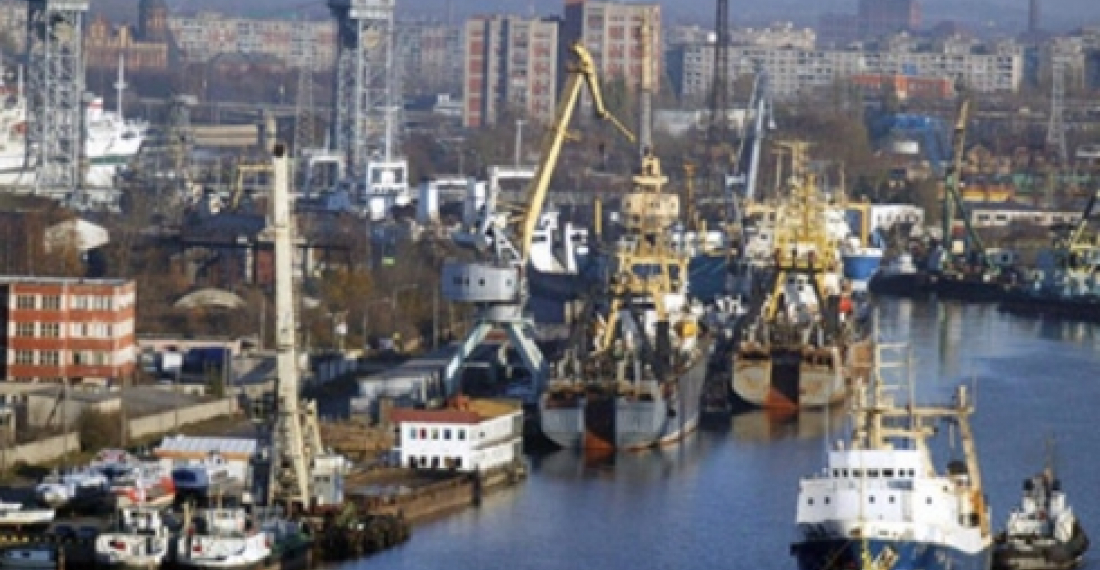
Photo: An aerial view of the harbour at Kaliningrad.
 

Related articles

Editor's choice
News
Landmines present to the European Union both a contradiction and a dilemma

Landmines present to the European Union both a contradiction and a dilemma

Finland’s decision to buy one million landmines creates a serious contradiction in the policy of the European Union, and is symbolic of a bigger dilemma facing European countries as they get used to the need to acquire “hard” power to face an increasing threat from Russia. Finland is seeking to acquire one million anti-personnel mines at a cost of 100 million euros. Finland, together with Poland, Latvia, Lithuania and Estonia last year abandoned the Ottawa agreement, the international framework that bans the use of anti-personnel mines, which the EU had been instrumental in establishing and supporting. All five countries cite the threat from Moscow as the reason. Colonel Riku Mikkonen of the Army Command told Finland’s national news agency STT that officials are now gathering information from suppliers regarding the deal, the AFP news agency reports. Helsinki would like domestic manufacturers to supply the mines, with contracts signed by the end of 2027 and production up and running by 2028. “It would be useful in many ways if Finnish companies produced the anti-personnel mines in Finland,” Mikkonen said. About half a dozen Finnish firms qualify, he told STT. “However, at this stage, buying the mines from abroad is not totally ruled out,” he added. LANDMINES PROVIDE THE EU WITH BOTH A CONTRADICTION, AND A DILEMMA Eliminating landmine contamination worldwide is one of the EU’s main soft power postures, and it basks in its record as the biggest funder of anti-landmine action in the world. But the fact that 5 of its 27 member states  have now left the Ottawa Treaty dents the EU moral high ground. It is a contradiction that is too big and important to be ignored. It also presents the European Union with a deeper dilemma. The threat from Russia is changing what the EU has stood for decades, namely a force for good able to mobilise its considerable soft power for the greater good of humanity. How the Union will implement this change will define its future. In the meantime landmines have not become any less lethal, benign, or unimportant. They remain in many parts of the world a major threat to life, an impediment to prosperity, and a potential trigger to further conflict. The 22 EU members states that still adhere to the Ottawa treaty must regroup, and be more assertive in their quest against anti-personnel land mines. All the reasons why they supported the Ottawa treaty in the first place still exist. The message must be clear: NO TO LANDMINES!
Editor's choice
News
Pashinyan says that he wants peace treaty with Azerbaijan by 2031

Pashinyan says that he wants peace treaty with Azerbaijan by 2031

Armenia should sign and ratify a peace treaty with Azerbaijan before 2031, Armenian Prime Minister Nikol Pashinyan said. He described the objective as the top priority for his administration. Earlier, the Armenian prime minister also spoke about a possible land-swap with Azerbaijan Armenia and Azerbaijan should agree to establish a clear, conventional border without enclaves or exclaves, Prime Minister Nikol Pashinyan said. Armenia controls three Azeri enclaves inside its borders while Baku controls one Armenian enclave – those could be subject to a land swap, Pashinyan announced.

Popular

Editor's choice
Interview
Thursday Interview: Murad Muradov

Thursday Interview: Murad Muradov

Today, commonspace.eu starts a new regular weekly series. THURSDAY INTERVIEW, conducted by Lauri Nikulainen, will host  persons who are thinkers, opinion shapers, and implementors in their countries and spheres. We start the series with an interview with Murad Muradov, a leading person in Azerbaijan's think tank community. He is also the first co-chair of the Action Committee for a new Armenian-Azerbaijani Dialogue. Last September he made history by being the first Azerbaijani civil society activist to visit Armenia after the 44 day war, and the start of the peace process. Speaking about this visit Murad Muradov said: "My experience was largely positive. My negative expectations luckily didn’t play out. The discussions were respectful, the panel format bringing together experts from Armenia, Azerbaijan, and Turkey was particularly valuable during the NATO Rose-Roth Seminar in Yerevan, and media coverage, while varied in tone, remained largely constructive. Some media outlets though attempted to represent me as more of a government mouthpiece than an independent expert, which was totally misleading.  Overall, I see these initiatives as important steps in rebuilding trust and normalising professional engagement. The fact that soon a larger Azerbaijani civil society visits to Armenia followed, reinforces the sense that this process is moving in the right direction." (click the image to read the interview in full)