


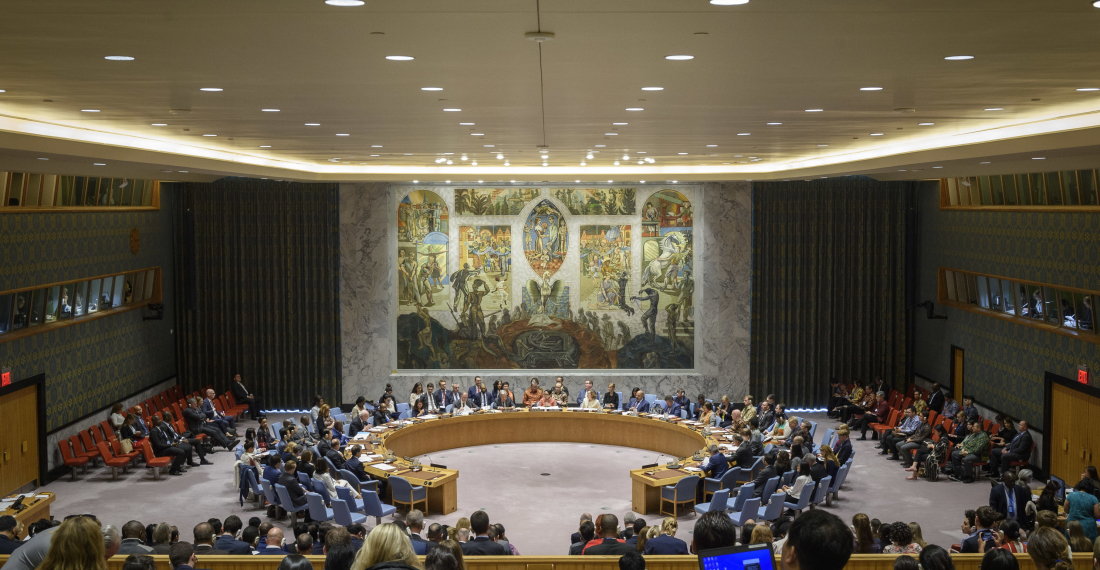
The United Nations Security Council will discuss the situation in Georgia today (Wednesday, 20 August). The Council’s European members (E5)—Denmark, France, Greece, Latvia, and the UK—requested the meeting to mark the 18th anniversary of the 2008 Russia-Georgia war.
Background
After Georgia gained independence from the Soviet Union in 1991, armed conflicts broke out in Abkhazia and in the Tskhinvali region/South Ossetia. Hostilities between the Georgian and South Ossetian sides ended with the signing of the Sochi Agreement on 24 June 1992, which established a ceasefire and created the Joint Control Commission and Joint Peacekeeping Forces. The hostilities between the Georgian and Abkhaz sides ended with the signing of the Agreement on a Ceasefire and Separation of Forces in Moscow on 14 May 1994.
The Security Council established the UN Observer Mission in Georgia (UNOMIG) in August 1993 to verify compliance with an earlier ceasefire agreement reached between Georgia and forces in Abkhazia on 27 July 1993, with special attention to the situation in the city of Sukhumi. UNOMIG’s mandate was subsequently expanded following the May 1994 agreement. It ended in June 2009 after the Security Council failed to agree on its extension, with Russia vetoing a draft resolution that would have extended the mission for two weeks while negotiations continued on a new security regime in the region.
On 7 and 8 August 2008, after a period of heightened tensions, hostilities broke out in the Tskhinvali region/South Ossetia. In a Security Council meeting at that time, Georgia characterised the escalation as a Russian-orchestrated provocation intended to justify military intervention and maintained that the authorities and armed formations were under the control and direction of Russia’s security and defence agencies. Russia, by contrast, said that Georgian forces had launched a “massive attack against Tskhinvali” and maintained that Russian forces were present in the area legally pursuant to existing peacekeeping arrangements. The six-point Ceasefire Agreement of 12 August 2008 mediated by the European Union (EU), followed by implementing measures agreed on 8 September, formally brought an end to the active phase of hostilities, although security and human rights concerns have persisted. Since the 2008 conflict, Russia has maintained a military presence in Abkhazia and the Tskhinvali region/South Ossetia and has concluded a series of agreements with the authorities in control in the two areas.
Russia recognises Abkhazia and South Ossetia as independent states, a position shared by only a small number of UN member states. The vast majority continue to recognise the two areas as part of Georgia. The EU has consistently reaffirmed its support for Georgia’s sovereignty and territorial integrity within its internationally recognised borders. In November 2011, the European Parliament adopted a resolution referring to the two areas as occupied territories.
In recent years, it has become an annual practice for European members of the Council to request a briefing on the situation in Georgia under “any other business” around the anniversary of the August 2008 conflict. Following these sessions, the convening members, occasionally joined by some of the incoming Council members, have held a press stakeout and issued a joint statement.
Today's meeting
Assistant Secretary-General for the Middle East, Europe, the Americas, Asia and the Pacific in the Departments of Political and Peacebuilding Affairs and Peace Operations (DPPA-DPO) Mohamed Khaled Khiari is the anticipated briefer at today's meeting
In his briefing, Khiari is likely to focus on the security, humanitarian, and human rights situation in Abkhazia and the Tskhinvali region/South Ossetia, as well as ongoing diplomatic efforts to address the consequences of the 2008 conflict. The Secretary-General’s latest report to the General Assembly on the status of internally displaced persons (IDPs) and refugees from the two areas, dated 4 May and covering the period from 1 April 2025 to 31 March 2026, expressed concern about persistent security challenges related to “borderization” measures, restrictions on freedom of movement, and the detention of civilians along the administrative boundary lines. The report also called for unhindered humanitarian access, noting that the UN has lacked operational access to South Ossetia since 2008, with the exception of a humanitarian assessment mission conducted by the Office of the UN High Commissioner for Refugees (UNHCR) in August 2016.
Khiari may also provide an update on the Geneva International Discussions (GID), which serve as the primary platform for addressing the security and humanitarian consequences of the 2008 Russia-Georgia war. The format is co-chaired by the UN, the EU, and the Organization for Security and Co-operation in Europe (OSCE). During the latest round of discussions, held on 30 June and 1 July, participants reviewed the security situation on the ground and continued discussions on the non-use of force and international security arrangements. They also explored possible ways to resume the Incident Prevention and Response Mechanism (IPRM) in the Gali district in Abkhazia and discussed humanitarian issues, including crossings, documentation, livelihoods, missing persons, health, and freedom of movement.
Participants were again unable to discuss the issue of the return of IDPs and refugees because of a walkout by the Russian, Abkhaz, and South Ossetian participants. Russia has argued that Georgia’s annual General Assembly resolution, titled “Status of internally displaced persons and refugees from Abkhazia, Georgia, and the Tskhinvali region/South Ossetia, Georgia”, most recently adopted on 4 June, politicises the issue and circumvents the GID, where participants from the two areas are represented. In its 1 July statement following the latest round, the Russian Foreign Ministry maintained that consideration of the issue in other forums violated existing agreements to discuss the issue within the GID.
Khiari may encourage participants to engage constructively on the GID’s core agenda items and underscore the importance of restoring the Gali IPRM. The Secretary-General’s report on the status of IDPs and refugees noted that neither the regular nor any ad hoc meetings of the Gali IPRM were held during the reporting period because of disagreements among participants, while the IPRM in Ergneti continued to meet regularly.
Several European members of the Council are expected to reaffirm their support for Georgia’s independence, sovereignty, and territorial integrity within its internationally recognised borders. They are likely to condemn Russia’s actions during the 2008 conflict and its continued military presence in Abkhazia and the Tskhinvali region/South Ossetia and call on Russia to implement the 2008 ceasefire agreement.
These members may also express opposition to steps that they regard as altering the status quo or leading to greater Russian integration with the two areas. In a 7 August statement marking the 18th anniversary of the conflict, the EU expressed concern about “increasing Russian attempts” to de facto integrate Abkhazia and the Tskhinvali region/South Ossetia into Russia’s regulatory and security space. The statement maintains that these measures, such as the “Agreement on Deepening Allied Cooperation” signed between Moscow and Tskhinvali on 9 May, and the appointment of a Russian official as “Acting President” of South Ossetia, have no validity under international law.
European members may also raise human rights concerns—including with regard to restrictions on freedom of movement and other measures affecting conflict-affected communities—and call for unhindered access for international human rights and humanitarian actors. They are also expected to emphasise the need for renewed dialogue and may highlight the EU’s mediation role, including through its co-chairmanship of the GID and the work of the EU Monitoring Mission in Georgia (EUMM). In a 9 July statement following the latest GID round, the EU reiterated its support for the discussions and called for all participants, including Russia, to commit to the non-use of force and for the establishment of a verification mechanism.
Other Council members are expected to emphasise dialogue and de-escalation, as well as the need to reach a peaceful settlement through existing diplomatic mechanisms. Such members may underscore the importance of confidence-building and the continued functioning of the GID.
Russia is likely to reject European members’ characterisation of the 2008 conflict and reiterate its own account of the events. In an 8 August press release marking this year’s anniversary, the Russian Foreign Ministry maintained that Georgia initiated the hostilities against South Ossetia, defending Russia’s military response. Moscow is also likely to reiterate its call for legally binding commitments on the non-use of force between Tbilisi and the authorities in Abkhazia and the Tskhinvali region/South Ossetia, which it stated would provide a “robust guarantee against a recurrence” of the events of August 2008.
In his briefing, Khiari is likely to focus on the security, humanitarian, and human rights situation in Abkhazia and the Tskhinvali region/South Ossetia, as well as ongoing diplomatic efforts to address the consequences of the 2008 conflict. The Secretary-General’s latest report to the General Assembly on the status of internally displaced persons (IDPs) and refugees from the two areas, dated 4 May and covering the period from 1 April 2025 to 31 March 2026, expressed concern about persistent security challenges related to “borderization” measures, restrictions on freedom of movement, and the detention of civilians along the administrative boundary lines. The report also called for unhindered humanitarian access, noting that the UN has lacked operational access to South Ossetia since 2008, with the exception of a humanitarian assessment mission conducted by the Office of the UN High Commissioner for Refugees (UNHCR) in August 2016.
Khiari may also provide an update on the Geneva International Discussions (GID), which serve as the primary platform for addressing the security and humanitarian consequences of the 2008 Russia-Georgia war. The format is co-chaired by the UN, the EU, and the Organization for Security and Co-operation in Europe (OSCE). During the latest round of discussions, held on 30 June and 1 July, participants reviewed the security situation on the ground and continued discussions on the non-use of force and international security arrangements. They also explored possible ways to resume the Incident Prevention and Response Mechanism (IPRM) in the Gali district in Abkhazia and discussed humanitarian issues, including crossings, documentation, livelihoods, missing persons, health, and freedom of movement.
Participants were again unable to discuss the issue of the return of IDPs and refugees because of a walkout by the Russian, Abkhaz, and South Ossetian participants. Russia has argued that Georgia’s annual General Assembly resolution, titled “Status of internally displaced persons and refugees from Abkhazia, Georgia, and the Tskhinvali region/South Ossetia, Georgia”, most recently adopted on 4 June, politicises the issue and circumvents the GID, where participants from the two areas are represented. In its 1 July statementfollowing the latest round, the Russian Foreign Ministry maintained that consideration of the issue in other forums violated existing agreements to discuss the issue within the GID.
Khiari may encourage participants to engage constructively on the GID’s core agenda items and underscore the importance of restoring the Gali IPRM. The Secretary-General’s report on the status of IDPs and refugees noted that neither the regular nor any ad hoc meetings of the Gali IPRM were held during the reporting period because of disagreements among participants, while the IPRM in Ergneti continued to meet regularly.
Several European members of the Council are expected to reaffirm their support for Georgia’s independence, sovereignty, and territorial integrity within its internationally recognised borders. They are likely to condemn Russia’s actions during the 2008 conflict and its continued military presence in Abkhazia and the Tskhinvali region/South Ossetia and call on Russia to implement the 2008 ceasefire agreement.
These members may also express opposition to steps that they regard as altering the status quo or leading to greater Russian integration with the two areas. In a 7 August statement marking the 18th anniversary of the conflict, the EU expressed concern about “increasing Russian attempts” to de facto integrate Abkhazia and the Tskhinvali region/South Ossetia into Russia’s regulatory and security space. The statement maintains that these measures, such as the “Agreement on Deepening Allied Cooperation” signed between Moscow and Tskhinvali on 9 May, and the appointment of a Russian official as “Acting President” of South Ossetia, have no validity under international law.
European members may also raise human rights concerns—including with regard to restrictions on freedom of movement and other measures affecting conflict-affected communities—and call for unhindered access for international human rights and humanitarian actors. They are also expected to emphasise the need for renewed dialogue and may highlight the EU’s mediation role, including through its co-chairmanship of the GID and the work of the EU Monitoring Mission in Georgia (EUMM). In a 9 July statement following the latest GID round, the EU reiterated its support for the discussions and called for all participants, including Russia, to commit to the non-use of force and for the establishment of a verification mechanism.
Other Council members are expected to emphasise dialogue and de-escalation, as well as the need to reach a peaceful settlement through existing diplomatic mechanisms. Such members may underscore the importance of confidence-building and the continued functioning of the GID.
Russia is likely to reject European members’ characterisation of the 2008 conflict and reiterate its own account of the events. In an 8 August press release marking this year’s anniversary, the Russian Foreign Ministry maintained that Georgia initiated the hostilities against South Ossetia, defending Russia’s military response. Moscow is also likely to reiterate its call for legally binding commitments on the non-use of force between Tbilisi and the authorities in Abkhazia and the Tskhinvali region/South Ossetia, which it stated would provide a “robust guarantee against a recurrence” of the events of August 2008.
source: commonspace.eu with Security Council Report (New York) and agencies



