In this analysis, Noman Ahmed and Dennis Sammut discuss recent moves to end the diplomatic crisis between Qatar and several other Arab states ahead of a crucial summit of the Gulf Co-operation Council in Bahrain later this month.
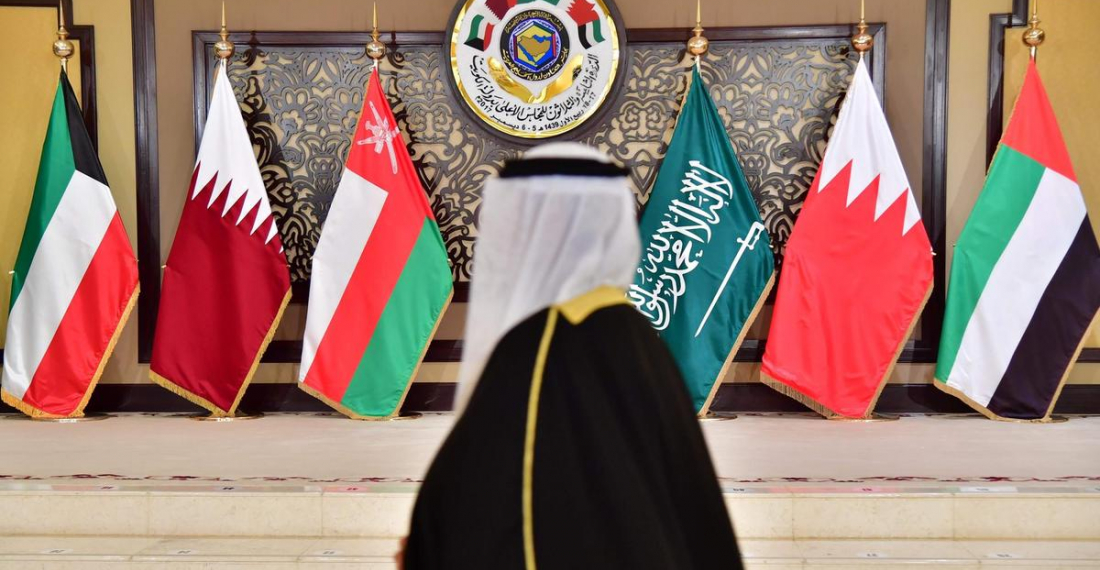
The Gulf Co-operation Council (GCC) – a grouping of the six Arab Gulf monarchies: Saudi Arabia, Bahrain, Qatar, Kuwait, Oman and United Arab Emirates – has been largely paralysed in the last few years following a dispute between some of its members. In a meeting scheduled to take place in Bahrain later this month, its members hope to be able to resolve the problem and relaunch the regional bloc whose existence is considered important for regional security. This could also open new prospects for co-operation between the bloc and the European Union.
Three years passed since several Arab countries imposed a naval, air and land blockade of Qatar, an interlocked peninsula state in Arabia. The blockade, which followed the severing of diplomatic relations, restricts the movement of traffic and persons. Reports in the last days suggest that after an intensive mediation effort by Kuwait, supported by the United States, Saudi Arabia and Qatar are expected to normalise relations between them, ending a tense crisis that threatened to jeopardise regional peace and solidarity.
At the start of the crisis, the blockading countries issued thirteen demands, which given that they would have severely curtailed Qatar’s ability to operate as an independent state, were always unlikely to be accepted except under military duress. However, three years after the break of relations, and after considerable and patient behind-the-scenes efforts, particularly by Kuwait, it seems that a way out of the crisis is now possible. Facilitating the negotiations to resolve the dispute has also been one of the Trump administration’s more nuanced diplomatic efforts. The US has strong military, political and economic ties with all the countries concerned, and wanted an end to the crisis. Any sustainable agreement, however, requires a strong commitment to follow-through on its provisions, especially from the Gulf countries themselves.
The Qatar diplomatic crisis has historical roots, dating back to centuries old territorial and family disputes between the ruling families of the Gulf, but the recent crisis is directly connected with a perception that Qatar was not acting decisively to combat terrorism and radical Islam, and had in fact become a haven for both – accusations that Qatar has always vehemently rejected.
In May 2017, unknown hackers briefly placed statements – allegedly made by Qatar’s Emir – praising Iran and criticising US foreign policy on the website of the Qatar News Agency. Saudi and UAE national TV channels reported these statements, and on the following day; the Doha-based global TV channel, Al Jazeera, which is generously funded by Qatar, was blocked in several Arab countries. Shortly after, Saudi Arabia, UAE, Bahrain and Egypt broke off diplomatic relations with Qatar and introduced a blockade. Border closures and an economic boycott followed. The blockading countries hoped other Arab and Muslim countries will back them, but hardly any did.
Whilst the blockade caused some inconvenience, it did not lead to sort of diplomatic and economic isolation that the blockading countries expected. A case in point was the decision of the Hague-based International Court of Justice (ICJ), in a case brought by Qatar after it complained to the UN’s International Civil Aviation Organization (ICAO) that the air blockade imposed against it was illegal. The blockading countries (Bahrain, Egypt, Saudi Arabia and the UAE) stated that only the ICJ could rule in this matter as it was beyond an issue of civil aviation. The ICJ rejected their claim and referred the case back to the ICAO, expressing its confidence that ICAO was able to make a sound decision. Although the ICJ ruling did not make either side a winner, it helped frame the crisis as a dispute, with the potential of an early solution
Turkey and Iran also became very active in ensuring that Qatar was not isolated, and Qatar soon found alternative paths for continuing commerce and transport. However, the blockade has distracted Qatar from focusing on some of its wider priorities and caused genuine hardship and inconvenience for citizens on both sides, who have family ties across the now closed borders.
A crisis with historical roots
Relations between the Qatari Al Thani royal family, and other royal families in the Gulf have always been difficult, or at best awkward, despite some cases of inter marriage. Yet despite these tensions, the six member Gulf Cooperation Council (GCC), a regional intergovernmental organisation, was created in 1981, it was able not only to contain and diffuse these and other tensions between its members, but also offer a basis for solid regional co-operation, and is considered a successful model of multilateral cooperation in the post-Cold War era. However, the 2011 uprisings in the region placed Qatar at odds with the region’s main political actors, namely, Egypt, Saudi Arabia and the UAE. Qatar’s improving relations with Turkey and Iran further antagonised its neighbours. The Saudi ruling family still considers Saudi Arabia as the primus inter pares in the Gulf, and does not want any actors to undermine its political and economic vision for the kingdom as a cultural and political senior in the regional relationship – a claim partly justified by its size, economic and military clout, and history. While Qatar does not directly challenge Saudi supremacy, its alliance with Turkey is seen as a potential threat by the Saudis. Qatari friendliness with Iran is also a matter of concern for Saudis who for decades have been locked in a battle for regional hegemony in the Gulf.
Historical baggage and tribal friend and foe dynamics of the Gulf region has continued to colour relations between the Qatar, UAE and Bahrain fifty years after they achieved independence, and despite having embraced modern governing systems and achieved tremendous economic success, which has very positively affected the wellbeing of their citizens.
Tensions between Qatar and UAE go back a long time over land disputes between the ruling al Nahyan family in Abu Dhabi and Qatar’s al-Thani. The British tried to resolve these disputes during their long sojourn in the Gulf, which ended in 1971, but only partially succeeded. After the 1995 coup in Qatar, the UAE hosted the deposed Qatari Emir, and Qatar blamed the UAE and its allies for interfering in its affairs.
Qatar and Bahrain also have long historical land disputes. The sectarian factor also plays a critical role. In Bahrain, a Sunni family rules over a majority Shia nation and relations are often tense and verging on breaking point. The government of Bahrain accuses Iran of instigating rebellion Bahrain is keen on joining its fellow regional allies to curb the alleged Iranian influence in internal Bahraini affairs.
Egypt, on the other hand, claims Qatar hosts and supports the Muslim Brotherhood – a prominent Islamist opposition force banned in Egypt but co-hosted in exile by Qatar and Turkey. On its part, Qatar remained determined to maintain its foreign policy course. Turkey had strong ties with Qatar historically, which was strengthened as they supported similar groups in the post-2011 Middle East. Qatar is also an important business partner for Turkey, and there has been a Turkish military presence in Qatar since 2017, providing it with logistical and strategic access to the Gulf. Iran, on the other hand, shares maritime gas fields and sees its support of Qatar as an opportunity to counter Saudi influence in the region.
The diplomatic crisis has not benefited any side economically or politically, and threatened the fragile regional co-operation that the GCC was trying to roll out, which everyone understands has huge potential. Several regional and international countries offered to mediate, but initial talks did not result in any considerable progress. Now the Kuwait and US initiatives appear to have succeeded. For Kuwait this is a victory for the efforts of the al Sabah ruling family that have in recent years often played the role of honest broker in Gulf disputes. For the United States, a deal is not only a diplomatic feather in Donald Trump’s hat. More significantly, it smooths a relationship between US strategic military partners. The US Central Command maintains a huge military base in Qatar and the Pentagon has remained solidly committed in its support of the Qatar government throughout the dispute, taking the sting out of the criticism of Qatar as an ally of Turkey and Iran. A resolution of the crisis will open a new page for the Gulf Co-operation Council, and may offer a new beginning for regional co-operation. Although details of the agreement are not yet disclosed, a broad solution to the crisis would require compromise by both sides – something that continues to be highlighted in statements by the international community.
One of the first institutions to welcome the agreement was the European Union, which said in a statement that, "The settlement of the internal rift will allow the GCC to restore its unity and resume its important work. The EU remains ready to further strengthen its long-standing partnership with a reinvigorated GCC." Another indication of an increased EU interest in the region was the reference to it in the 2 December 2020 joint communication from the European Commission and the EU High Representative 'A new EU-US agenda for global change'. It states: “the EU will continue addressing security in the Gulf, supporting de-escalation, creating conditions for confidence building and for an inclusive security architecture.”
The role of GCC, its mission and values of collective responsibility should be the foundations for normalising relations. Qatar and its GCC neighbours should give serious consideration to successfully implement the forthcoming agreement and adopt confidence-building measures that would gradually restore GCC unity and its regional role, and enable it to play an important role as a regional partner to the global community.
Noman Ahmed is Research Associate focusing on Europe’s neighbourhood south at LINKS Europe
Dennis Sammut is the Director of LINKS Europe