|
Azerbaijan is many things to many people.
It is a country that has risen from the ashes of the recent past, including humiliating defeat in war and economic collapse in the early 1990s, to become a confident and ambitious regional leader. It is true that it was propelled by the revenues of abundant oil and gas, but many other countries had similar windfalls and still failed.
But perhaps Azerbaijan’s success is more profound when one considers how it has managed its international relations, and particularly how it managed to balance the interests of sworn enemies and make them support it.
If you cut through and dismiss the public bravado of President Ilham Aliyev, one is still faced with a reality that is difficult to square. It goes beyond the official statements of “a balanced foreign policy” or the tactical moves that every country indulges in to protect its national interests.
Turkiye and Israel
The most striking enigma is perhaps Azerbaijan’s ability to galvanise the support, especially during times of war, of Turkiye and Israel, and to maintain the trust of both. The last decade has seen Turkiye and Israel get increasingly distant from each other, and a hostility has emerged that often seems on the brink of turning the verbal confrontations into open conflict. Yet Azerbaijan has not only been able to keep excellent relations with both but turned them into reliable allies in times of war. Both supported their war effort during the 44-day war, and both have avoided any issues that might have damaged this relationship.
Azerbaijan’s special relationship with Turkiye
Azerbaijan has a special relationship with Turkiye, based on ethnic, religious and historical grounds, and a spirit of pan-Turkism that is dominant in both countries. That does not mean that there have not been difficult moments. Perhaps the lowest point in recent years was in 2008, when Turkish diplomacy toyed with the idea of normalising relations with Armenia, at the peak of Armenian Karabakh separatism. Azerbaijan resisted. It used all the tools it had in Turkiye to stop the process. President Erdogan intervened. He directed that relations with Armenia and Azerbaijan should be moved to the Presidency. He has since invested a lot of time nurturing Turkish-Azerbaijani relations, meeting Aliyev frequently, and visiting Azerbaijan regularly.
The relationship was crowned with overt Turkish support during the 44-day war, which, short of direct involvement in fighting, covered all the other aspects of the war.
Israel-Azerbaijan “special” relations
Long before the Abraham Accords, Azerbaijan maintained relations with Israel. There was not much difference in this: most post-Soviet countries established relations with Israel following the dissolution of the USSR. But Israel-Azerbaijan relations have been warm, close and strategic. Israel appreciated its relationship with a Muslim country, but most of all it valued having a foothold in one of Iran’s neighbours. Iran’s concerns about Israel's presence in Azerbaijan is paranoic. Israel adopted a flexible approach that allowed Azerbaijan to take pro-Palestinian positions in international fora, without Israel’s rebuke. Israeli involvement during the 44-day war was not transparent, but it was there, and consolidated the “special” relationship.
US and Iran
If Azerbaijan’s management of relations with Turkiye and Israel is masterly, its ability to juggle Iran and the Trump White House is nothing but amazing.
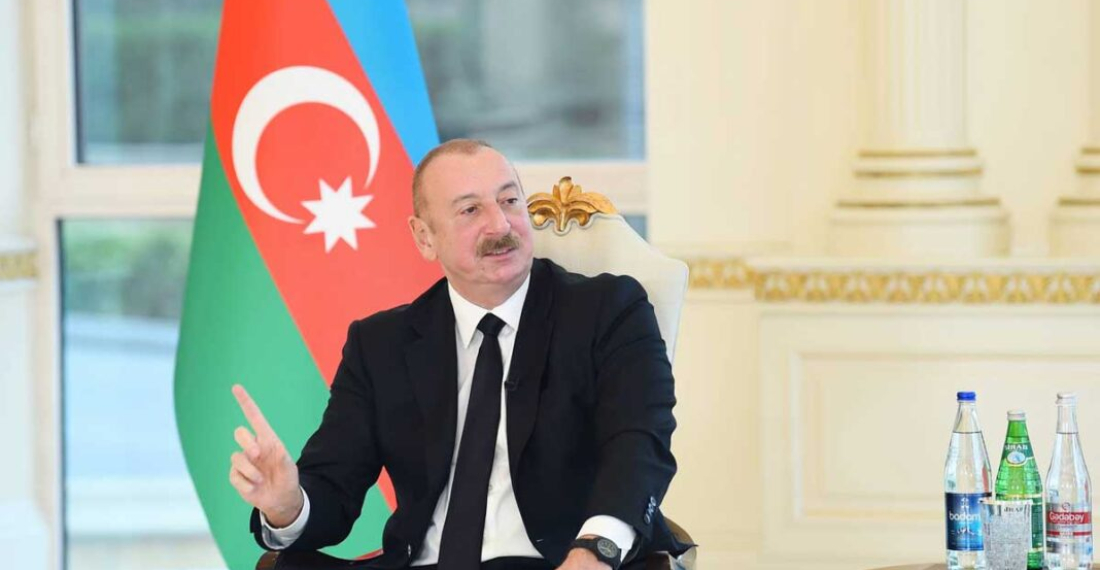
Aliyev and Trump
The difficulty in US-Azerbaijan relations during the Biden White House endeared it to Donald Trump. The extraordinary scene in the White House on 8 August, when Trump hosted Aliyev and Armenian Prime Minister Nikol Pashinyan, marked a new stage in relations that brought the US back to the South Caucasus. Moscow was not amused, but in Tehran they were seriously concerned.
Iran-Azerbaijan relations are not purely inter-state diplomatic relations. They are based on kinship, religious affinity (both countries have a majority Shia-Muslim population) and history.
Much as secular Azerbaijan does not like the theocracy that rules in Tehran, it has always sought to keep relations warm.
This approach has never been tested so much as in the last days, when anti-regime demonstrators took to the streets of Iranian cities in an attempt to bring down the regime of the Ayatollahs. The Trump White House was adamant in its support of the protests and imposed tariffs as a penalty on those trading with Iran, including Azerbaijan.
Azerbaijan finds itself having to manage two difficult and increasingly antagonistic partners. For the moment, it is managing.
In balancing the relations with Turkiye, Israel, Iran and the US, Azerbaijan is between a rock and a hard place. But, for now, it is still smiling and telling others they should learn from its experience.
Azerbaijan as a reliable partner
Apart from the astuteness of President Ilham Aliyev or perhaps a result of it, is the fact that Azerbaijan has developed a reputation as a reliable partner, in areas where it matters, including energy, energy security and the fight against terrorism. This has insulated Azerbaijan from criticism, some of it unjustified, most of it justified, in areas such as human rights, freedom of speech and rule of law.
Peace with Armenia is now on the horizon, and Azerbaijan has the possibility to square the circle and become the open hub in the wider region that it aspires to, and that benefits from the complex international relations it has forged.
|